Source-grounded visitor guide • Confirm current Mandir operations
Opening: approximately 4:00 AM
Worship: Jalabhishek tradition
Kanwar: check current route controls
Rituals: use authorised channels
Planning note: crowd guidance is not a live queue reading.
Jyotirlinga No. 9
Shri Baba Baidyanath Jyotirlinga Mandir
Deoghar, Jharkhand
Deity: Lord Shiva as Vaidyanath, the Divine Healer
Meaning: “Lord Shiva as the Divine Healer” Vaidya — Physician / Healer · Nath — Lord
Vaidyanath Jyotirlinga Temple is also established in pilgrimage tradition as Baba Baidyanath Dham and Baba Dham.AC5 The multi-shrine complex is a major eastern Indian centre of Shiva worship and Jalabhishek.
Healing, protection and wish-fulfilment statements on this page describe devotional belief. Timings, access and ritual arrangements require current confirmation.
Darshan Start
About 4:00 AM
Subject to current Mandir arrangements.
Crowd Expectation
Plan generous time
Shravan and major Shiva festivals can be exceptionally busy.
Best Darshan Window
Arrive early
Prefer non-peak days outside major festivals.
Planning recommendation
Pilgrimage Planning
Confirm current controls
Review queue, Jalabhishek and Kanwar arrangements.
Mandir hours and access may change during Shravan, festivals and administrative controls.
Source basis: supplied Baidyanath content document and the Reference Notes below.
Jyotirlinga No. 9One of the twelve sacred Jyotirlingas.
Divine HealerVaidyanath form of Lord Shiva.
Baba DhamEstablished sacred identity of Deoghar.
Kanwar TraditionGanga water carried from Sultanganj.
Sacred identity, living worship and pilgrimage setting of Baba Baidyanath Dham in Deoghar.SRC
Revered as the ninth Jyotirlinga among the twelve Jyotirlingas of Lord Shiva.
Located in Deoghar, Jharkhand and known across the pilgrimage tradition as Baba Dham.
Lord Shiva is worshipped as Vaidyanath, the Divine Healer; healing associations are matters of devotional faith.
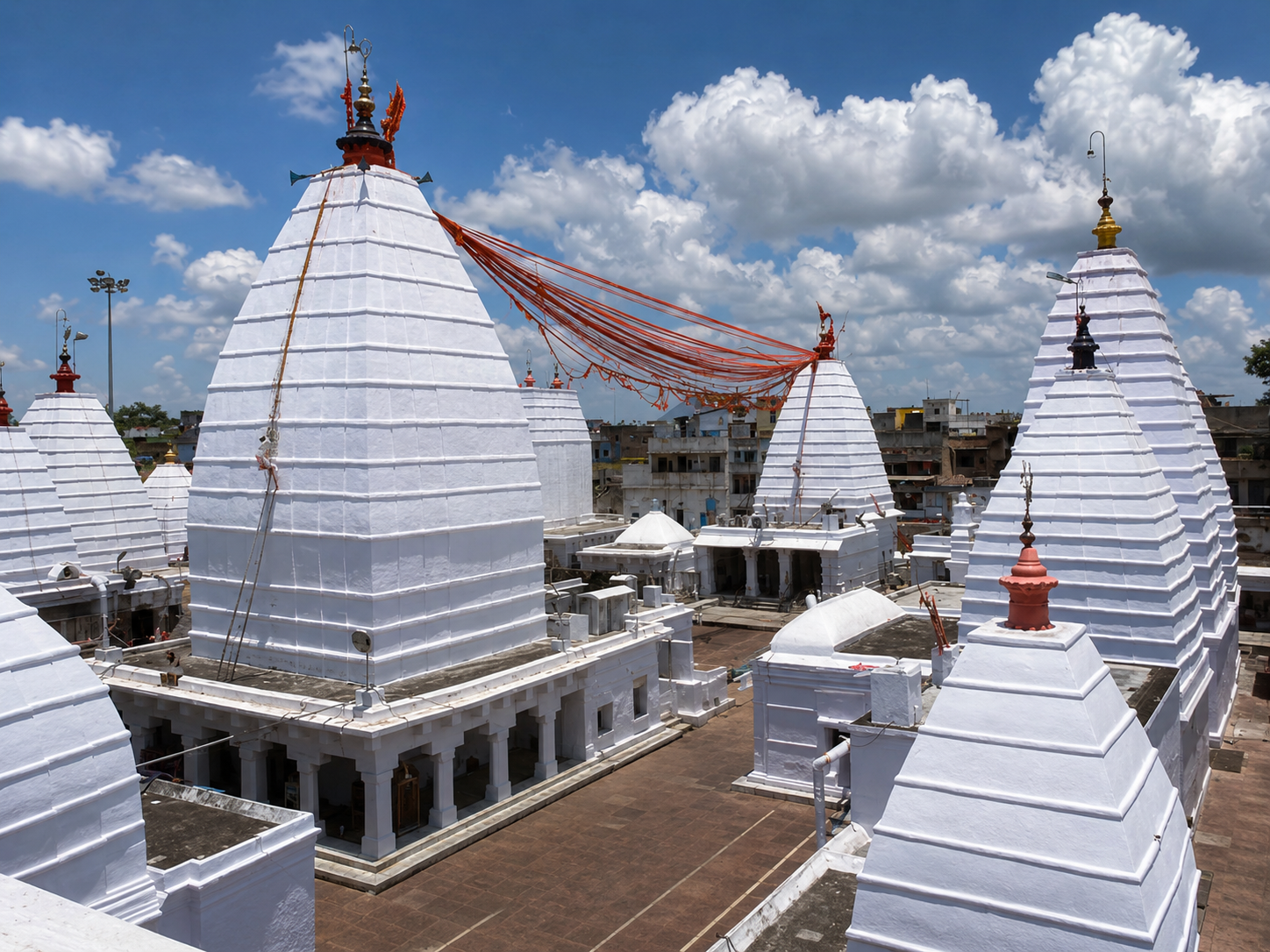
The stone, multi-shrine complex follows North Indian Nagara architecture.AR7
Continuous Jalabhishek, the Shravan pilgrimage and Kanwar tradition make it a major eastern Indian Shaiva centre.
Baba Baidyanath Dham brings Jyotirlinga worship, healing symbolism, Ravana tradition, Ganga-water pilgrimage and a living multi-shrine complex into one sacred centre.
A Shiva Purana-associated temple tradition about devotion, healing and the Jyotirlinga’s establishment at Deoghar.
Penance and healing
Ravana’s devotion
Temple tradition remembers Ravana, king of Lanka and an intense devotee of Shiva, performing severe penance and offering his heads as the highest sign of devotion.DM5 Shiva appeared and healed him like a divine physician; the story connects this healing act with the name Vaidyanath.
Jyotirlinga arrival
The Lingam rests at Deoghar
The sacred account says Ravana wished to carry Shiva’s Lingam to Lanka and was warned that it must not touch the ground. Through divine intervention he placed it at Deoghar, where it became permanently established. This is a Shiva Purana-associated and temple-tradition account, not a claim of documented history.VD3
Shiva’s healing act gives the sacred name its devotional meaning.
Permanent sacred site
Deoghar
The Lingam’s placement completes the temple’s origin tradition.
Historical Importance
Scriptural memory, longstanding pilgrimage practice and the growth of Deoghar as Baba Dham are distinct parts of the site’s importance.
Sacred textual tradition
Purana-associated identity
The Jyotirlinga and Ravana accounts belong to sacred tradition associated with the Shiva Purana and other Hindu textual memory. They establish religious meaning rather than a datable construction history.
Living pilgrimage history
Eastern Indian Shaiva centre
Over centuries, longstanding pilgrimage, the Kanwar tradition and support from regional rulers and devotees helped Deoghar develop as Baba Dham. The source does not assign a single verified founder, dynasty or construction date, so none is asserted here.
Scriptural memory
Jyotirlinga tradition
Sacred narratives shape the Mandir’s religious identity.
Longstanding journey
Kanwar pilgrimage
Ganga-water pilgrimage became central to Baba Dham practice.
Present importance
Deoghar pilgrimage city
The Mandir remains a major Shiva destination in eastern India.
Architecture and Orientation
A source-reported east-facing Nagara temple organised around a central sanctum, courtyard and surrounding shrines.
North Indian Nagara form
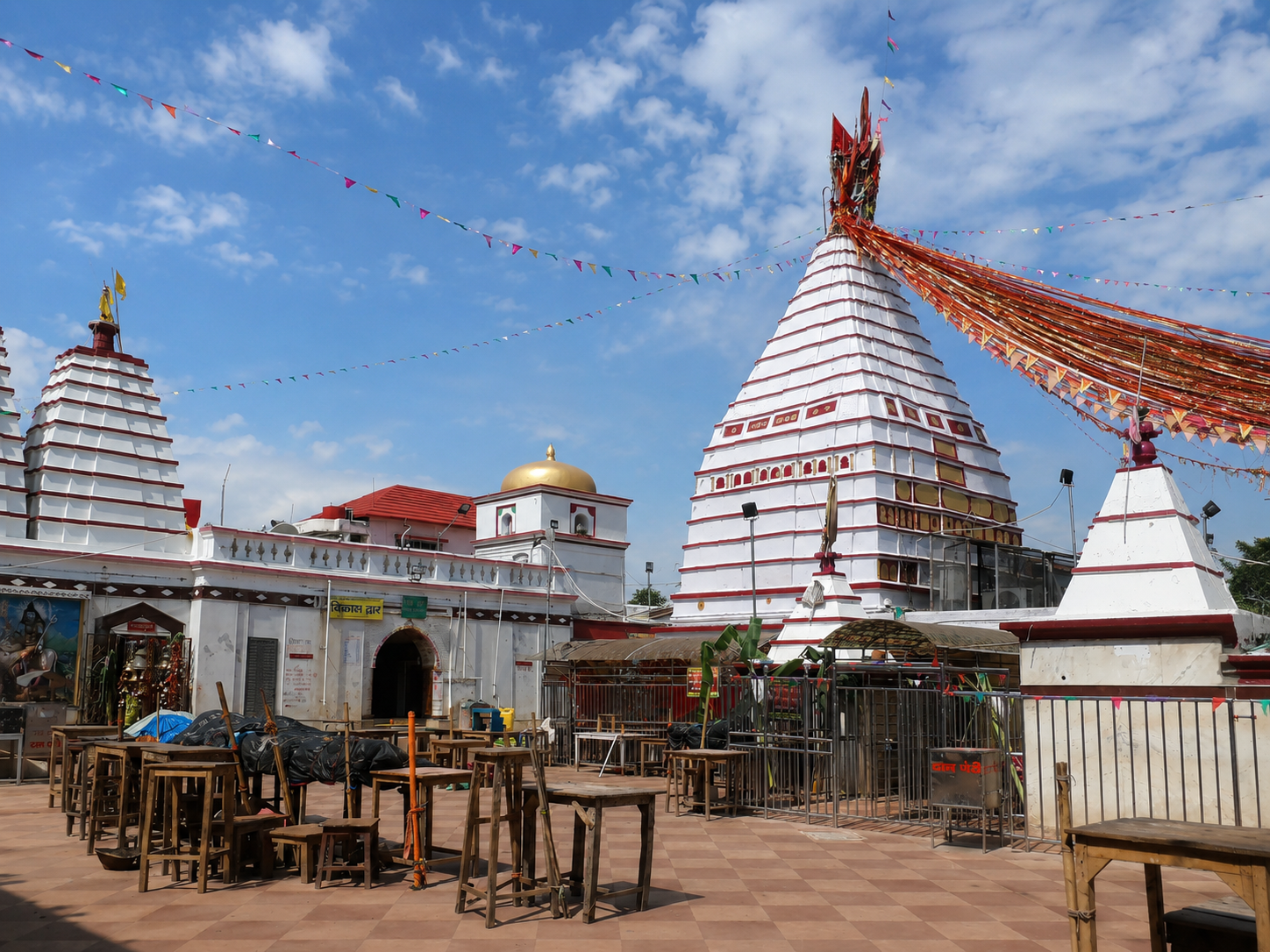
Tall white shikhara and stone complex
The main shrine is distinguished by a tall white shikhara above the central garbha griha. A large sacred courtyard, multiple surrounding shrines and dedicated water-offering areas create a compact pilgrimage complex. Its visual character is comparatively restrained rather than heavily ornamented.
Orientation and movement
East-facing approach
The source reports the main entrance as east-facing, with the garbha griha at the centre and devotee flow following clockwise parikrama. Actual queue routing and access lanes must follow current Mandir controls.
Special Features
Six defining traditions and features of Baba Baidyanath Dham.
Healing symbolism
Divine Healer
Shiva is worshipped as Vaidyanath; healing and relief are devotional beliefs, not medical promises.
Sacred story
Ravana’s Devotion
Intense penance and Shiva’s healing response define the traditional origin account.
Shravan pilgrimage
Kanwar Tradition
Kanwariyas carry Ganga water from Sultanganj for offering at the Jyotirlinga.
Living worship
Continuous Jalabhishek
Water, milk, Ganga Jal and Bilva leaves are central to the source-described worship tradition.
Established name
Baba Dham Identity
Deoghar is widely identified in pilgrimage practice with Baba Baidyanath Dham.
Sacred precinct
Multi-Shrine Complex
The central Jyotirlinga is surrounded by multiple shrines within the stone courtyard complex.
Spiritual Importance
Faith at Baidyanath centres on Shiva’s compassion, healing symbolism and the discipline of pilgrimage.
Devotional meaning
Faith, healing and divine compassion
Devotees traditionally pray here for relief from suffering, peace, protection, freedom from negativity, fulfilment of sincere wishes and spiritual purification. These are expressions of faith and should not be presented as guaranteed physical, medical or material outcomes.
Pilgrimage discipline
Offering, remembrance and renewal
Jalabhishek, Bilva offering, mantra, parikrama and the Kanwar journey join personal devotion with sacrifice, purity and disciplined service.
Kanwar Yatra and the Ganga-Water Tradition
The Shravan journey from Sultanganj to Deoghar is one of Baba Dham’s defining living traditions.
Sacred river source
Sultanganj and the Ganga
Devotees collect holy water at Sultanganj in Bihar, where the source describes the Ganga as flowing northward.R11 They carry the water in decorated Kanwars balanced on their shoulders and offer it to the Shiva Lingam at Baidyanath.
Shravan discipline
Kanwariya pilgrimage
Many Kanwariyas travel barefoot, chanting and observing personal discipline. For devotees, the journey symbolises faith, sacrifice, purity and steadfastness. Claims about wish fulfilment or removal of sin are matters of belief.
Special queue and water-offering arrangements may operate during Shravan.
Security camps, food stalls and rest points are commonly arranged along the pilgrimage route.
Follow current administration instructions for permitted containers, queues, rest areas and entry.
No fixed walking distance is stated here; route conditions and controls must be checked for the current season.
Quick Decision Box
Choose a practical plan for darshan, Jalabhishek or the Deoghar sacred circuit.
Darshan visit
Recommended for most visitors
Start Early
Use the approximate 4:00 AM opening as planning guidance and arrive outside peak festival periods when possible.
A three-step journey to Baba Baidyanath Dham in central Deoghar.
1
Step 1
Reach the Deoghar Region
Choose the most suitable air, rail or road arrival.
Air
Deoghar, Gaya or Patna
Deoghar Airport is approximately 10–12 km away; Gaya Airport about 220 km and Patna Airport about 270 km. The source lists a Deoghar Airport transfer at roughly 20–30 minutes, subject to traffic.
Rail
Jasidih Junction · about 7 km
The source lists links with Delhi, Kolkata, Patna, Ranchi, Varanasi and Howrah. Taxi, auto-rickshaw and local bus are onward options.
Road
Regional highway routes
Patna: about 275 km / 6–7 h. Kolkata: about 350 km / 7–9 h. Ranchi: about 250 km / 6–7 h. Varanasi: 400+ km / 8–10 h.
All distances and journey times are approximate and vary by route, traffic and stopping point.
2
Step 2
Continue Through Deoghar
Use current local transport and traffic controls.
Taxi / Auto
Airport, station and city transfers
Jasidih transfers are source-listed at roughly 15–20 minutes by taxi and 20–25 minutes by auto-rickshaw.
Local Bus / E-rickshaw
City-area movement
The source lists local bus from Jasidih at roughly 25–30 minutes and e-rickshaw for shorter temple-area travel.
Walking
Mandir and nearby shrines
Walking is practical within the central temple zone where current pedestrian controls permit.
Common route: train to Jasidih Junction → local transfer → Baba Dham market.
3
Step 3
Final Mandir Access
Complete the central-market approach on foot.
Baba Dham Market
Central Deoghar entry
The main approach passes through the town market toward the Baba Dham complex.
Parking
Outside the main temple zone
The source places parking outside the principal Mandir area; current controls and capacity are not guaranteed.
Final Walk
Market to Mandir
The source estimates roughly 5–10 minutes from the local market, depending on the actual start point and crowd routing.
Live traffic, parking, queue routes and pedestrian access should be reconfirmed.
Important Travel Note: Start early, allow generous Shravan and festival buffers and check current Trikut and Tapovan access before leaving Deoghar.
Source-supplied general planning periods and exactly four daily ritual rows; current times must be reconfirmed.TIME
Reconfirm before travel
General DarshanMorning approximately 4:00 AM–3:30 PMEvening approximately 6:00 PM–9:00 PM; planning values, not a live schedule.
OpeningApproximately 4:00 AM
Temple OpensAbout 4:00 AMSubject to current arrangementsMorning Darshan4:00 AM–3:30 PMApproximate planning periodEvening Darshan6:00 PM–9:00 PMApproximate planning periodFestival DaysSchedules differConfirm current information
Daily Aarti
Four Source-Supplied Ritual Periods
Mangala AartiEarly morning, around 4:00–5:00 AM
Madhyan AartiMidday · exact time to confirm
Sandhya AartiEvening · exact time to confirm
Shayan AartiNight closing · exact time to confirm
Timing note: Hours and ritual periods may change during Shravan, festivals, special worship and administrative arrangements. Confirm the current schedule before travel; this page does not present a dynamic “next aarti” value.
Major Festivals
Exactly four source-supplied observances shaping worship and pilgrimage at Baba Dham.
February–March
Maha Shivaratri
Night-long Jagaran, Shiva worship, Rudrabhishek, mantra, aarti and traditional offerings mark this major annual festival. Programme details vary.
July–August
Shravan / Shravani Mela
The largest pilgrimage season, when Kanwariyas carry Ganga water from Sultanganj and special crowd, security, food and rest arrangements may operate.
October–November
Kartik Purnima
Full-moon worship can include sacred bathing, Shiva puja, Rudrabhishek, Deepdan, mantra and bhajan; exact observance varies.
January–February
Basant Panchami
Springtime devotional observance associated with Shiva and Saraswati prayers, floral decoration, singing and community gathering; current programmes should be checked.
Festival months are given as broad planning windows. Lunar dates and Mandir programmes vary each year.
Jalabhishek and Ritual Guidance
Source-described Shiva offerings and worship practices; current permissions and arrangements must be confirmed.
Authorised channels only
Water offering
Jalabhishek
Ganga water and ordinary water are central to Baidyanath worship. Use only currently permitted containers and follow posted queue and offering rules.
Ganga waterTraditional offering
Queue / accessConfirm currently
ContainersFollow Mandir rules
Abhishek materials
Milk and Panchamrit
The source lists milk, honey, ghee and Panchamrit among abhishek items. Their current use is subject to Mandir permission and handling arrangements.
Permitted materialsVerify first
Quantity / handlingFollow instructions
Outcome claimsFaith-based
Shiva worship
Bilva and Rudrabhishek
Bilva leaves and Rudrabhishek are part of the source-described tradition. Confirm the authorised process, priest, materials, duration and access before payment.
Priest / channelAuthorised only
MaterialsConfirm
ChargesVerify before payment
Sacred movement
Clockwise Parikrama
Clockwise parikrama is source-described as the devotee flow. Follow current barriers, queues and restricted areas around the central and surrounding shrines.
DirectionClockwise
AccessSubject to controls
ConductFollow personnel
Authorisation notice: Use Mandir-authorised counters, priests or verified official channels. Confirm permitted materials, ritual access, eligibility, duration and charges before payment. This guide does not provide private contacts, prices or guaranteed outcomes.
Best Time to Visit
Season, time of day and the Shravan pilgrimage substantially affect a visit.
Comfortable season
October to March
The source identifies these months as the most comfortable broad planning period.
Best daily start
Early Morning
Start early outside major festival periods; this is guidance, not a waiting-time promise.
Peak pilgrimage
Shravan
Visit for the Kanwar tradition only with very large crowd, queue and route-control expectations.
Route planning
Festival and Hill Checks
Confirm Mandir controls, transport, Trikut ropeway status and Tapovan access before travel.
Nearby Sacred Places
Five source-supplied pilgrimage places in Deoghar and the wider Baba Dham circuit.
Basukinath Temple
Approximately 43 km
A major Shiva shrine regarded in the supplied pilgrimage tradition as the second shrine whose visit completes the Deoghar–Basukinath journey.C8 It is especially significant in Shravan. Completion, merit and cleansing statements are matters of faith.
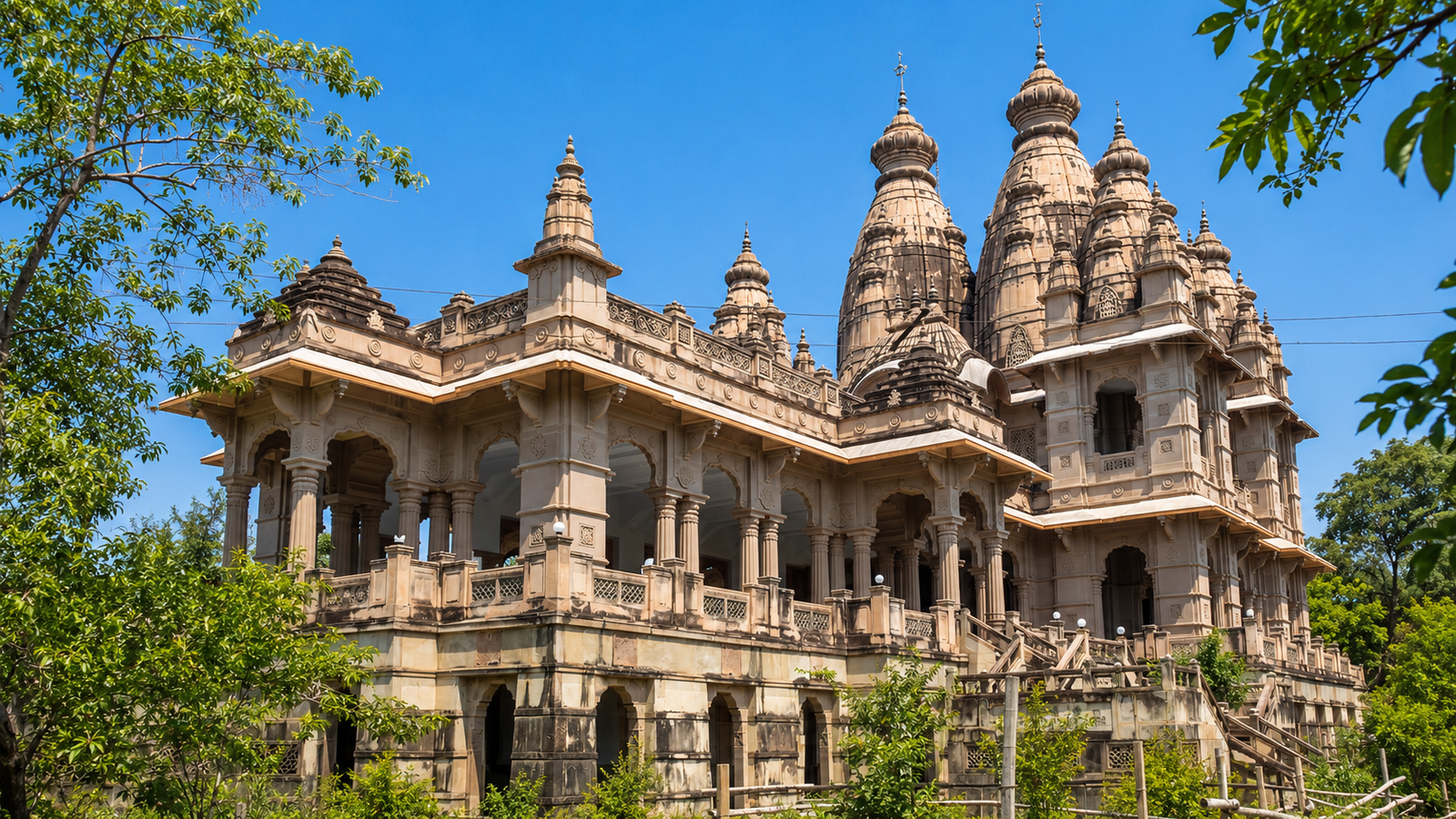
Naulakha Temple
Within Deoghar · route summary about 3 km
A peaceful Radha-Krishna temple associated with patronage of the Pathuriaghata royal family.D17 Its tall form, carvings, gardens and comparatively quiet atmosphere support architecture viewing, prayer and meditation.
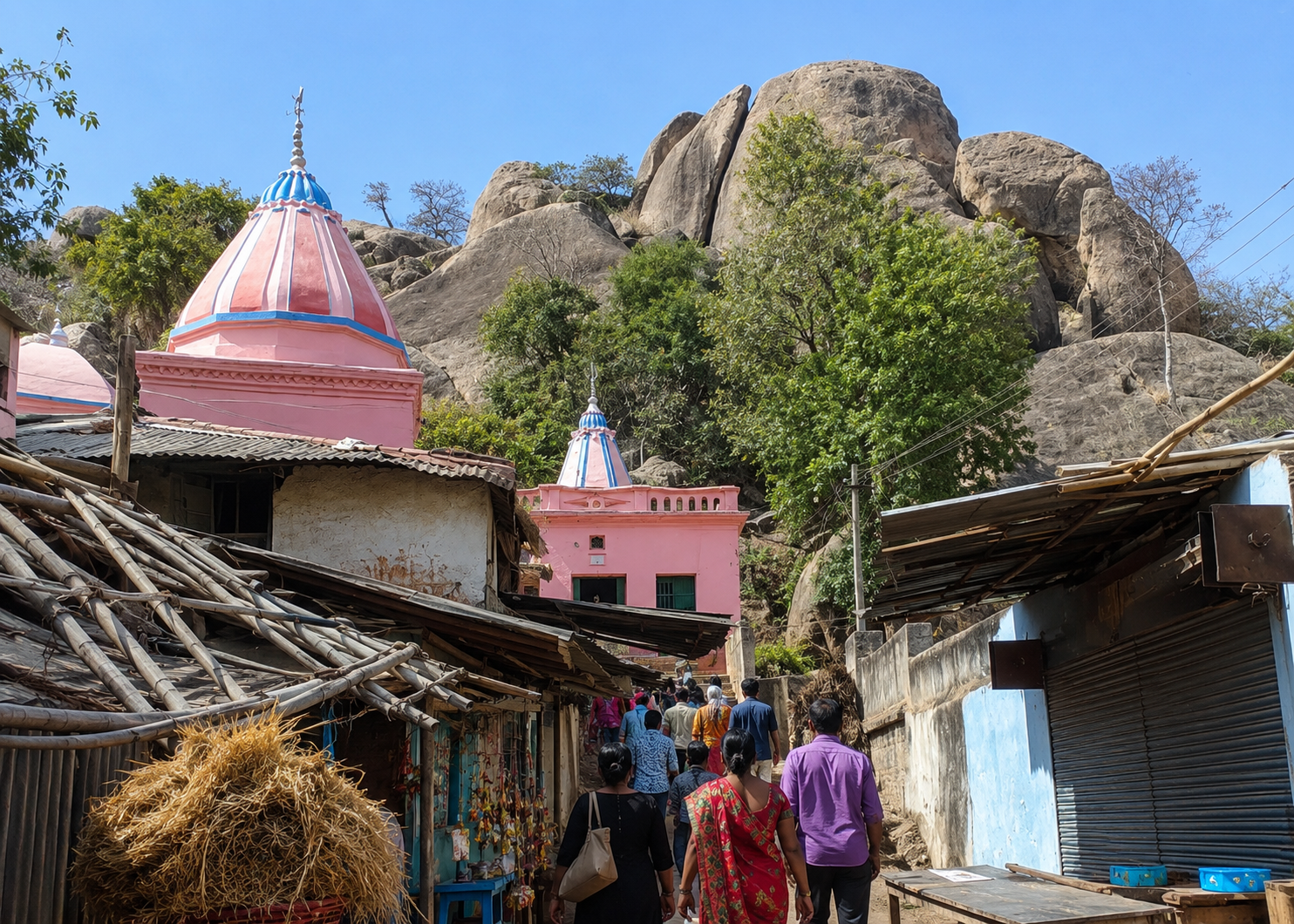
Trikut Hills
Source variants: 15–20 km narrative / 10 km route summary
A three-peak pilgrimage and trekking landscape associated in local tradition with Shiva, meditation and sacred energy.H15 Forest routes, shrines and panoramic plateau views are highlighted in the source. Confirm current ropeway operation, weather and access; distances vary by route and start point.
Tapovan Hills
Source variants: 10–15 km narrative / 5 km route sequence
A forested hill and cave landscape remembered in local tradition as a place of sages, penance and meditation.H16 Paths, viewpoints and natural caves support a quieter pilgrimage; confirm current access and route conditions because distance varies by start point.
Satsang Ashram
Within Deoghar · route summary about 4–6 km
A spiritual centre founded by Thakur Anukulchandra.K27 Meditation halls, prayer spaces, regular satsang, spiritual learning, community life and humanitarian activity define the source account. Distance depends on the start point and route.
Distance note: The source gives conflicting Trikut, Tapovan and Satsang values. They are retained here as variants; confirm the current route, actual start point and access rather than treating one number as definitive.
Baidyanath Sacred City Circuit
The user-controlled traditional sequence keeps Basukinath as the final pilgrimage-completion stop.
Six-Stop Sacred Sequence
Stop
Sacred place
Source distance context
Purpose
1
Baidyanath Jyotirlinga Mandir
Starting point
Main Jyotirlinga darshan and permitted Jalabhishek.
2
Naulakha Temple
About 3 km / within Deoghar
Radha-Krishna devotion, architecture, gardens and quiet worship.
3
Satsang Ashram
Within Deoghar / about 4–6 km summary
Meditation, satsang, learning and community life.
4
Tapovan Hills
10–15 km narrative / 5 km route table
Meditation, penance tradition, caves and forest landscape.
5
Trikut Hills
15–20 km narrative / 10 km summary
Pilgrimage, trekking, Shiva tradition and panoramic views.
6
Basukinath Temple — FINAL
About 43 km
Traditional final completion of the Deoghar–Basukinath pilgrimage.
Sequence note: A source transport table places Basukinath earlier, but the supplied traditional spiritual sequence explicitly places it last. This page follows that final user-controlled sequence. Distances and travel times vary by route, starting point, traffic, crowd, weather and current access.
Local Deoghar Plan
Walking + local auto / taxi
Baidyanath darshan and authorised Jalabhishek
Naulakha Temple
Satsang Ashram meditation
Local market and Prasad after darshan
Start early and adapt to real queue and city traffic conditions.
One-Day Pilgrimage Plan
Approximate source itinerary
4:00 AM Mangala-period planning; 5:00 AM darshan; 6:30 AM permitted Jalabhishek; 7:30 AM breakfast
9:00 AM Naulakha; 10:30 AM Satsang; 12:00 PM lunch
1:30 PM Tapovan; 3:00 PM Trikut, subject to access and ropeway status
All clock times are source itinerary suggestions, not guaranteed Mandir or transport slots.
Two-Day Pilgrimage Plan
Deoghar local + outer circuit
Day 1: Baidyanath, Naulakha, Satsang and evening worship.
Day 2: Tapovan and Trikut after access checks, then Basukinath as the final completion stop.
Return to Deoghar only after allowing realistic road, crowd, rest and hill buffers.
The source’s Day 2 table lists Basukinath earlier, but final placement follows the supplied traditional sequence.
Offerings and Prasad
Three source-supplied offering groups; current Mandir permissions always take precedence.
Traditional Shiva items
Leaves, Flowers and Fruit
Bilva / Bel leaves, white flowers, Dhatura, lotus and coconut are listed in the source tradition.
Abhishek items
Sacred Liquids
Ganga water, milk, honey, ghee and Panchamrit are source-described abhishek materials.
Prasad
Traditional Sweets
Laddoo, peda and other local sweets are listed as familiar Prasad choices.
Offering guidance: Do not assume every listed item is permitted in every queue or ritual. Confirm current rules, use modest quantities and follow Mandir instructions for handling, disposal and authorised Prasad.
Local Market and Pilgrim Information
Source-listed items found around the pilgrimage market, presented without vendor recommendation.
Prayer items
Rudraksha Malas
Sacred forms
Shiva Lingam Idols
Kanwar supplies
Pots and Decorations
Ritual supplies
Puja Thalis
Traditional item
Bhasma
Reading
Religious Books and Scriptures
Food / Prasad
Local Sweets
Remembrance
Spiritual Souvenirs
Check quality, price and permitted-item rules yourself. This guide does not recommend a seller or guarantee authenticity.
Visitor Information and Hill Safety
Prepare for very high Shravan demand, central-city queues and optional Trikut or Tapovan routes.
Mandir visit
Crowd and queue readiness
Start early and keep generous buffers during Shravan and major festivals.
Carry minimal valuables, water as permitted and essential medicines.
Use safe walking footwear outside footwear-restricted areas.
Follow current administration, queue, security and offering instructions.
Avoid unofficial agents and confirm transport and accommodation directly.
Outer circuit
Trikut and Tapovan checks
Confirm Trikut ropeway operation rather than assuming availability.
Check current hill access, weather and route condition for both sites.
Carry water, pace the walk and avoid unsafe or closed paths.
Add rest and transport buffers for children and senior visitors.
Do not rely on a fixed distance where the supplied route values conflict.
Accessibility note: The supplied source does not verify wheelchair access, so this page makes no accessibility guarantee. Ask the current Mandir administration about assistance and route suitability.
Frequently Asked Questions
Vaidya means physician or healer and Nath means lord. Temple tradition links the name with Shiva healing Ravana after his intense penance.
The Shiva Purana-associated sacred account tells of Ravana’s penance, Shiva’s healing and a Lingam intended for Lanka becoming permanently established at Deoghar.
Use approximately 4:00 AM–3:30 PM and 6:00 PM–9:00 PM only as general planning periods. Confirm current Mandir hours before travel.
The source places Mangala Aarti around 4:00–5:00 AM and identifies Madhyan, Sandhya and Shayan periods without exact fixed times. Confirm the current schedule.
During Shravan, Kanwariyas carry Ganga water from Sultanganj for offering at Baidyanath, producing the year’s largest pilgrimage demand and special route arrangements.
The supplied tradition places collection at Sultanganj in Bihar, where it describes the Ganga as flowing northward.
Yes for this supplied traditional sequence. Although one source transport table places it earlier, the explicit spiritual sequence makes Basukinath the final completion stop.
Check current access, weather, route condition, transport and physical suitability. For Trikut, also confirm current ropeway operation.
Reference Notes
Definitions for the twelve source markers used beside their first relevant public occurrence.
AR7 — North Indian Nagara architecture taxonomy.
DM5 — Ravana, king of Lanka and intense Shiva devotee in the sacred account.
R11 — Ganga River reference in the Sultanganj Kanwar tradition.
H15 — Trikut Hills reference.
H16 — Tapovan Hills reference.
AC5 — Baba Baidyanath Dham / Baba Dham established sacred-name reference.