
First-Time Visitor
Recommended for most visitors
Simple Darshan Planning
Ideal for first visit with minimal confusion
Best time: Arrive from 6:00 AM
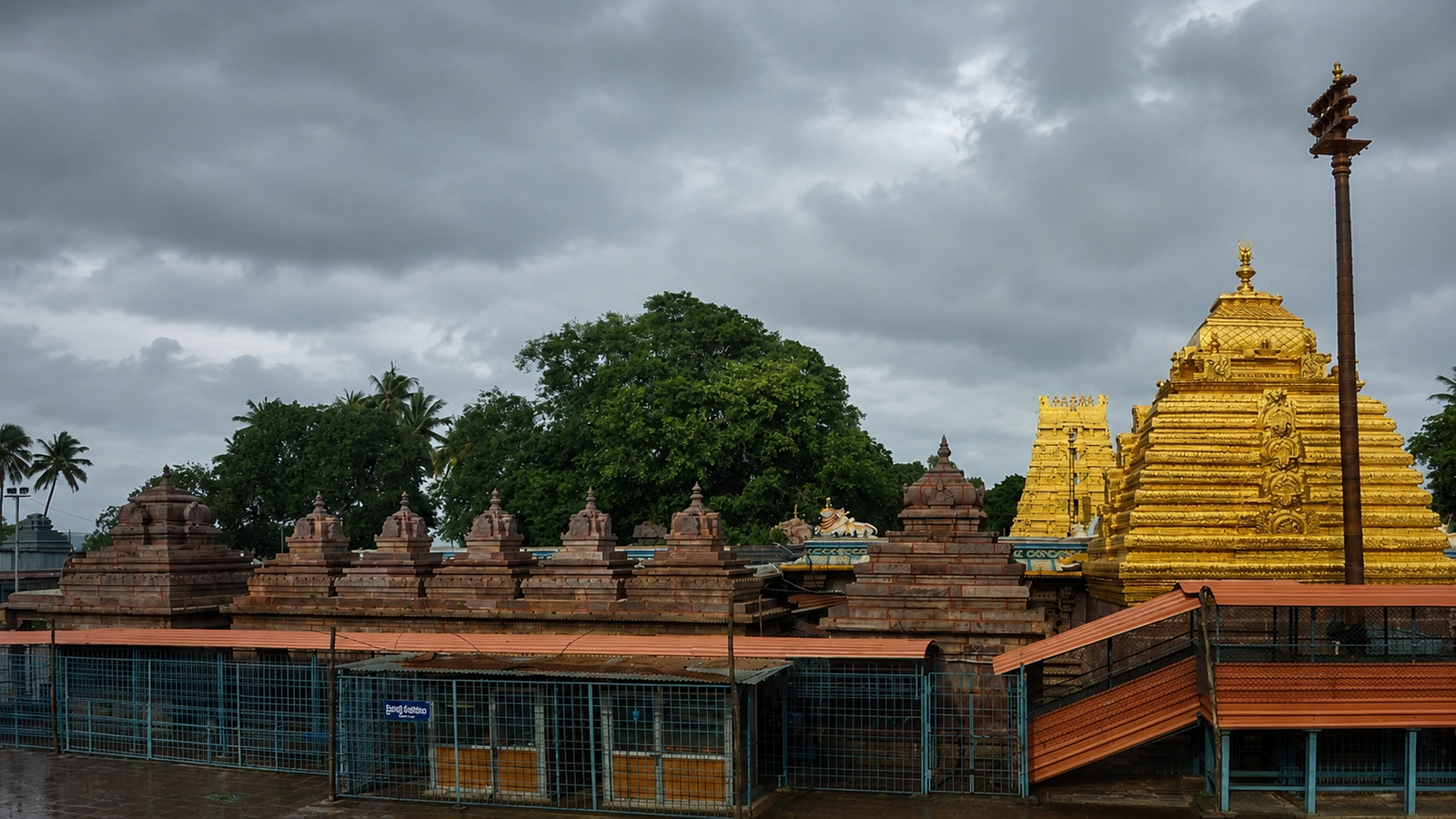
Srisailam, Andhra Pradesh, on the banks of the Krishna RiverR4
Mallikarjuna is a rare Shiva–Shakti pilgrimage centre where devotees worship Mallikarjuna Jyotirlinga—one of the 12 Jyotirlingas—together with Bhramaramba Devi Shakti Peetha at the east-facing Mandir amid the sacred Srisailam landscape.
Public darshan begins from 6:00 AM onward. Crowd and best-window guidance below is a planning estimate, not a live queue reading.
Tuesday–Friday ordinary days use a Moderate planning estimate. Monday, Saturday and Sunday use High.
Forest gates are closed daily from 9:00 PM to 6:00 AM.
Choose your darshan path — plan before arrival to avoid long queues.
First-Time Visitor
Recommended for most visitors
Ideal for first visit with minimal confusion
Best time: Arrive from 6:00 AM
Crowd-Aware
Use a transparent weekday estimate, not a live queue claim
Method: Day-based planning estimate
Darshan Choice
Sarva Darshan is free; Seeghra is ₹150 and Athi Seeghra is ₹500
Best fit: Official darshan booking
Sacred identity and landscape of Shri Mallikarjuna Jyotirlinga Mandir at Srisailam
The Srisailam pilgrimage brings together the Jyotirlinga identity of Mallikarjuna and the Shakti Peetha identity of Bhramaramba Devi within one active sacred complex.
The Krishna River, Nallamala forest hills and elevated Srisaila plateau shape a quiet pilgrimage environment associated in the supplied account with worship, meditation and spiritual retreat.
The supplied religious tradition connects Srisailam with Kartikeya, Ganesha, the compassion of Shiva and Parvati and the sacred origin of Jyotirlinga and Shakti Peetha worship.
This tradition presents Mallikarjuna as a sacred expression of family love, reconciliation and Shiva–Shakti unity.
Kartikeya and the divine family
According to tradition, Lord Shiva and Goddess Parvati had two sons, Kartikeya and Ganesha. A challenge was set to circle the world. Kartikeya immediately travelled on his peacock, while Ganesha circled his parents, regarding them as his entire universe. Ganesha was declared the winner for the wisdom of his response.
When Kartikeya returned, he felt disappointed and left Mount Kailash. He chose the Srisailam HillsH3 for solitude and penance. Shiva and Parvati followed to console him, but Kartikeya remained at Srisailam. Out of parental compassion, Shiva manifested as Mallikarjuna and Parvati as Bhramaramba. The site thereby became a centre of Shiva–Shakti worship and a story of family love, compassion, reconciliation and unity.
Jyotirlinga and Shakti Peetha origin
The supplied religious accounts refer to the Skanda PuranaV1 and Shiva PuranaV2. According to tradition, Lord Shiva appeared before Brahma and Vishnu as an endless pillar of light. Their search for its beginning and end expresses the Jyotirlinga as Shiva’s infinite form, with 12 Jyotirlingas regarded as especially sacred; Mallikarjuna is one of them.
According to the supplied religious account, Bhramaramba is revered as one of the 18 Maha Shakti Peethas. In the Daksha Yaga and Sati tradition, it is believed that Sati Devi’s upper lip fell at Srisailam. This belief explains the site’s joint importance to Shaiva and Shakti worship; it is presented here as religious tradition, not independently verified history.
Ganesha represents wisdom; Kartikeya represents strength and determination.
Shiva and Parvati follow Kartikeya to Srisailam to console him.
Shiva as Mallikarjuna and Parvati as Bhramaramba are worshipped together.
Love over ego; wisdom over competition; compassion over anger; unity over separation.
The supplied historical account traces an early Satavahana association and later contributions by the Kakatiya, Reddy and Vijayanagara dynasties.
Source-supplied evidence places the active shrine in a long historical continuum, with important additions across several South Indian dynasties.
Sacred timeline
The supplied account associates early evidence from the 2nd century with the Satavahana dynastyD1. It also records contributions from the Kakatiya dynastyD2 and the Reddy dynastyD3. The Reddy contribution is associated with Veerasheromandapam and the Paathalaganga steps.
Major 14th–15th century additions are associated in the source with the Vijayanagara EmpireD4, including work during the reign of Harihara IK18. Together, these contributions form part of Mallikarjuna’s long continuity as an active Mandir.
Associated in the source with the Satavahana period.
Vijayanagara additions and Reddy-period works helped shape the living Mandir complex.
The approximately two-hectare complex brings together Dravidian design, four grand gopurams, carved stonework, mandapas and fort-like walls.
Its sacred design combines monumental gateways and protective walls with carved pillars, inscriptions and devotional imagery.
Sacred design
The complex is built primarily in the Dravidian architectural styleAR2. Across approximately two hectares, it includes four grand gopurams, stone carvings, carved pillars, large mandapas, fort-like protective walls and ancient inscriptions.
The supplied account also identifies Nandikeshwara, a Sahasra Linga traditionally associated with Lord Rama, Pandava Lingams associated with the Mahabharata tradition and a mirror hall with Nataraja images. Carvings depict forms of Lord Shiva, Bhramaramba Devi, mythological scenes and celestial beings.
Large gateways, mandapas and protective stone enclosures shape the complex.
Traditional associations and carved imagery connect architecture with the Mandir’s devotional stories.
The rare Jyotirlinga and Shakti Peetha combination is worshipped within a forest, plateau and river landscape associated with retreat, meditation and reconciliation.
Mallikarjuna joins Shaiva and Shakti worship with the Patal Ganga and the Tamil Shaivite hymn tradition.
Sacred river and devotion
Patal Ganga / Krishna River GhatR2 is approached as a sacred riverfront where devotees bathe and collect water for Shiva Lingam Abhishekam. Bathing and worship here are traditionally believed to support spiritual purification.
Mallikarjuna is also honoured as a Paadal Petra Sthalam, praised in Tamil devotional hymns by Shaivite saints known as the Nayanmars. This heritage, together with Bhramaramba worship, reflects a continuing Shaiva and Shakti devotional tradition.
The Krishna River is approached as a holy water source for bathing and Abhishekam.
Mallikarjuna and Bhramaramba are revered together at one sacred site.
Praised in ancient Tamil hymns by Shaivite saints known as Nayanmars.
Reach the Srisailam Mandir complex and follow the marked queue-line approach.
Deposit bags, mobile phones, cameras and gadgets at the cloakroom before entry.
Choose Sarva Darshan, Seeghra Darshan or Athi Seeghra Darshan and join the assigned lane.
Follow Devasthanam queue instructions through the main temple precinct.
Take darshan of Sri Mallikarjuna Swamy followed by Sri Bhramaramba Devi.
Follow the exit route, receive Prasadam and collect deposited belongings using the cloakroom token.
A simple 3-step journey to Mallikarjuna Mandir, Srisailam
Choose the most practical rail, air or road combination for reaching Srisailam.
Rajiv Gandhi International Airport, Hyderabad
Approximately 230 km from Srisailam with an onward road journeyMarkapur railway station
Approximately 91 km from Srisailam; continue by road or busGovernment bus and private-vehicle access
Services connect from Andhra Pradesh, Telangana and Karnataka; use caution on ghat roadsContinue from the last major arrival point toward the Srisailam mandir area.
Direct road transfer
Keep the journey within the forest-gate operating window and drive cautiously on the ghat roadsGovernment road transport
Services are provided from Andhra Pradesh, Telangana and KarnatakaPlan before 9:00 PM
Forest gates reopen at 6:00 AM each dayReach the mandir complex through the designated local access route.
Queue-line complex
Follow the marked approach into the main Mandir precinctDeposit restricted items
Phones, cameras, bags and gadgets are not allowed insideInformation centre
Available on the south-east side of the main MandirFour source-supplied annual periods when visitors should plan for higher pilgrimage demand.
A major Shiva festival and high-crowd pilgrimage period.
A prominent devotional month with increased visitor demand.
A major Shakti observance and high-crowd period.
A seasonal pilgrimage period associated with local festivals.
Official online booking covers darshan tickets, Pratyaksha Sevas and Paroksha Sevas.
Darshan tickets
Book available darshan options through the official Devasthanam booking system.
In-person worship
Pratyaksha Sevas are offered in person at Srisailam and may be purchased online or at the ticket counter.
Virtual worship
Paroksha Sevas allow devotees to book virtual worship through the official online system.
Daily services
The Devasthanam lists both Homams as daily services in the main temple. No unsupported time is shown here.
For most devotees, Mallikarjuna planning is about both season and hill-route timing. Comfortable weather helps with Srisailam travel, while the day-of-week rule below helps set a transparent crowd expectation.
Cooler weather usually makes the broader Srisailam visit more comfortable.
Plan for a Very High expectation when a major Mallikarjuna festival date is explicitly configured.
Higher footfall is expected; allow additional queue time.
Important pilgrimage stops to visit around Mallikarjuna Jyotirlinga Mandir and the wider Srisailam spiritual circuit
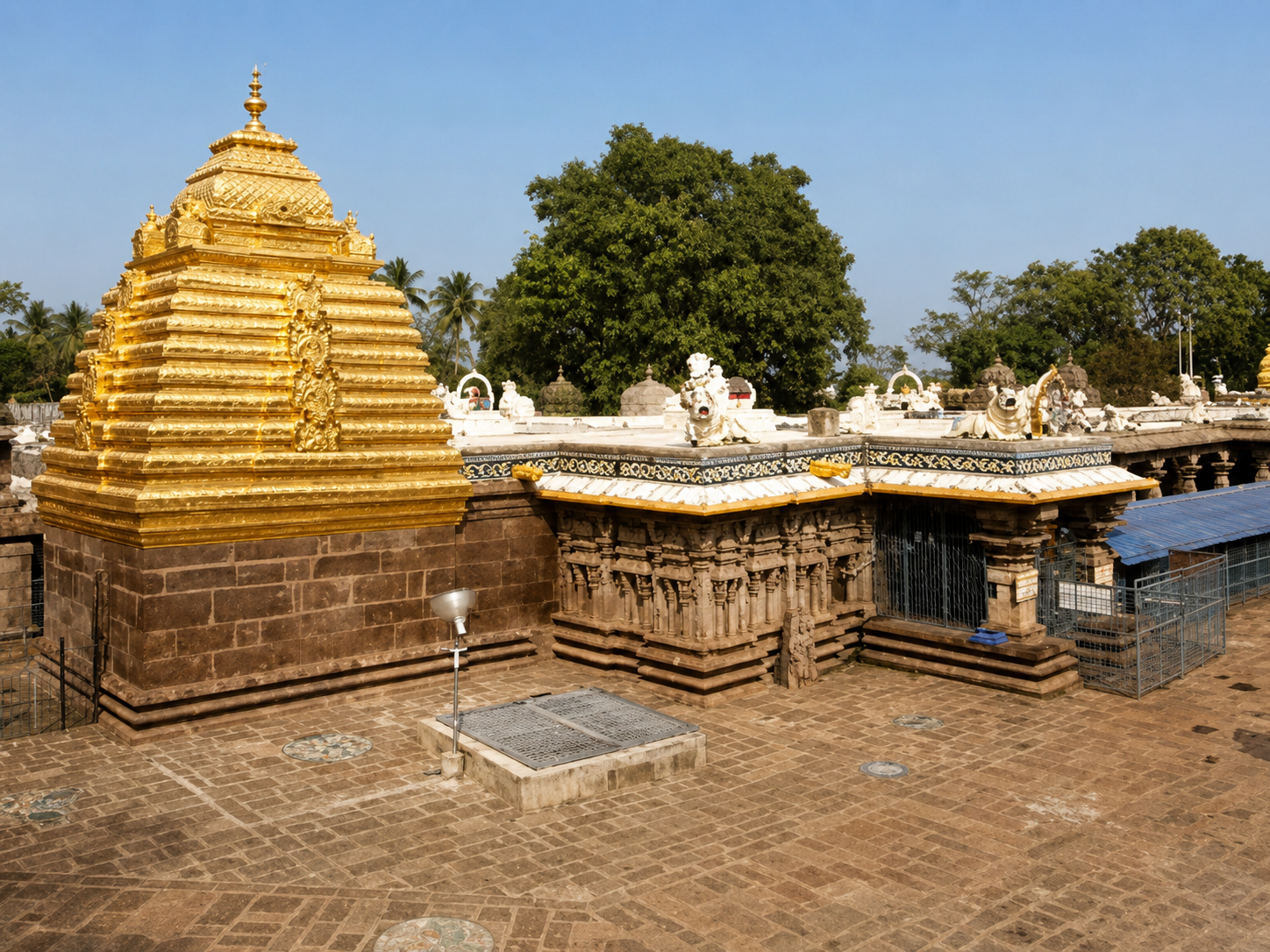
One of the 18 Shakti Peethas. Complete this visit on foot before beginning the taxi route.
A meditation hill associated with Siddhas; the source records a belief concerning purification and inner peace.
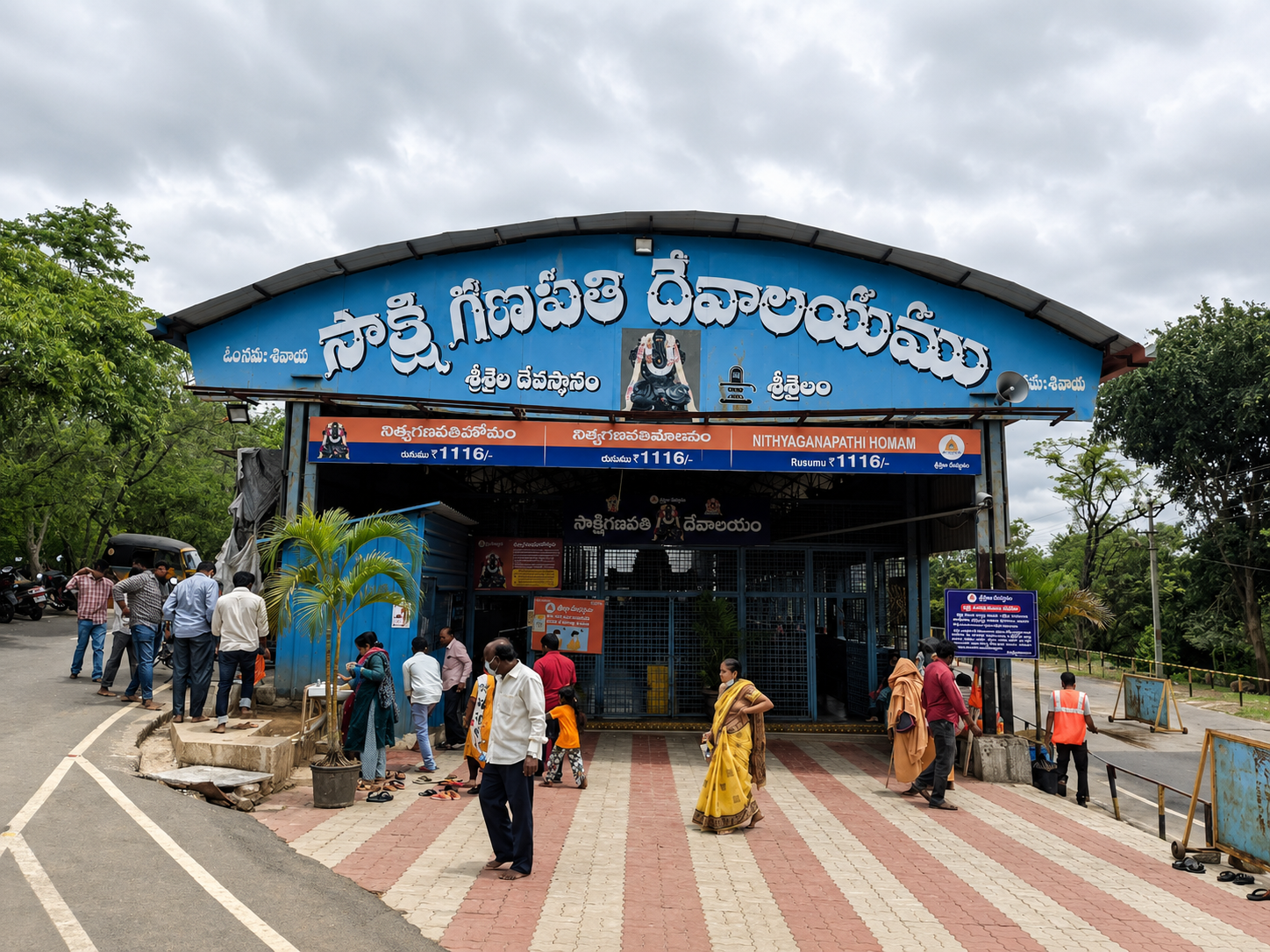
Pilgrims visit with the source-supplied belief that Lord Ganesha witnesses their Srisailam pilgrimage.
An ancient Shiva shrine in the forest hills; allow approximately 20–25 minutes for the supplied forest-route planning value.
Natural spring streams and a meditation place associated in the source with Adi Shankaracharya.
A hilltop location with panoramic views and a source-supplied belief concerning moksha.
The ride is approximately five minutes each way. An historic stepped alternative has approximately 500 steps. The hilltop has better restrooms, seating and food facilities; riverfront-ghat facilities are limited.
Google MapsA sacred Krishna River ghat associated with holy bathing and the tradition of collecting water for Abhishekam.
Google MapsReached by Krishna River boat and trekking rather than taxi, this natural limestone cave contains a sacred Shiva Lingam and is associated with meditation.
A rocky Krishna River-bank area associated with pilgrimage bathing and riverfront devotion.
A Krishna River dam and valley viewpoint suited to a sunset or evening stop.
Google MapsA restricted forest ride using limited-access vehicles. The source records a wish-fulfilment belief and recommends arranging the route one day earlier.
A Shiva–Parvati hill Mandir with caves and a natural setting, included in the Nallamala spiritual circuit.
An ancient Shiva Mandir associated with the Tripurasura tradition and a regional Shaivite pilgrimage route.
A source-supplied route plan for local Srisailam stops, the Nallamala circuit and the Tripuranthakam departure route. These are planning windows, not official Mandir schedules.
Suggested morning circuit window: 4:30 AM–7:00 AM
| Time | Route stop | Planning details |
|---|---|---|
| 4:30–7:00 AM | Mallikarjuna Jyotirlinga + Bhramaramba Devi Mandir | Bhramaramba is inside the Mallikarjuna complex. Complete both on foot before beginning the taxi circuit. |
| 7:10–7:35 AM | Siddha Ramappa Gutta / Kolanu | Approximately 10–12 km; approximately 30–40 minutes. |
| 7:45–8:20 AM | Sakshi Ganapati Mandir | Approximately 2 km; approximately 5–10 minutes; road plus short walk. |
| 8:25–8:55 AM | Hatakeswaram Mandir | Approximately 3 km direct / 5–6 km by forest route. Approximately 20–25 minutes for the supplied forest-route planning value. |
| 9:00–9:30 AM | Phaladhara–Panchadhara | Approximately 4–5 km; approximately 15–20 minutes. |
| 9:40–10:10 AM | Shikhareshwaram Mandir | Approximately 6–8 km; approximately 20–30 minutes. |
| 10:15 AM–2:30/3:00 PM | Srisailam Ropeway View Point → Patal Ganga → Akkamahadevi Caves |
Taxi drop at the Ropeway / Patal Ganga area; Akkamahadevi Caves are reached by boat and trek, not taxi. Ropeway: near Haritha Hotel / Ropeway Center; supplied daily hours 6:00 AM–5:30 PM; approximately five minutes each way; historic alternative of approximately 500 steps; better restrooms, seating and food at the hilltop; limited riverfront-ghat facilities. Patal Ganga: approximately 2–3 km downhill; about 852 steps or road access; approximately 10–15 minutes; sacred Krishna River ghat used for bathing and collecting Abhishekam water. Akkamahadevi Caves: approximately 18–20 km river route; approximately 1.5–2 hours by boat and trek; natural limestone cave with a sacred Shiva Lingam and meditation association. |
| 3:00–4:00 PM | Lunch / rest | Keep a buffer because boat queues may vary. |
| 4:15–4:45 PM | Lingala Gattu / Lingala Ghat | Around 5 km from Srisailam centre; a rocky Krishna River-bank area associated with pilgrimage bathing and riverfront devotion. |
| 5:00–6:00 PM | Srisailam Dam | Approximately 13–15 km depending on starting point; Krishna River dam and valley viewpoint for a sunset or evening stop. |
| 6:30 PM | Return to hotel or accommodation | Return near Mallikarjuna Mandir. |
| Time | Route stop | Planning details |
|---|---|---|
| 7:00 AM | Srisailam hotel → Shikharam / Nekkanti Jungle Ride counter | Taxi drop at the jungle-ride counter. |
| 8:00–11:00 AM | Ishtakameshwari Mandir forest ride | Restricted forest ride; approximately 20–22 km; approximately 1–1.5 hours; limited-access vehicles. The supplied route note recommends arranging the visit one day earlier. |
| 11:00 AM–12:00 PM | Return to Srisailam / lunch | Rest before the outstation drive. |
| 12:00–3:00 PM | Srisailam → Uma Maheshwaram Mandir | Travel toward the Shiva–Parvati hill Mandir. |
| 3:00–4:30 PM | Uma Maheshwaram darshan and surroundings | Approximately 60–70 km; approximately 2–3 hours; Shiva–Parvati hill Mandir with caves, a calm natural setting and a place in the Nallamala spiritual circuit. |
| 4:30–7:30/8:00 PM | Uma Maheshwaram → Srisailam hotel | Plan the return around the supplied forest-gate closure period of 9:00 PM–6:00 AM. |
Night halt:
Srisailam
Route summary: Srisailam hotel
→ Shikharam / Nekkanti counter → Ishtakameshwari →
Srisailam → Uma Maheshwaram → Srisailam hotel
| Time | Route stop | Planning details |
|---|---|---|
| 7:00 AM | Srisailam hotel checkout | Begin the departure route after checkout. |
| 7:30–11:00 AM | Srisailam → Dornala side → Tripuranthakam Mandir | Use the approved source timetable for this departure leg. |
| 11:00 AM–12:30 PM | Tripuranthakam Mandir darshan | Ancient Shiva Mandir associated with the Tripurasura tradition; approximately 150–170 km; part of a regional Shaivite pilgrimage route. |
| After 12:30 PM | Onward journey | Continue toward Markapur / Ongole / Vijayawada / Guntur. |
Route summary: Srisailam hotel → Dornala route → Tripuranthakam Mandir → onward journey
Traditional offerings at Mallikarjuna are simple, devotional and closely tied to Shiva Ji worship, with puja essentials and sacred rituals usually arranged through trusted local vendors or approved mandir channels.
Flowers, bel patra and simple Shiva Ji puja items remain the most familiar offerings for devotees visiting Mallikarjuna.
Fresh flowers are among the most common devotional offerings for Lord Shiva Ji and are easily available through trusted local vendors near the mandir approach.
Bel patra remains one of the most symbolically important offerings in Shiva Ji worship and is often part of simple, focused puja at Mallikarjuna.
Milk-based abhishek offerings are widely associated with Shiva Ji worship. Devotees should follow current mandir rules and approved puja procedures before bringing items inside.
Rudrabhishek is one of the most sought-after mandir rituals for devotees seeking a deeper spiritual offering experience at Mallikarjuna.

Short reminders that help avoid confusion and keep darshan smoother.
A little planning before you leave for the mandir usually makes the darshan experience calmer, especially when access and queue flow need coordination.
Arrival checklist
Plan road travel before the 9:00 PM forest-gate closure, use the cloakroom before the queue and allow extra time on High-expectation days.
Simple, respectful choices usually make the visit smoother than trying to manage extra items near a tightly monitored mandir entry.
Modest clothing, light items and simple offerings usually make entry, walking and security checks much easier.
Clothing
Mandir-appropriate clothing is the easiest choice for darshan lines, walking access and longer devotional visits.
Restricted items
Bag, phone, electronics and deposit rules can vary by crowd control setup, mandir guidance and security enforcement.
Offerings
Simple offerings are easier to manage and more likely to fit current entry expectations near the mandir complex.
Where you stay affects how easy an early darshan day feels, especially when route timing and local transfer planning become part of the plan.
Staying near the mandir approach or a practical transfer point usually makes early darshan planning much smoother than depending on long local transfers.
Best area to stay
If mandir access is the priority, stay in an area that keeps the morning approach manageable instead of adding a long transfer before the queue.
Near mandir approach
Staying close to the mandir approach can make it easier to combine darshan, local movement and other Srisailam pilgrimage stops in one day.
Near railway station
This area can work better for visitors arriving by train, carrying luggage or prioritizing simpler onward travel over a more immersive but slower local stay pattern.
Budget and comfort
Budget stays can work well if access is clear, while comfort stays are often worth considering when your visit depends on rest, early reporting or family travel.
Staying too far from the main mandir approach may feel quieter, but it can complicate luggage movement, local transfers and very early mandir starts.
Use Srisaila Devasthanam for darshan, Pratyaksha Seva and Paroksha Seva booking.
The official Darshanam and Online Booking pages are the primary operational sources for this guide.
Where to confirm
Use the official pages for public darshan information, ticket options and available seva booking.
Before you depend on a booking
Follow the ticket and service details shown by the official booking system for the selected visit date.
The current official pages reviewed do not expose a complete daily aarti schedule, so this guide limits operational timing to the confirmed 6:00 AM public darshan start and daily service names.
Compact definitions for the source codes used beside their first relevant public occurrence.