Kashi Vishwanath Mandir

Today's Key Info

Opening Time 2:30 AM
General Darshan 4:00 AM - 11:00 AM
Best Season Oct - Mar
Access Corridor + Walking
🟢 Mandir is open now • High crowd expected •
🔔 Next Aarti Today: 7:00 PM
Avg Darshan Time: 45–90 minutes
Best time today: 4:00 AM – 5:30 AM
🚶 Last 500m: walking only (no vehicles)
💡 First visit? arrive before 5 AM for smooth entry
📊 Today: 18,000+ devotees • Peak: 6–9 AM
Jyotirlinga No. 7

Kashi Vishwanath Jyotirlinga Mandir

Holy city of Varanasi on the western banks of the sacred Ganga River

Deity: Lord Shiva Ji as Kashi Vishwanath Jyotirlinga

Kashi Vishwanath Jyotirlinga Mandir is revered as Jyotirlinga No. 7, the seventh among the 12 Jyotirlingas, and stands in the holy city of Varanasi on the western banks of the sacred Ganga River.

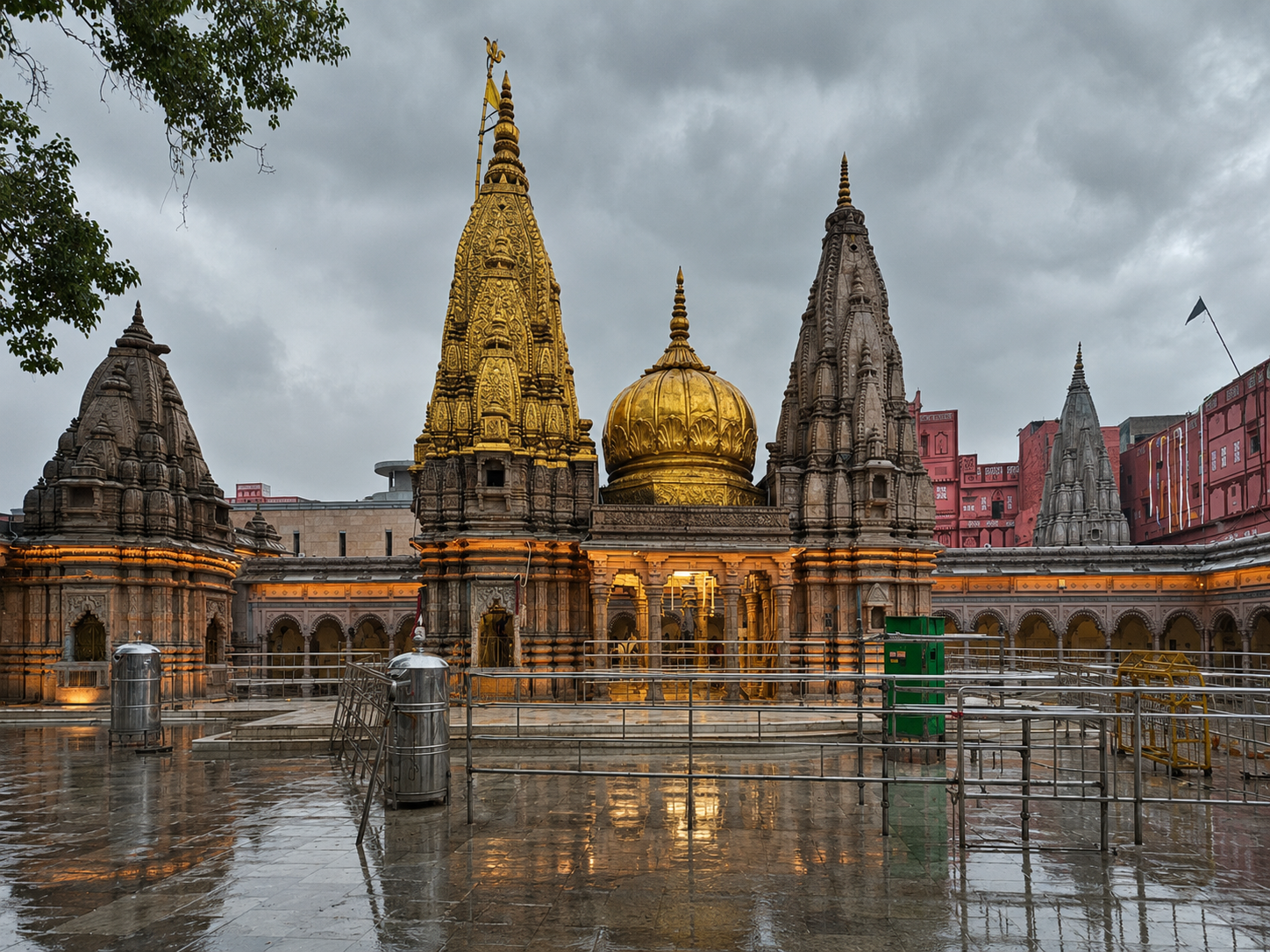
The mandir is famous for deep spiritual importance, ancient Hindu traditions, golden spires, moksha-centered devotion, and the sacred movement of the Kashi Vishwanath Corridor.

Mangala Aarti access, corridor flow, special rituals and local visit advisories should be rechecked on the date of darshan.

Meaning of Kashi Vishwanath
Lord of the Universe in the Sacred City of Light
Kashi means City of Light, Vishwanath means Lord of the Universe, and Kashi Vishwanath means Lord of the Universe in the Sacred City of Light.
Kashi = City of Light Vishwanath = Lord of the Universe Sacred City of Light
Mandir Status
Open Now
Live status (updated recently)
Crowd Expectation
🔴High today
Peak expected during aarti time

85% crowd probability based on pattern

Next Aarti
7:00 PM
Saptarishi Aarti
Best Darshan Window
4:00 AM - 6:00 AM
Lowest rush for general darshan
Recommended

👉 Best to visit before 5:30 AM to avoid heavy crowd today

📅 Today: Moderate to high devotee flow expected
Map
Mandir Location Snapshot

Holy city of Varanasi on the western banks of the sacred Ganga River

View Full Map →
CityVaranasi
StateUttar Pradesh
WaterbodyGanga River
RiverbankWestern banks of the sacred Ganga River
FacingEast
LandmarkNear Dashashwamedh Ghat
Railway StationVaranasi Junction
AirportLal Bahadur Shastri Airport
AccessCorridor entry, walking lanes and local transport

🚗 20 min from Varanasi Junction • ✈ 45 min from Airport

Sun, Moon & Sacred Timings

Today's Sacred Timings

Sunrise Today 5:08 AM
Sunset Today 6:48 PM
Moonrise Today 6:01 AM
Moonset Today 8:24 PM
Jyotirlinga No. 7 Seventh among the 12 Jyotirlingas.
City of Moksha Kashi is revered as Shiva Ji’s sacred city.
Golden Mandir of Shiva Ji Famed for golden domes and spires.
Sacred Ganga Connection Located on the western banks of the Ganga.
Kashi Corridor Ancient spirituality with modern pilgrimage access.
↓ See darshan process & planning guide
Plan your darshan now Start Planning →

Quick Decision Box

Choose your darshan path — plan before arrival to avoid long queues.

First-Time Visitor

Recommended for most visitors

Simple Darshan Planning

Ideal for first visit with minimal confusion

Best time: 4:00 AM – 6:00 AM

Best fit: First-time visitors

Best time: 4:00 AM – 6:00 AM

Start Planning

Aarti-Focused

Attend Mangala Aarti

Experience early morning spiritual energy

Best fit: Devotees ready for early arrival

Best fit: Devotees ready for early arrival

See Aarti Timing

Ritual-Focused

Book Rudrabhishek

Perform focused Shiva Ji ritual with priest

Best fit: Devotees planning special puja

Best fit: Devotees planning special puja

Book Rudrabhishek

Mandir Overview

Understanding the spiritual importance of Kashi Vishwanath

  • Jyotirlinga No. 7 and the seventh among the 12 Jyotirlingas of Lord Shiva Ji
  • Located in Varanasi on the western banks of the sacred Ganga River
  • Kashi is believed to be the eternal city of Shiva Ji and a city of moksha
  • East-facing shrine with golden spires, corridor access, and deep Ganga-side pilgrimage identity

Kashi Vishwanath Jyotirlinga Mandir is one of the most sacred mandirs of Lord Shiva Ji and is regarded as the seventh among the 12 Jyotirlingas. It is located in the holy city of Varanasi in Uttar Pradesh on the western banks of the sacred Ganga River, where devotees come for spiritual knowledge, blessings, and freedom from the cycle of birth and death.

Kashi is believed to be the eternal city of Shiva Ji. The mandir is associated with ancient Hindu traditions, golden spires, moksha, and grand corridors leading toward the sacred shrine. The mandir mainly faces east, and east-facing mandirs are traditionally considered auspicious because they welcome the rising sun and symbolize purity, positivity, and divine light in Hindu tradition.

Jyotirlinga No. 7 Varanasi Ganga River East-Facing Mandir Moksha Kshetra

Kashi Vishwanath Mythology and Taraka Mantra Tradition

Kashi Vishwanath’s sacred tradition is rooted in Lord Shiva Ji’s eternal presence in Kashi, the promise of moksha, and the Taraka mantra associated with final liberation.

According to Hindu tradition, Lord Shiva Ji chose Kashi as his eternal abode and promised that devotees who worship here would attain liberation, with the sacred Taraka mantra guiding souls toward salvation.

Sacred legend

According to Hindu tradition, Lord Shiva Ji chose Kashi as his eternal abode and promised that devotees who worship here would attain liberation, or moksha. Kashi is therefore revered not only as a holy city, but as a city made sacred by Shiva Ji’s own everlasting presence.

Ancient scriptures describe Kashi as a city beyond destruction, protected by Shiva Ji himself. It is believed that Shiva Ji whispers the sacred Taraka mantra into the ears of devotees at the time of death, helping them attain salvation and freedom from the cycle of birth and death.

The Jyotirlinga at Kashi Vishwanath is therefore worshipped as Shiva Ji’s supreme cosmic light and as the eternal protector of spiritual wisdom, divine light, and final liberation.

Eternal abode
Lord Shiva Ji chose Kashi

Kashi is traditionally revered as the city where Shiva Ji remains eternally present.

Taraka mantra
Salvation at the final moment

Tradition holds that Shiva Ji grants liberation by whispering the sacred mantra at the time of death.

Cosmic light
Protector of spiritual wisdom

The Jyotirlinga is worshipped as Shiva Ji’s eternal light and divine protection.

Mandir History

Kashi Vishwanath has remained an important center of Hindu worship, learning, and pilgrimage for centuries, with a history shaped by ancient textual memory, repeated rebuilding, and enduring devotion in Varanasi.

Kashi Vishwanath is mentioned in Puranas, ancient pilgrimage records, and Hindu devotional literature. The present structure was rebuilt in 1780 by Ahilyabai Holkar, and its golden domes were later associated with Maharaja Ranjit Singh.

Sacred timeline

Kashi Vishwanath has been an important center of Hindu worship, learning, and pilgrimage for thousands of years. The mandir is mentioned in Puranas, ancient pilgrimage records, and Hindu devotional literature, which together preserve its sacred standing in the religious life of Kashi.

The mandir faced destruction and reconstruction multiple times during medieval invasions, yet its worship tradition continued through the faith of devotees. The present Kashi Vishwanath Mandir was rebuilt in 1780 by Ahilyabai Holkar, restoring the shrine’s historic core as one of the most sacred Shiva Ji mandirs in India.

Later, the mandir’s golden domes became closely associated with the donation of Maharaja Ranjit Singh. Together, the ancient textual references, repeated rebuilding, and continued worship tradition explain why Kashi Vishwanath remains one of the most revered Jyotirlinga pilgrimage centers.

Ancient memory
Puranas and pilgrimage records

Kashi Vishwanath is deeply rooted in Hindu devotional and pilgrimage literature.

Present mandir rebuilt
1780 CE (Common Era / AD)

Ahilyabai Holkar restored the present historic structure in Varanasi.

Golden domes
Maharaja Ranjit Singh

The mandir’s famed golden domes are linked with his later patronage.

Mandir Architecture & Design

Kashi Vishwanath reflects North Indian Nagara-style architecture, golden domes and spires, sacred shrines and mandapas, and a pilgrimage layout now closely linked with the Kashi Vishwanath Corridor.

The mandir complex combines North Indian Nagara-style architecture, the sacred sanctum containing the Jyotirlinga, golden domes and spires, marble pathways, and the modern Kashi Vishwanath Corridor.

Sacred design

Kashi Vishwanath follows the North Indian Nagara style of mandir architecture. The sacred sanctum containing the Jyotirlinga remains the heart of the shrine, while surrounding shrines, mandapas, and mandir pathways shape the devotional movement of pilgrims through the complex.

The mandir is especially recognized for its golden domes and spires, which helped give it the widely known identity of the Golden Mandir of Shiva Ji. Marble corridors and mandir pathways strengthen the experience of processional worship and darshan around the sacred precinct.

The modern Kashi Vishwanath Corridor has further connected the mandir complex with broader pilgrimage movement in Varanasi, helping the mandir combine ancient spirituality with modern pilgrimage facilities while preserving its sacred identity.

Architecture style
North Indian Nagara style

A sacred design tradition expressed through shrine form, mandapas, and mandir profile.

Golden profile
Domes and spires

Golden domes and spires remain the mandir’s most iconic architectural feature.

Modern pilgrimage access
Kashi Vishwanath Corridor

The corridor connects the shrine more directly with wider mandir movement and facilities.

Spiritual Importance & Sacred Features

Kashi Vishwanath is revered as a moksha-giving Shiva Ji shrine in the City of Light, with a sacred Ganga connection, continuous worship tradition, Vedic chanting, and the pilgrimage energy of the Kashi Vishwanath Corridor.

Worship at Kashi Vishwanath is believed to remove sins and grant moksha, while pilgrims come for spiritual purification, ancestral rituals, meditation, Shiva Ji devotion, and the liberating atmosphere of Kashi.

Sacred devotion

Worship at Kashi Vishwanath is believed to remove sins and grant moksha. Pilgrims visit Kashi for spiritual purification, ancestral rituals, meditation, and Shiva Ji devotion, and the mandir is revered as a place where eternal knowledge, divine light, and liberation are sought together.

Kashi is remembered as the City of Moksha and the eternal abode of Shiva Ji. The mandir’s sacred Ganga connection, its continuous worship tradition, and the rhythm of rituals, aartis, Vedic chanting, and Shiva Ji worship throughout the day strengthen its identity as one of India’s most powerful spiritual destinations.

Kashi Vishwanath is also a major moksha and Ganga pilgrimage destination. The mandir complex now combines ancient spirituality with the Kashi Vishwanath Corridor and modern pilgrimage movement, while exact ritual and festival schedules should still be verified on the date of visit.

  • City of Moksha and eternal abode of Shiva Ji
  • Golden Mandir of Shiva Ji with sacred Ganga connection
  • Continuous worship tradition throughout the day
  • Rituals, aartis, Vedic chanting, and Shiva Ji devotion
  • Spiritual purification, ancestral rituals, meditation, and moksha-seeking pilgrimage
  • Kashi Vishwanath Corridor and modern pilgrimage facilities
Spiritual goal
Removal of sins and moksha

Devotees seek liberation, purification, and Shiva Ji’s grace at Kashi Vishwanath.

Sacred setting
Ganga, ghats and City of Light

The shrine’s location in Varanasi deepens its identity as a river-linked moksha mandir.

Living tradition
Corridor, chanting and daily worship

Ancient devotion continues through aartis, Vedic chanting, and modern pilgrimage access.

Darshan Process

A quick visual flow from entry point to exit.

Average total time: 45–90 minutes (varies by crowd)

1

Reach Mandir Area

Use the approved drop point and move toward the corridor entry.

2

Clear Security

Phones, bags and restricted items are checked before entry.

3

Join Queue Lane

Enter the assigned lane and keep darshan items ready in hand.

4

Move Final Stretch

The last approach is controlled in batches near the shrine.

5

Take Darshan

Darshan is brief, so move calmly and follow mandir volunteers.

6

Follow Exit Flow

Continue through the managed exit toward corridor or nearby mandir lanes.

How to Reach

A simple 3-step journey to Kashi Vishwanath Mandir, Varanasi

1
Step 1

Reach the City

Choose the most convenient way to reach Varanasi, the city of Lord Shiva Ji.

Air

Lal Bahadur Shastri Airport (VNS)

Approx. 25 km from mandir | 45 - 60 min

Rail

Varanasi Junction (BSB)

Approx. 5 km from mandir | 15 - 25 min

Road

Well connected by NH-19, NH-31

Regular buses, taxis and state transport from major cities
Varanasi is well connected to Delhi, Prayagraj, Lucknow, Patna, Kolkata and other major cities.
2
Step 2

Local Transfer

From the airport, railway station or bus stand, continue to the mandir area.

Taxi / App Cab

Available 24/7

Recommended for a comfortable and direct ride

Auto / E-rickshaw

Readily available for shorter distances

Negotiate fare or use meter if available

Local Transport

City buses and shared autos

Connect major points in Varanasi

Travel Time

30 - 60 minutes from airport

15 - 30 minutes from railway station, depending on traffic
Most visitors continue by taxi/auto from the airport or station.
3
Step 3

Final Mandir Access

Reach the mandir complex through the designated pedestrian route.

Pedestrian Corridor

A dedicated walking lane leads to the mandir

Vehicles are not allowed near the main gate

Security Check

All visitors must pass through security screening

Before entry

Walking Distance

Approx. 300 - 800 meters walk

From the nearest drop-off point to the mandir entrance

Shuttle / Assistance

Local shuttles, e-rickshaws and porter services

May be available as permitted
Plan for a short walk. Keep footwear comfortable and carry only essentials.
Important Travel Note: Private vehicles may not be allowed up to the main mandir gate. The final access is usually by walking or local shuttle/auto as permitted by local authorities. Check local guidelines before your visit and plan a little extra time for the last stretch.

Mandir Timings and Aarti Schedule

Check best time today to avoid heavy crowd.

Mandir Status OPEN NOW Based on current time in IST and listed daily schedule.
Today's Timing 2:30 AM – 11:00 PM
Next Aarti 7:00 PM Saptarishi Aarti
Best Darshan Window 4:00 AM – 6:00 AM Least rush for general darshan
Crowd Expectation High Aarti windows stay busiest
Mandir Closes 11:00 PM Listed daily closing time
Daily Entry
Mandir Timings
Mandir Opens 2:30 AM
Best Darshan Window 4:00 AM – 6:00 AM
General Darshan 4:00 AM – 11:00 AM
Midday Darshan 12:00 PM – 7:00 PM
Mandir Closes 11:00 PM
Main Rituals
Aarti Schedule
Mangala Aarti Next 3:00 AM – 4:00 AM
Bhog Aarti Next 11:15 AM – 12:20 PM
Saptarishi Aarti Next 7:00 PM – 8:15 PM
Shringar Aarti Next 9:00 PM – 10:15 PM
Shayan Aarti Next 10:30 PM – 11:00 PM

Pooja Booking Details

Most devotees only need general darshan timing, but special pujas and aarti access usually work better when you plan the booking method and reporting time in advance.

Mangala Aarti and Rudrabhishek are the most commonly planned ritual bookings, and both usually work best through verified mandir channels.

Early-morning access

Mangala Aarti

One of the most sought-after devotional experiences at Kashi Vishwanath, especially for pilgrims who want the mandir atmosphere before the main day crowd builds.

  • BookingOfficial portal booking is the safest option for planned visits
  • Timing noteVery early morning reporting is usually required
  • Advance suggestionReserve early if your trip depends on this slot

Most common ritual booking

Rudrabhishek

This is the main puja many devotees plan in advance. It is suited to pilgrims who want a more focused Shiva Ji worship experience beyond standard queue darshan.

  • BookingOfficial online booking or mandir help desk guidance
  • Timing noteUsually arranged within daytime ritual hours
  • Advance suggestionBook ahead if you want a preferred date and smoother reporting

Ticketed aarti windows

Bhog, Saptarishi and Shringar Aarti

These aarti slots are useful for devotees who want a specific ritual window rather than only general darshan, especially during a shorter mandir visit.

  • BookingCheck official slot availability before arrival
  • Timing noteAccess is tied closely to the listed aarti window
  • Advance suggestionKeep buffer time because public movement may pause around entry

Longer ritual planning

Laghu Rudra and special pujas

Devotees planning a more elaborate ritual should confirm current procedure carefully because reporting, priest allocation and mandir coordination can vary by puja type.

  • BookingBest handled through the official portal and mandir support desk
  • Timing noteSome rituals need extra coordination beyond a standard darshan visit
  • Advance suggestionDo not leave these bookings to the last minute

Best Time to Visit

For most devotees, Kashi planning is about both season and time of day. Comfortable weather helps with old-city walking, while early darshan can improve the overall mandir experience.

Most balanced season
October to March

Cooler temperatures make it easier to walk the lanes, move between ghats and mandir access points, and handle longer devotional days in the city.

Spiritually intense period
Shravan and major Shiva Ji festivals

These periods are deeply powerful for devotees, but they also bring heavier crowds, longer waits and more tightly managed movement around the shrine.

Best daily window
Early morning visits

Morning darshan often feels more focused and spiritually charged, especially for visitors who want to pair mandir worship with a calmer ghat circuit later.

Nearby Mandirs & Spiritual Circuit

Important ghats and sacred mandirs to visit near Kashi Vishwanath as part of the wider Varanasi spiritual circuit.

Dashashwamedh Ghat in Varanasi
Dashashwamedh Ghat
Nearby ghat access

A major Ganga ghat linked with daily river devotion and the wider Kashi pilgrimage rhythm.

View Mandir
Manikarnika Ghat in Varanasi
Manikarnika Ghat
Sacred riverfront

One of Kashi’s most sacred ghats, deeply tied to the city’s moksha tradition.

View Mandir
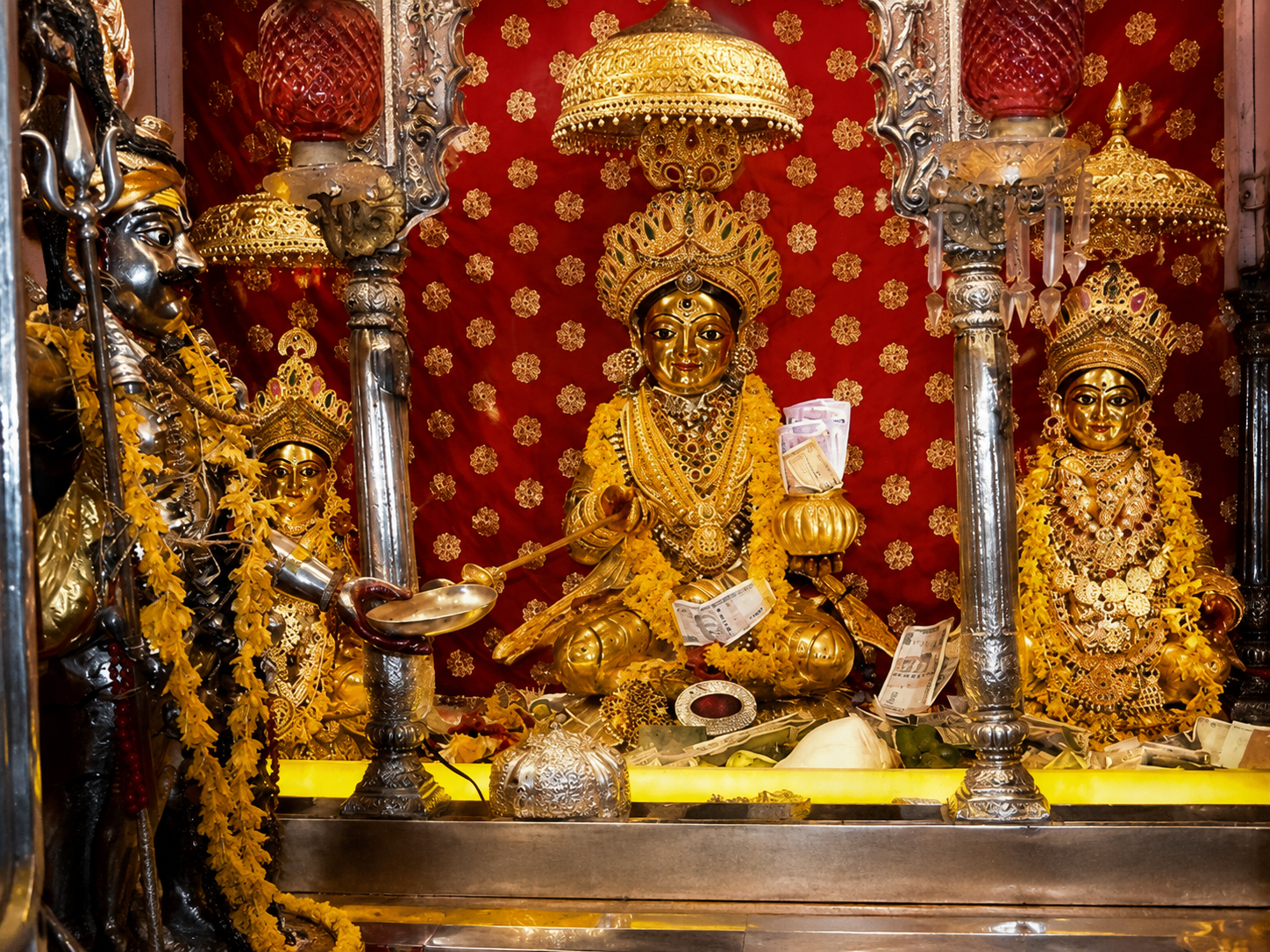
Annapurna Devi Mandir in Varanasi
Annapurna Devi Mandir
0.3 km / 5 min

Traditional stop paired naturally with Vishwanath darshan.

View Mandir
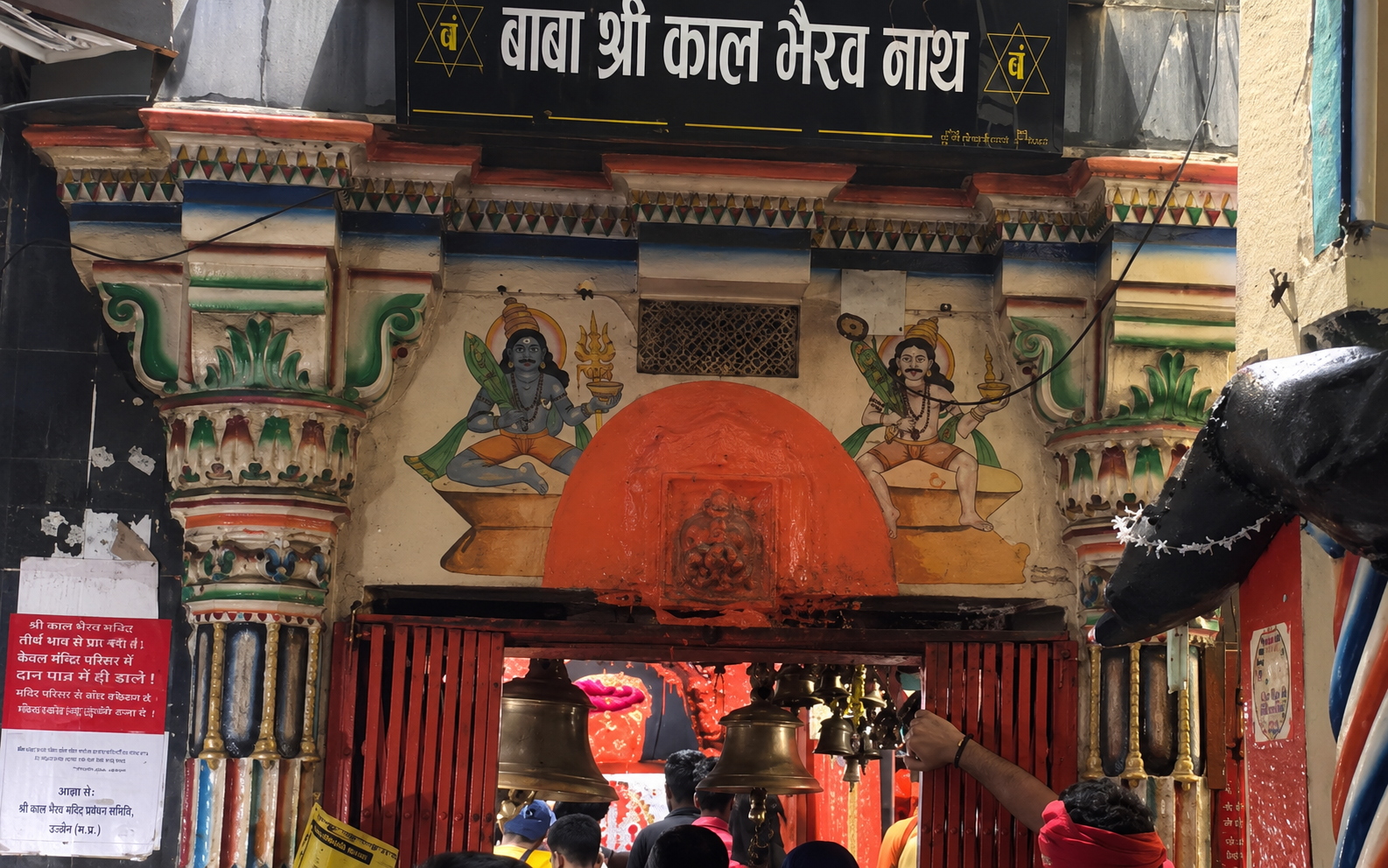
Kal Bhairav Mandir in Varanasi
Kal Bhairav Mandir
2.2 km / 12 min

Guardian deity stop for a fuller Kashi yatra and a long-standing part of the city’s sacred circuit.

View Mandir
Sankat Mochan Hanuman Ji Mandir in Varanasi
Sankat Mochan Hanuman Ji Mandir
5.5 km / 20 min

Popular Hanuman Ji mandir for extending the Varanasi spiritual circuit beyond Vishwanath darshan.

View Mandir

Offerings & Prasad

Traditional offerings at Kashi Vishwanath are simple, devotional and closely tied to Shiva Ji worship, with puja essentials and sacred rituals usually arranged through trusted local vendors or approved mandir channels.

Flowers, bel patra and simple Shiva Ji puja items remain the most familiar offerings for devotees visiting Kashi Vishwanath.

Flowers

Fresh flowers are among the most common devotional offerings for Lord Shiva Ji and are easily available through trusted local vendors near the mandir approach.

Bel Patra

Bel patra remains one of the most symbolically important offerings in Shiva Ji worship and is often part of simple, focused puja at Kashi Vishwanath.

Milk Abhishek

Milk-based abhishek offerings are widely associated with Shiva Ji worship. Devotees should follow current mandir rules and approved puja procedures before bringing items inside.

Rudrabhishek

Rudrabhishek is one of the most sought-after mandir rituals for devotees seeking a deeper spiritual offering experience at Kashi Vishwanath.

Before You Visit (Important Tips)

Short reminders that help avoid confusion and keep darshan smoother.

Avoid These Mistakes
  • Don't carry mobile inside mandir.
  • Don't come late for aarti slots.
  • Avoid peak hours if possible.
Helpful Tips for Smooth Darshan
  • Reach early morning for smooth darshan.
  • Keep offerings ready before entry.
  • Follow local queue instructions.

Before You Visit

A little planning before you leave for the mandir usually makes the darshan experience calmer, especially when the corridor is busy.

Arrival checklist

Prepare these basics before entering the mandir zone
  • Carry minimal essentials so security checks and deposit needs stay manageable.
  • Confirm the latest darshan or aarti timing before you leave for the mandir.
  • Arrive earlier than usual on Mondays, Shravan dates and major festival days.
  • Keep extra buffer time for queue movement, checkpoints and corridor walking.
  • Use comfortable footwear for the walking approach and city lanes.
  • Keep booking confirmation and ID easy to access if your ritual slot requires verification.
Planning note
Plan for the full arrival flow, not just mandir timings

Travel time, old-city lane movement, security checks and queue pauses can easily add more time than first-time visitors expect.

Dress Code & Allowed Items

Simple, respectful choices usually make the visit smoother than trying to manage extra items near a tightly monitored mandir entry.

Modest clothing, light items and simple offerings usually make entry, walking and security checks much easier.

Clothing

Dress modestly and comfortably

Mandir-appropriate clothing is the easiest choice for darshan lines, walking access and longer devotional visits.

  • Modest clothing is generally the safest option.
  • Choose easy, comfortable clothing for walking and waiting.

Restricted items

Check the current rules before you carry extras

Bag, phone, electronics and deposit rules can vary by crowd control setup, mandir guidance and security enforcement.

  • Confirm the latest rules for bags, phones, electronics and leather items.
  • Security and deposit procedures may change with the situation.

Offerings

Keep puja items simple and mandir-appropriate

Simple offerings are easier to manage and more likely to fit current entry expectations near the mandir complex.

  • Keep offerings modest, clean and appropriate for Shiva Ji worship.
  • Confirm local guidance if you plan to carry special ritual items.

Accommodation Near Mandir

Where you stay affects how easy an early darshan day feels, especially when Varanasi traffic and old-city movement become part of the plan.

Staying near the corridor or a practical transfer point usually makes early darshan planning much smoother than depending on long city transfers.

Best area to stay

Choose a base that supports your darshan timing

If mandir access is the priority, stay in an area that keeps the morning approach manageable instead of adding a long transfer before the queue.

Corridor or ghat zone

Useful for walkable mandir and river access

Staying near the corridor side or nearby ghat zone can make it easier to combine darshan, old-city movement and a ghat visit in one day.

Near railway station

Practical for shorter trips and easier transfers

This area can work better for visitors arriving by train, carrying luggage or prioritizing simpler onward travel over walkable old-city ambience.

Budget and comfort

Balance price, access and early-start convenience

Budget stays can work well if access is clear, while comfort stays are often worth considering when your visit depends on rest, early reporting or family travel.

Convenience note
Old-lane stays can be atmospheric but slower for arrival

Staying too deep inside narrow old-city lanes may feel immersive, but it can complicate luggage movement, auto drop-offs and very early mandir starts.

Official Info & Booking Help

Use official confirmation for ritual planning whenever your visit depends on a specific booking, reporting time or access rule.

Use official sources first whenever your visit depends on a puja slot, reporting window or paid ritual booking.

Where to confirm

Start with official sources

For puja access, timing changes and reporting instructions, official guidance should be your first reference point.

  • Mandir sourceCheck official mandir source
  • Booking accessConfirm from official booking portal
  • Special pujasUse official helpdesk guidance for ritual-specific support

Before you depend on a booking

Verify the process before you travel

Reporting windows, entry rules and ritual availability can shift, so final confirmation matters even after you plan the trip.

  • Ritual processConfirm the latest booking method from the official source
  • Reporting timeCheck the current reporting window before reaching the mandir
  • Third-party cautionAvoid relying only on unverified third-party booking claims
Trust reminder
Use verified guidance when the visit depends on a paid ritual

If your darshan day depends on a specific aarti or puja slot, re-check official instructions shortly before travel rather than depending only on older summaries or unofficial listings.

Frequently Asked Questions

The mandir opens at 2:30 AM. General darshan typically runs from 4:00 AM to 11:00 AM, resumes from 12:00 PM to 7:00 PM, and can reopen after the evening aarti before the mandir closes at 11:00 PM.

October to March is usually the most comfortable season for mandir visits in Varanasi. For a calmer experience, early morning darshan is often preferred, especially outside major festival dates.

Devotees should wear modest, mandir-appropriate clothing. Comfortable footwear helps before the final deposit point, and simple traditional or respectful attire is the safest choice for darshan and aarti visits.

Expect security checks, managed queue movement and restrictions on phones, bags or certain items in sensitive entry zones. Traveling light and reaching the corridor entry early generally makes the process easier.

Yes, major aartis such as Mangala Aarti are key attractions for devotees. Availability, access procedure and any booking requirement can vary, so it is best to confirm the current process before visiting.

Mobile phones and electronic items are usually restricted near the main mandir entry. Use locker/deposit facilities or confirm latest rules before visiting.

Locker or deposit facilities may be available near the mandir approach, but availability can change based on crowd and security arrangements.

General darshan may take 45–90 minutes on normal days, but Mondays, Shravan, weekends and festival days can take longer.

Some aarti and puja services may require advance booking through official mandir channels. Always verify current booking rules before planning.
Watch Live Darshan