
First-Time Visitor
Recommended for most visitors
Simple Darshan Planning
Ideal for first visit with minimal confusion
Best time: 6:00 AM–6:45 AM
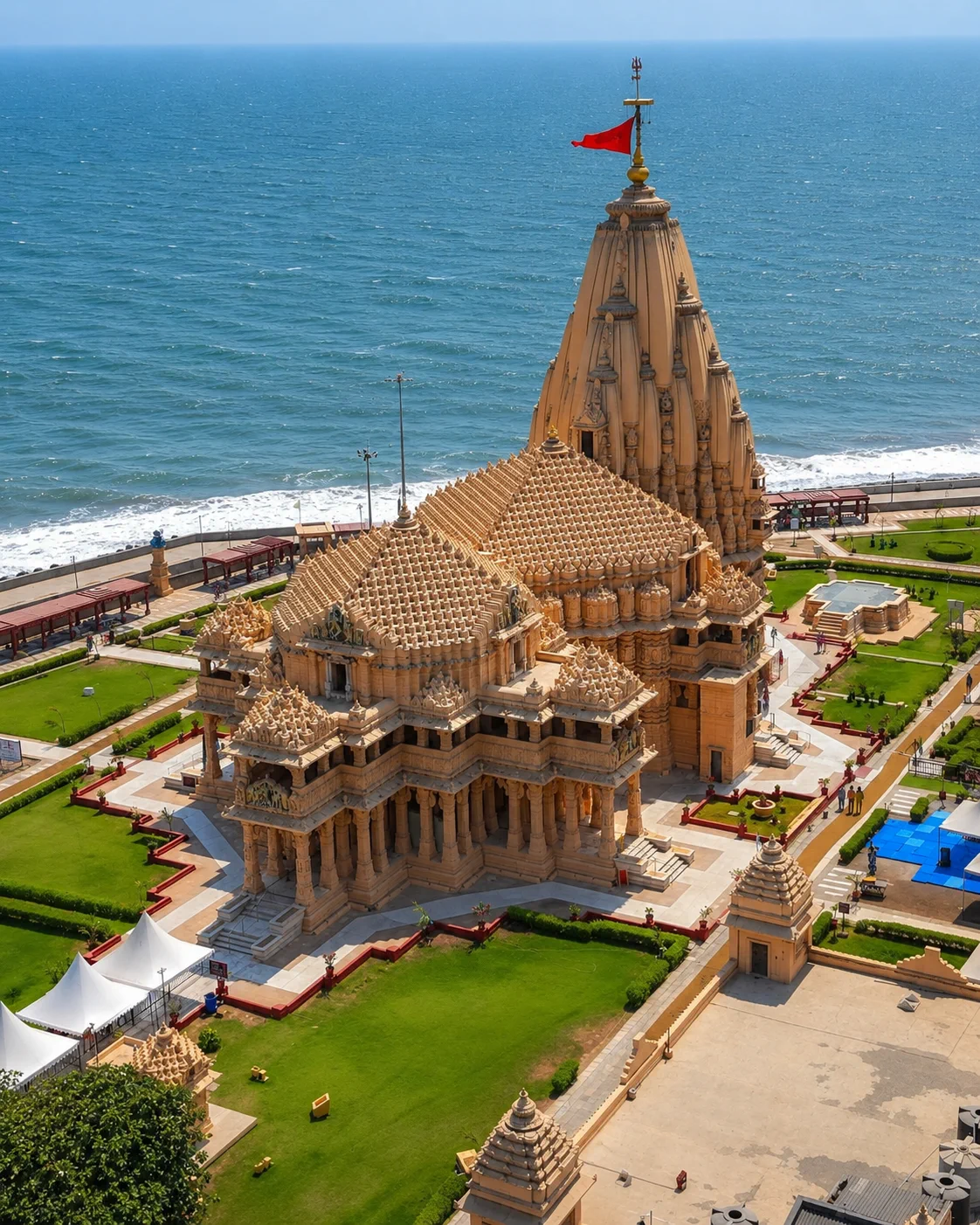
Prabhas Patan near Veraval, Gujarat
Somnath is a major Lord Shiva pilgrimage site whose spiritual identity is shaped by its sea-facing setting and repeated destruction and reconstruction.
Somnath is known for its spiritual importance, sea-side setting, long history of destruction and reconstruction and the enduring grace of Lord Shiva Ji as Somnath, Lord of the Moon.
Official Trust timings are paired with transparent Divine Mandir planning estimates.
Plan with official Trust timings and transparent day-based crowd guidance.
15-20 min from Veraval Junction • Diu Airport (DIU) — approximately 63 km
Astronomical times are location-based estimates for Somnath and vary by date.
Choose your darshan path — plan before arrival to avoid long queues.
First-Time Visitor
Recommended for most visitors
Ideal for first visit with minimal confusion
Best time: 6:00 AM–6:45 AM
Aarti-Focused
Plan for the main evening worship window
Best fit: Devotees ready for early arrival
Ritual-Focused
Perform focused Shiva Ji ritual with priest
Best fit: Devotees planning special puja
Understanding the spiritual importance of Somnath
Somnath is a major Lord Shiva pilgrimage site whose spiritual identity is shaped by its sea-facing setting and repeated destruction and reconstruction.
The sacred tradition connects Chandra’s penance at Prabhas Kshetra with Lord Shiva’s manifestation as a Jyotirlinga and the establishment of the Somnath shrine.
According to legend
Daksha PrajapatiK1 had 27 daughters, traditionally representing the 27 Nakshatras. Chandra married all 27 and promised to treat them equally, but he spent most of his time with Rohini while the other 26 wives were neglected. Daksha then cursed Chandra, causing him to lose his brightness.
Chandra worshipped Lord Shiva at Prabhas KshetraAC6. Lord Shiva could not completely revoke the curse, but softened it so the Moon wanes for 15 days and waxes for 15 days. Krishna Paksha and Shukla Paksha together complete one lunar month. According to the tradition, Lord Shiva appeared as a Jyotirlinga, restored Chandra’s brightness and Chandra established the Somnath shrine after receiving the blessing.
Origin and divine story
According to the traditional account, Chandra’s penance led to Lord Shiva’s Jyotirlinga manifestation and the restoration of Chandra’s brightness at Prabhas Kshetra. Chandra then established and worshipped the shrine in gratitude.
The supplied tradition says Chandra built the shrine in gold, Ravana rebuilt it in silver, Lord Krishna rebuilt it using wood, and King Bhimdev I later rebuilt it in stone.
“Krishna” means dark and “Paksha” means fortnight. It begins after Purnima and ends on Amavasya. The supplied source associates this phase with introspection, fasting and spiritual cleansing and lists Maha Shivratri and Pitru Paksha among its key occasions.
“Shukla” means bright and “Paksha” means fortnight. It begins after Amavasya and ends on Purnima. The supplied source associates this phase with positive energy, growth and auspicious beginnings and lists new ventures, rituals, Navaratri, Ganesh Chaturthi and Rama Navami.
Somnath stands on one of the most revered sacred sites in India. The present shrine reflects the rebuilding of an ancient Jyotirlinga tradition at Prabhas Patan after repeated destruction and renewal.
The supplied history traces Somnath from early Someshvara references through invasion, repeated rebuilding and the post-independence reconstruction of the present Mandir.
Sacred timeline
Early records in the supplied source mention Someshvara. The first major Mandir is believed to have been built or renovated before 997 CE by MularajaK10, founder of the Chaulukya or Solanki dynastyD8. The history also associates King Bhima IK11 with the Mandir’s rebuilding tradition.
In 1026 CE, Mahmud of GhazniK12 attacked Somnath during the reign of King Bhima I. The supplied account says Al-Biruni recorded Somnath as a renowned sea-side pilgrimage Mandir and referred to the attack. Devotees and rulers rebuilt the shrine repeatedly, giving Somnath the identity “The Shrine Eternal” as a symbol of faith, strength, resistance and spiritual rebirth.
The supplied history also records Devi Ahilyabai Holkar’sK3 construction of a parallel sanctuary, which helped sustain Somnath’s sacred continuity.
After India’s independence, Sardar Vallabhbhai PatelP1 initiated reconstruction of the present Somnath Mandir. Dr. Rajendra PrasadP2 inaugurated it in 1951.
Somnath Swabhiman Parv was organised from 8 to 11 January 2026, marking one thousand years since the January 1026 attack. The supplied source presents it as a national commemoration of civilisational resilience and faith.
The supplied record connects early Somnath history with Mularaja and the Chaulukya / Solanki dynasty.
Mahmud of Ghazni’s attack occurred during King Bhima I’s reign and was recorded in the supplied historical account.
Repeated renewal represents faith, strength, resistance and spiritual rebirth.
Devi Ahilyabai Holkar’s sanctuary preserved the continuing devotional tradition.
Reconstruction followed independence and the present Mandir was inaugurated in 1951.
A source-supplied national commemoration of civilisational resilience and faith.
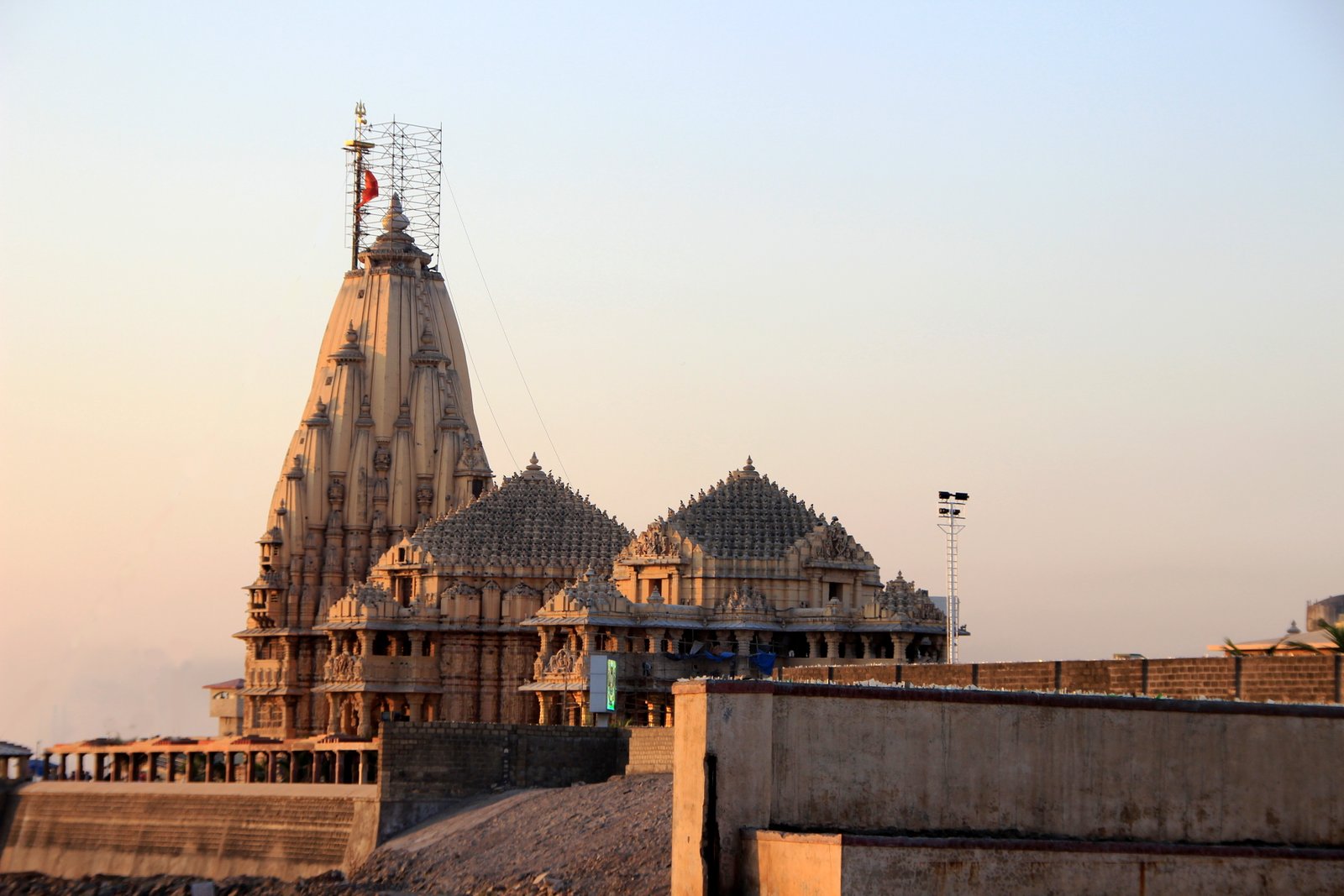
The present sea-facing Mandir follows the supplied Chalukya-style and Kailash Mahameru Prasad designAR1 tradition, associated with c. 6th–12th centuries CE, with an east-facing sacred axis, carved stone and a grand shikhara.
Somnath’s supplied architectural account describes a Kailash Mahameru Prasad composition that combines northern shikharas with southern Dravidian multi-tiered vimanas.
Sacred design
The supplied architectural explanation associates Somnath’s Chalukya-style, Kailash Mahameru Prasad design with the Malaprabha River basin of Karnataka. It describes a fusion of northern shikharas and southern Dravidian multi-tiered vimanas, expressed through stone carvings, carved pillars, the mandapa and the traditional Hindu Mandir layout.
The sacred plan includes the Garbhagriha, Sabhamandap and Nrityamandap. The Mandir faces east, the Arabian Sea lies to its west and the main shikhara rises to 155 feet. The structure is crowned with a 10-tonne Kalash and includes a 27-foot Dhwajdand, 1,666 gold-plated Kalash and 14,200 Dhwajas.
The sea-side Baan Stambh is presented in the supplied source as an inscription-based traditional feature. Its tradition describes the southern direction from Somnath as extending without intervening land to Antarctica; this is retained as the supplied tradition rather than an independently verified geographic claim.
Northern shikharas and southern Dravidian multi-tiered vimanas are combined in the supplied design account.
Garbhagriha, Sabhamandap and Nrityamandap shape the sacred plan.
The shikhara is crowned with a 10-tonne Kalash.
The supplied fact file presents it as part of the Mandir’s enduring identity.
Gold-plated Kalash and Dhwajas contribute to the grandeur of the complex.
An inscription-based traditional feature beside the sea.
The supplied fact file highlights initiatives spanning cleanliness, recycling, water management, reforestation and the community use of purified Abhishek water.
Somnath was declared a Swachh Iconic Place in 2018.
Mandir flowers are converted into vermicompost and used to nourish around 1,700 Bilva trees.
Plastic waste is converted into around 4,700 paver blocks each month.
Rainwater harvesting and treatment systems support the treatment of nearly 30 lakh litres of sewage water each month.
Its 7,200 trees have an estimated carbon dioxide absorption of 93,000 kg per year.
Purified Abhishek water is bottled as Somgangajal and had benefited more than 1.13 lakh families as of December 2024.
Somnath’s spiritual importance brings together its first-Jyotirlinga identity, Chandra tradition, sacred river confluence, Arabian Sea setting and continuing symbolism of revival.
Special features
Somnath is revered as the first Jyotirlinga and remains a major Lord Shiva pilgrimage site. The nearby Triveni SangamR1 is the sacred confluence of the KapilaR14, HiranR15 and SaraswatiR16 rivers. Somnath’s repeated destruction and reconstruction represents faith, strength, revival and spiritual rebirth.
The Arabian Sea setting, Chandra’s connection and the waxing-and-waning Moon tradition shape the pilgrimage experience. In the supplied account, Prabhas means “lustre” and Someshvara means “Lord of the Moon.”
Traditionally regarded as the first among the 12 Jyotirlingas.
Sacred confluence of the Kapila, Hiran and Saraswati rivers.
Somnath preserves the sacred memory of Chandra’s penance.
A source-supplied visitor feature; no show timing is stated.
Use the approved drop point and move toward the main mandir approach.
Phones, bags and restricted items are checked before entry.
Enter the assigned lane and keep darshan items ready in hand.
The last approach is controlled in batches near the shrine.
Darshan is brief, so move calmly and follow mandir volunteers.
Continue through the managed exit toward the precinct road or nearby pilgrimage stops.
A simple 3-step journey to Somnath Mandir, Prabhas Patan, Veraval
Choose the most convenient way to reach Prabhas Patan and nearby Veraval in Gujarat.
Primary nearby airport: Diu Airport (DIU) — approximately 63 km
Diu Airport (DIU) is a nearby airport option for reaching Somnath. Travellers can continue to Somnath by road.Alternative nearby airport: Keshod Airport (IXK) — approximately 65 km
Keshod Airport (IXK) is another nearby mainland airport option for reaching Somnath. Check current flight availability and schedules with the airline before booking.Somnath railway station / Veraval Junction
Official trust guidance lists Somnath station at about 0.5 km and Veraval at about 7 kmRegional road links across Gujarat
Official trust guidance notes road connections from Ahmedabad and Diu toward SomnathContinue by road from the airport or station to the Mandir area.
Continue to Somnath by road
Diu Airport code: DIUAbout 0.5 km from Somnath
Distance listed by Shree Somnath TrustAbout 7 km from Somnath
Distance listed by Shree Somnath TrustUse the official Main Gate facilities before entering the Mandir.
Wheelchairs and a golf cart are available
For physically challenged and senior visitorsElectronic gadgets are prohibited; use the free cloak-room lockers before entry
Before entryA lift is available inside the Mandir premises
Official visitor facilityElectronic and electric gadgets are not allowed inside; free cloakroom storage is available.
Restricted items include mobile phones, cameras, smartwatches, laptops, tablets, calculators and other electronic or electric gadgets.
Photography is prohibited inside.
Four source-supplied occasions when devotees should allow additional time for a Somnath visit.
A major high-crowd occasion at Somnath Mandir.
A high-crowd devotional period.
Listed in the supplied material as a high-crowd occasion.
The supplied fact file describes it as marking one thousand years since the January 1026 attack and as a commemoration of civilisational resilience and faith.
The official Trust portal supports Pooja Vidhi, donation and special-pooja services without requiring this page to reproduce a booking form.
Official service
Choose supported pooja offerings or make a donation through the Trust's official portal.
Official pooja service
Rudrabhishek is listed on the Trust's Pooja Vidhi portal.
Official seasonal service
The Trust publishes a dedicated 2026 Shravan Bilva Pooja service.
Official special service
The Trust lists this in-person Shravan 2026 yagna from 13 August through 11 September 2026.
The supplied source recommends the cooler months while noting that devotees visit Somnath throughout the year.
The supplied source identifies November to February as the best time to visit.
Seasonal planning can help, but the supplied source records pilgrimage visits in every season.
Plan extra time on Mondays, during Shravan, Maha Shivratri, Kartik Purnima and holiday weekends.
Important pilgrimage stops to visit around Somnath Jyotirlinga Mandir
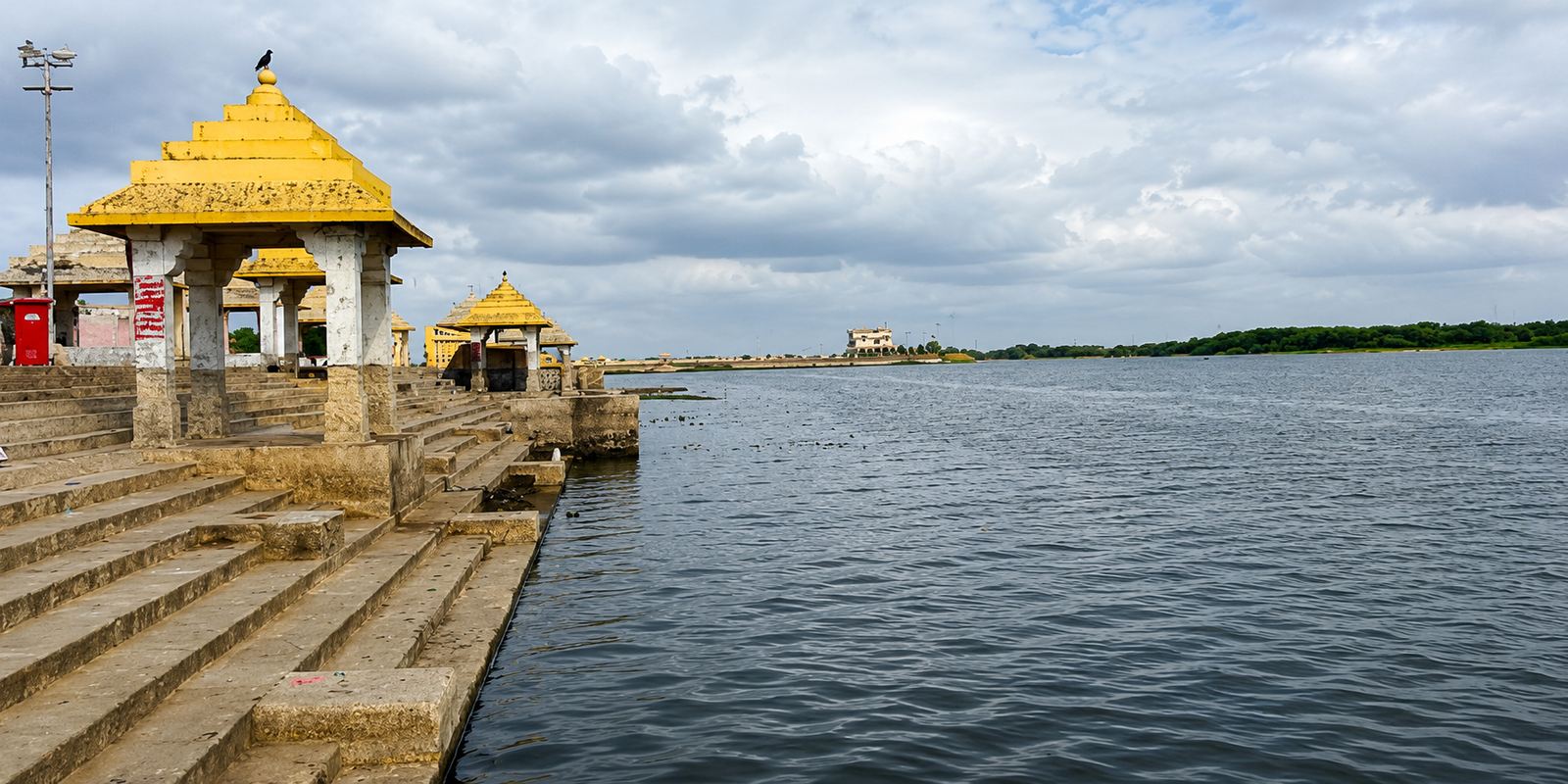
Sacred confluence of the Kapila, Hiran and Saraswati rivers. Devotees take a holy bath here before visiting Somnath Mandir.
Open in Google Maps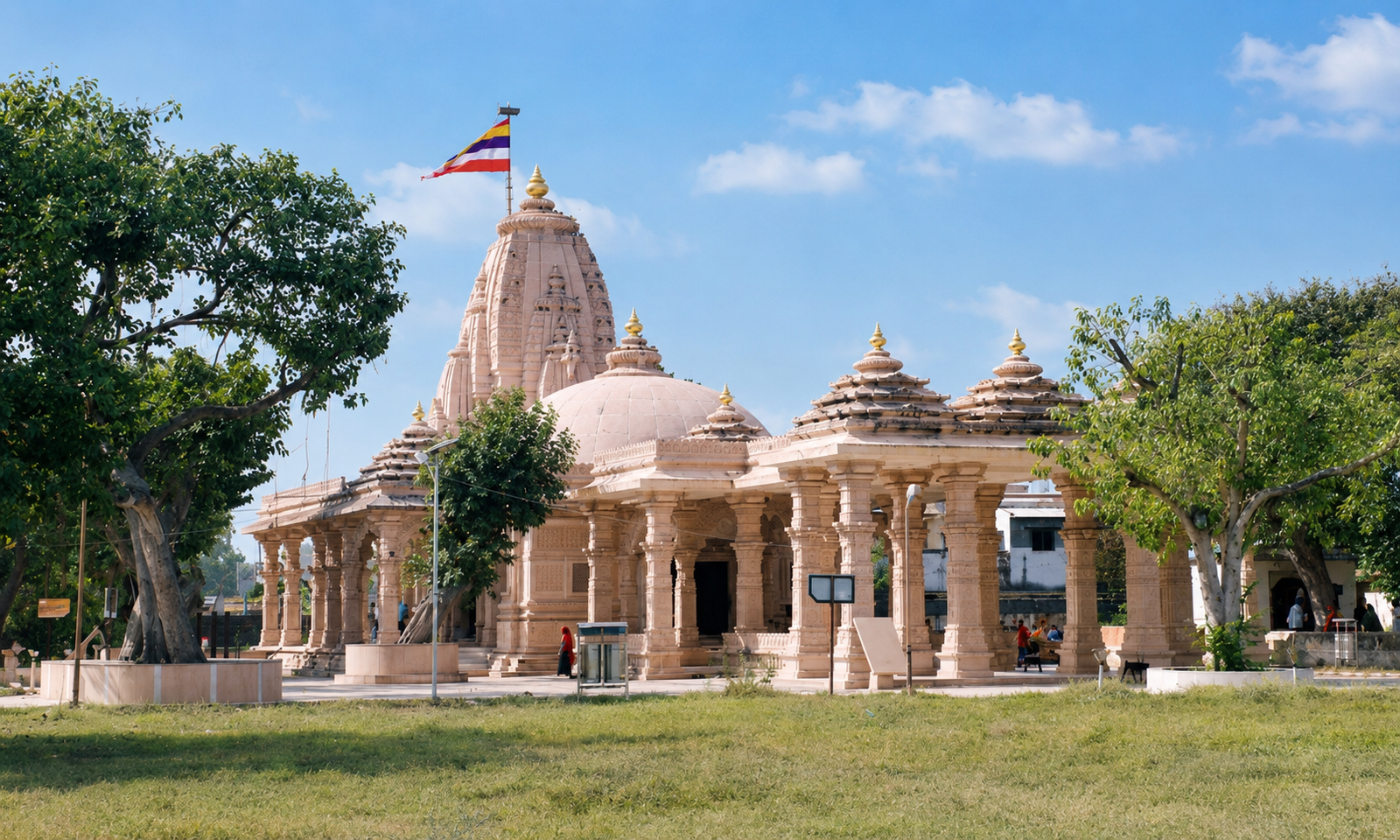
Traditionally associated with Lord Krishna being struck by an arrow from hunter Jara before leaving his earthly form.
Open in Google Maps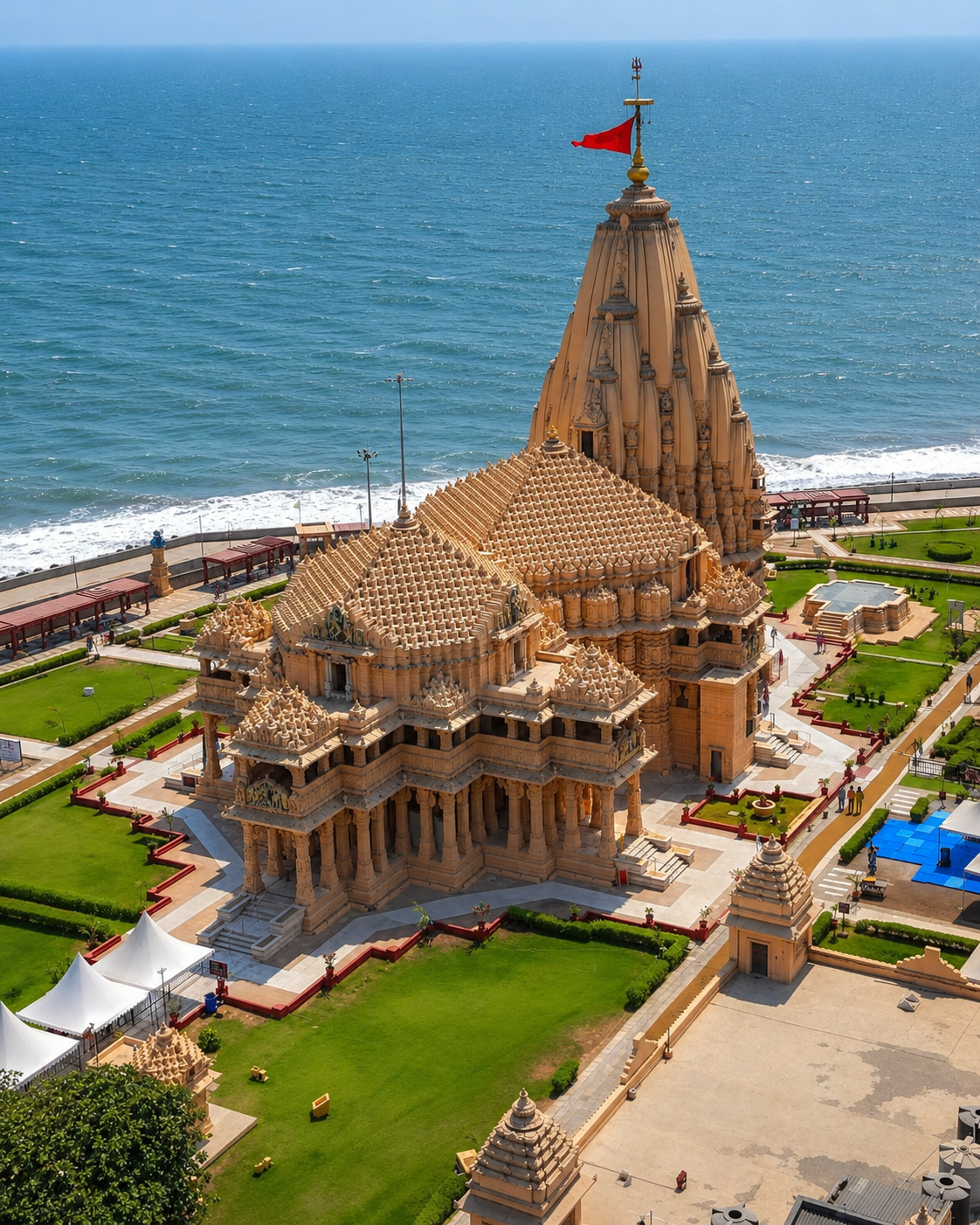
Sacred site near the Hiran River, traditionally associated with Lord Krishna’s final departure and moksha.
Open in Google Maps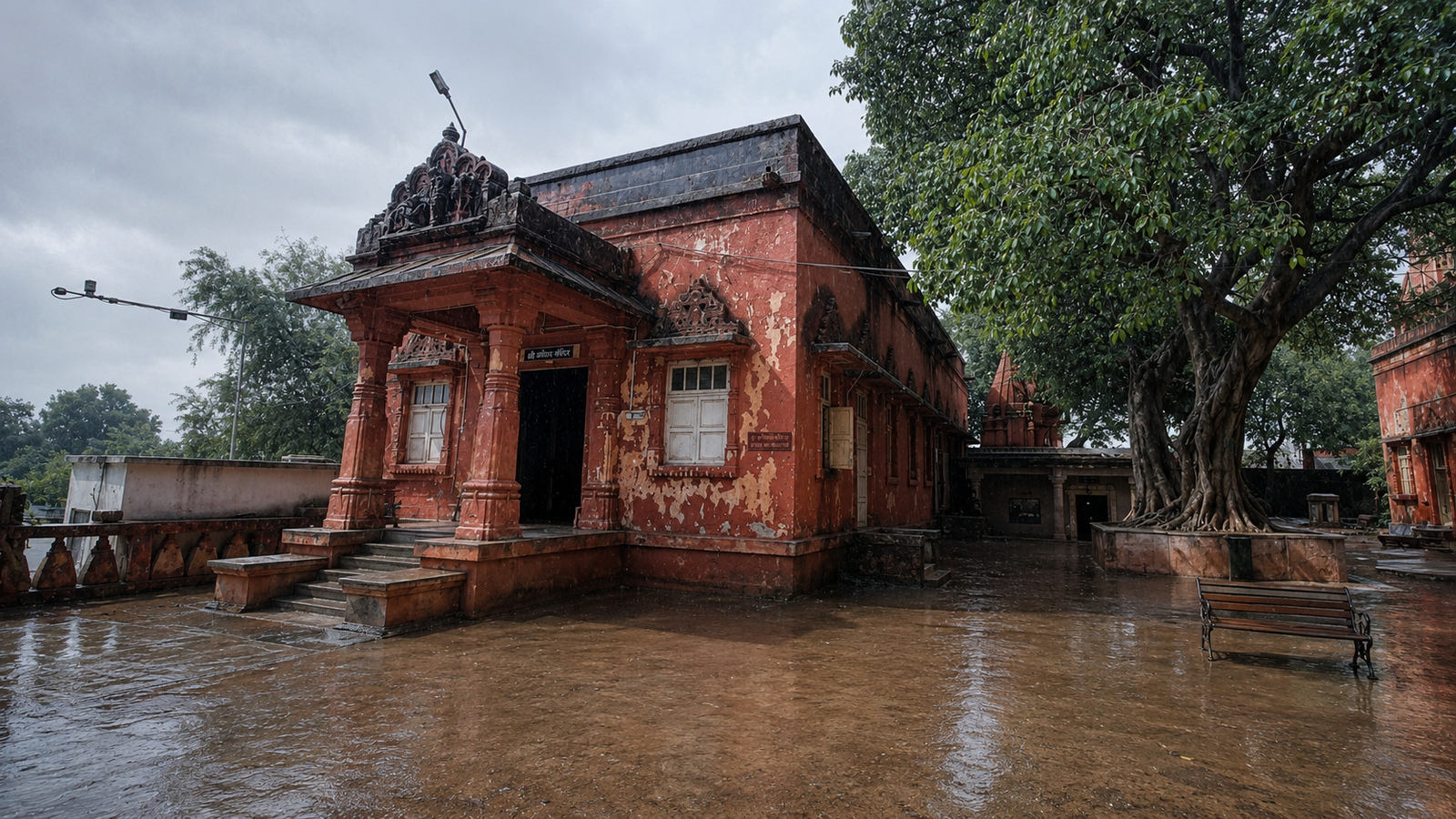
Dedicated to Lord Shri Krishna, the present structure was built in 1970 by the Birla Group. Its 18 marble pillars display Bhagavad Gita inscriptions and the site is associated with Lord Krishna’s Neejdham journey.
Located on the banks of the Hiran River, the supplied source describes it as a Badrinath Lakshminarayan Mandir replica with a South Indian, yellow-tiered gopuram. Supplied visiting hours: 6:00 AM–1:00 PM and 3:30 PM–8:30 PM.
Open in Google Maps
A Surya Mandir near Triveni Ghat, noted in the supplied source for historic carvings and morning sunlight. Surya Kund’s healing quality is presented as a traditional belief, not a medical claim.
Open in Google Maps
An approximately 300-year-old pilgrimage site traditionally associated with Lord Parashurama’s penance and relief from Kshatriyahatya. Its black axe-bearing idol is joined by shrines of Lord Ganesha, Lord Hanuman and Renuka. Supplied hours: 6:00 AM–7:00 PM.
Open in Google Maps
The Lalghati cave contains shrines associated with Goddess Hinglaj, the Pandavas, Lord Shiva, Lord Rama, Devi Sita and Lord Hanuman. Its entrance is narrow, steep and low and the confined interior lacks ventilation. Visitors with claustrophobia or knee, back or mobility difficulties should take care. Supplied hours: 6:00 AM–6:00 PM; no entry fee.
Open in Google MapsA source-supplied local taxi itinerary covering the Triveni bath, Somnath darshan and the surrounding sacred circuit.
| Time | Place | Taxi
Travel from Previous Stop |
Visit Time | What to Do |
|---|---|---|---|---|
| 5:30 AM | Hotel pickup | — | — | Keep dry clothes, a towel and small puja items with you; leave extra luggage in the taxi. |
| 5:40–6:25 AM | Triveni Sangam / Triveni Ghat | 5–15 min | 40–45 min | Bath, sankalp and tarpan or puja if planned. Triveni is the confluence of the Hiran, Kapila and Saraswati rivers; the supplied visiting hours are dawn to dusk. |
| 6:25–6:50 AM | Change clothes | 0–10 min | 20–25 min | Use a changing facility nearby, or return briefly to the hotel if it is very close. Add 15–20 minutes when changing at the hotel. |
| 6:55–8:15 AM | Somnath Mandir | 5–10 min | 75–90 min | Attend the 7:00 AM aarti if the queue permits, then take darshan. Mobile phones, cameras, smartwatches and other gadgets are prohibited inside; use the cloakroom or lockers. |
| 8:15–8:45 AM | Breakfast / tea break | Local | 25–30 min | Eat after Somnath darshan and before beginning the outer circuit. |
| 9:00–9:30 AM | Bhalka Tirth | 15–20 min | 25–30 min | Take darshan at the place traditionally associated with Lord Krishna being struck by Jara’s arrow. The source schedule describes it as about 5 km from Somnath on the Prabhas–Veraval highway. |
| 9:45–10:10 AM | Dehotsarg Teerth / Golok Dham | 12–15 min | 25 min | Take darshan at the sacred place associated with Lord Krishna’s Neejdham journey on the Hiran River. |
| 10:10–10:35 AM | Gita Mandir | Same complex / 2–5 min walk | 20–25 min | Visit the Mandir with 18 pillars inscribed with the 18 chapters of the Bhagavad Gita. |
| 10:35–10:55 AM | Shree Laxmi Narayan Mandir | 2–5 min walk or drive | 15–20 min | Take darshan of Lord Lakshminarayan. Supplied visiting hours are 6:00 AM–1:00 PM and 3:30 PM–8:30 PM, making the morning suitable for this schedule. |
| 11:05–11:20 AM | Suraj Mandir / Sun Temple | 5–10 min | 10–15 min | Take a short darshan at the Sun Mandir near Triveni. |
| 11:25–11:45 AM | Parshuram Temple | 5 min | 15–20 min | Take a short darshan near Triveni Ghat on the way to the Dehotsarg area. |
| 11:50
AM– |
Panch Pandav Gufa / Hinglaj Mataji Gufa | 5 min | 20–25 min | Visit last because it is near Triveni Ghat. The entrance is narrow and low, so seniors and visitors with knee or back difficulties may prefer darshan from outside. |
| 12:30–12:45 PM | Return to hotel / Somnath area | 10–20 min | — | The local tour ends. |
Taxi travel: —
Visit time: —
What to do: Keep dry clothes, a towel and small puja items with you; leave extra luggage in the taxi.
Taxi travel: 5–15 min
Visit time: 40–45 min
What to do: Bath, sankalp and tarpan or puja if planned. Triveni is the confluence of the Hiran, Kapila and Saraswati rivers; the supplied visiting hours are dawn to dusk.
Taxi travel: 0–10 min
Visit time: 20–25 min
What to do: Use a changing facility nearby, or return briefly to the hotel if it is very close. Add 15–20 minutes when changing at the hotel.
Taxi travel: 5–10 min
Visit time: 75–90 min
What to do: Attend the 7:00 AM aarti if the queue permits, then take darshan. Mobile phones, cameras, smartwatches and other gadgets are prohibited inside; use the cloakroom or lockers.
Taxi travel: Local
Visit time: 25–30 min
What to do: Eat after Somnath darshan and before beginning the outer circuit.
Taxi travel: 15–20 min
Visit time: 25–30 min
What to do: Take darshan at the place traditionally associated with Lord Krishna being struck by Jara’s arrow. The source schedule describes it as about 5 km from Somnath on the Prabhas–Veraval highway.
Taxi travel: 12–15 min
Visit time: 25 min
What to do: Take darshan at the sacred place associated with Lord Krishna’s Neejdham journey on the Hiran River.
Taxi travel: Same complex / 2–5 min walk
Visit time: 20–25 min
What to do: Visit the Mandir with 18 pillars inscribed with the 18 chapters of the Bhagavad Gita.
Taxi travel: 2–5 min walk or drive
Visit time: 15–20 min
What to do: Take darshan of Lord Lakshminarayan. Supplied visiting hours are 6:00 AM–1:00 PM and 3:30 PM–8:30 PM, making the morning suitable for this schedule.
Taxi travel: 5–10 min
Visit time: 10–15 min
What to do: Take a short darshan at the Sun Mandir near Triveni.
Taxi travel: 5 min
Visit time: 15–20 min
What to do: Take a short darshan near Triveni Ghat on the way to the Dehotsarg area.
Taxi travel: 5 min
Visit time: 20–25 min
What to do: Visit last because it is near Triveni Ghat. The entrance is narrow and low, so seniors and visitors with knee or back difficulties may prefer darshan from outside.
Taxi travel: 10–20 min
Visit time: —
What to do: The local tour ends.
Taxi planning
Plan an approximately eight-hour local taxi package with waiting at multiple stops. The supplied guidance recommends four principal parking or waiting clusters: the Triveni / Sangam area, Somnath Mandir parking, Bhalka Tirth and the Dehotsarg–Gita–Laxmi Narayan cluster.
Seniors may keep the taxi moving between close stops instead of walking between Suraj Mandir, Parshuram Temple and Panch Pandav Gufa.
Practical guidance
Carry dry clothes after the Triveni bath and avoid carrying electronics into Somnath Mandir. Allow extra time on Mondays, during Shravan, Maha Shivratri, Kartik Purnima and holiday weekends.
Traditional offerings at Somnath are simple, devotional and closely tied to Shiva Ji worship, with puja essentials and sacred rituals usually arranged through trusted local vendors or approved mandir channels.
Flowers, bel patra and simple Shiva Ji puja items remain the most familiar offerings for devotees visiting Somnath.
Fresh flowers are among the most common devotional offerings for Lord Shiva Ji and are easily available through trusted local vendors near the mandir approach.
Bel patra remains one of the most symbolically important offerings in Shiva Ji worship and is often part of simple, focused puja at Somnath.
Milk-based abhishek offerings are widely associated with Shiva Ji worship. Devotees should follow current mandir rules and approved puja procedures before bringing items inside.
Rudrabhishek is one of the most sought-after mandir rituals for devotees seeking a deeper spiritual offering experience at Somnath.
Source-backed reminders for the Triveni bath, Mandir entry, high-crowd periods and mobility-sensitive circuit stops.
Plan the bath, clothing change, Mandir entry restrictions and local circuit movement together.
Source-backed checklist
The supplied itinerary allows time for changing clothes, Mandir entry and taxi movement between closely grouped stops.
Simple, respectful choices usually make the visit smoother than trying to manage extra items near a tightly monitored mandir entry.
Modest clothing, light items and simple offerings usually make entry, walking and security checks much easier.
Clothing
Mandir-appropriate clothing is the easiest choice for darshan lines, walking access and longer devotional visits.
Restricted items
Electronic and electric gadgets are prohibited inside; free cloakroom storage is available.
Offerings
Simple offerings are easier to manage and more likely to fit current entry expectations near the mandir complex.
Where you stay affects how easy an early darshan day feels, especially when Prabhas Patan traffic and local transfers become part of the plan.
Staying near the mandir precinct or a practical transfer point usually makes early darshan planning much smoother than depending on long city transfers.
Best area to stay
If mandir access is the priority, stay in an area that keeps the morning approach manageable instead of adding a long transfer before the queue.
Mandir precinct or shoreline zone
Staying near the mandir side or nearby shoreline zone can make it easier to combine darshan, local movement and a seafront visit in one day.
Near railway station
This area can work better for visitors arriving by train, carrying luggage or prioritizing simpler onward travel over walkable town-center ambience.
Budget and comfort
Budget stays can work well if access is clear, while comfort stays are often worth considering when your visit depends on rest, early reporting or family travel.
Staying too deep inside older town lanes may feel immersive, but it can complicate luggage movement, auto drop-offs and very early mandir starts.
Use Shree Somnath Trust links for pooja, donation, accommodation and service information.
Use official sources first whenever your visit depends on a puja slot, reporting window or paid ritual booking.
Official channels
For puja access, timing changes and reporting instructions, official guidance should be your first reference point.
Booking safety
The Trust warns devotees to use its official website and offices for room booking, pooja and donation transactions.
Somnath.org provides Pooja Vidhi, donation, special-pooja and official accommodation services.
Compact definitions for the source codes used beside their first relevant public occurrence.