
Bhasma Aarti
4:00 AM–6:00 AM
Daily official Bhasma Aarti schedule.
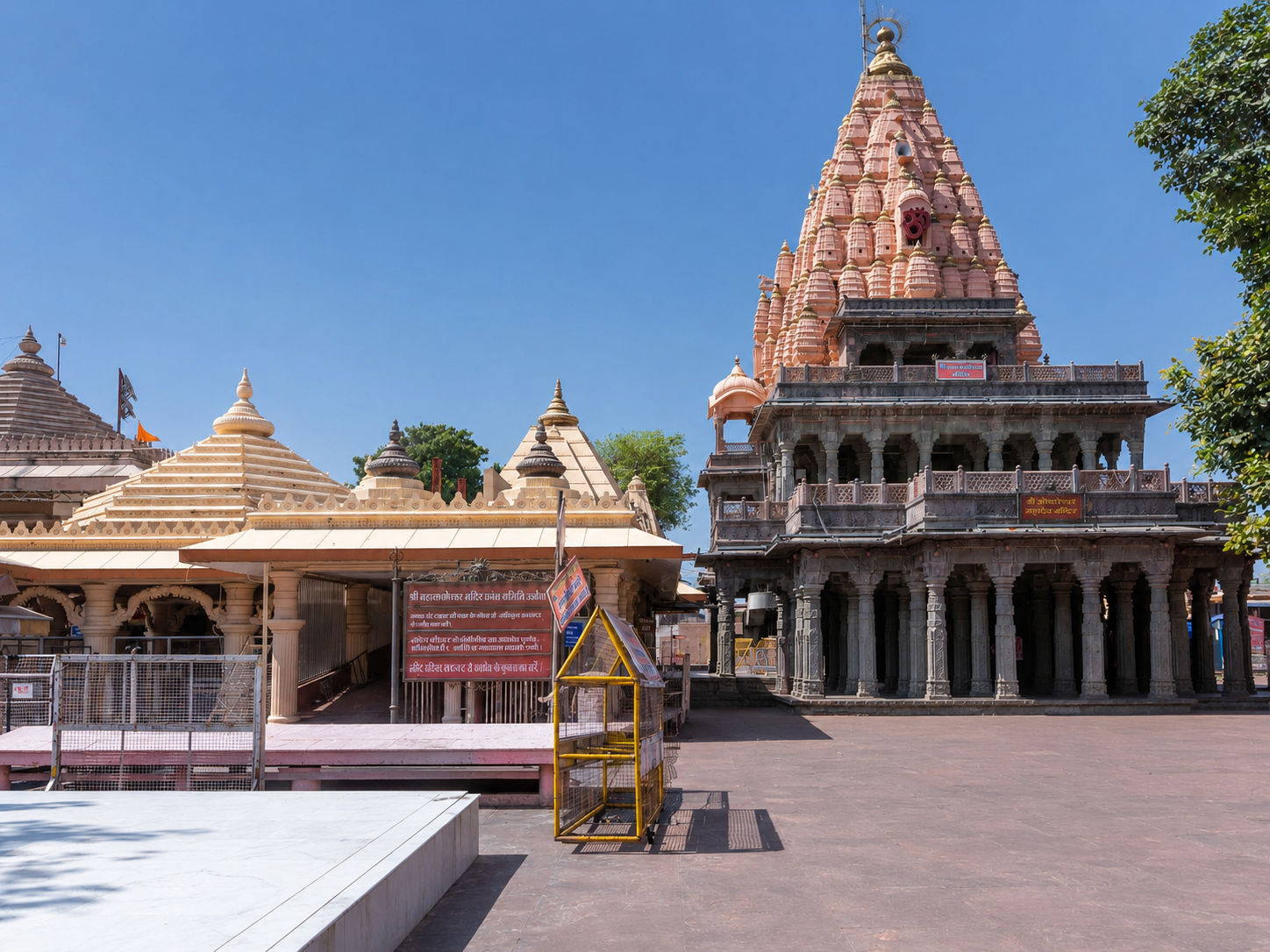
Ujjain, Madhya Pradesh • ancient Avantika • Shipra River
Mahakaleshwar is a south-facing Swayambhu Jyotirlinga in ancient Ujjain, revered through the Bhasma Aarti tradition and its spiritual connection with time, death and liberation.
Crowd and best-window guidance are Divine Mandir planning estimates rather than official Mandir slots.
Travel time varies by your arrival point in Ujjain and the Indore-Ujjain transfer route.
The third Jyotirlinga in Ujjain, where Mahakala is revered in a south-facing Swayambhu form beside the sacred Shipra.
Mahakaleshwar Jyotirlinga is revered as a Swayambhu, Dakshinamukhi form of Lord Shiva. Its Bhasma Aarti identity and association with time and death give the shrine a distinctive place among the twelve Jyotirlingas.
Ujjain is both a sacred pilgrimage city and an enduring centre of cultural learning, ritual time and astronomy. Mahakaleshwar stands at the heart of this living landscape beside the Shipra River.
Temple and regional tradition connect King Chandrasena, Shrikhar, priest Vridhi and the devotees of ancient Ujjain with Shiva’s manifestation as Mahakala.
According to sacred tradition, Mahakala arose from the earth, defeated Dushan and remained in Ujjain as the Swayambhu Mahakaleshwar Jyotirlinga at the devotees’ request.
Sacred legend
Ancient Ujjain was known as Avantika. Sacred tradition remembers King ChandrasenaK19 as a devoted worshipper of Lord Shiva, whose worship inspired the young devotee Shrikhar.
Enemy rulers and the demon DushanDM1 are said to have troubled Ujjain. Shrikhar, priest Vridhi and other devotees prayed to Shiva for protection.
Lord Shiva then manifested from the earth as Mahakala, defeated Dushan and protected the city. At the request of Shrikhar, Vridhi and the devotees, Shiva remained as the Swayambhu Mahakaleshwar Jyotirlinga. The south-facing form represents Mahakala’s authority over time and death.
Tradition describes Mahakala defeating Dushan and protecting ancient Ujjain.
The king’s Shiva worship is said to have inspired Shrikhar and the city’s devotees.
Mahakaleshwar is revered as a Jyotirlinga manifested from the earth by Shiva himself.
The Dakshinamukhi form expresses Mahakala’s authority over time, mortality and fear.
Ancient textual memory, attributed medieval accounts and the Maratha revival together show the continuity and resilience of Mahakaleshwar worship in Ujjain.
The official Temple Committee history records the Iltutmish attack, the Scindia-period revival and Ramachandra Baba Shenvi’s role in rebuilding the sacred complex.
Sacred timeline
Mahakaleshwar has ancient roots in Ujjain and appears in Puranic and Sanskrit literary memory. The supplied source connects the city’s intellectual life with BhartrhariSA1 and KalidasaSA6, while recognising these as literary and traditional associations.
The official history account records an attack by Shams ud-Din IltutmishK13 in 1235. The supplied source also places Jalaluddin KhaljiK14 and Alauddin KhaljiK15 in the wider Khalji-period record; these claims remain expressly attributed rather than strengthened.
The Maratha-periodD9 revival is associated with Ranoji ShindeK16. The Committee describes Ramachandra Baba ShenviK17, an official under Scindia administration, as developing the present structure around 150 years ago with remains from earlier structures. Together these layers express continuity, resilience and continuing Scindia patronage.
Literature and devotional tradition preserve Ujjain’s longstanding sacred importance.
Reconstruction and later development renewed the shrine while preserving remains from earlier structures.
The Temple Committee identifies Bhoomija, Chalukya and Maratha as the core architectural blend of this multi-storey sacred complex.
The mandir is known for its massive shikhara, carved pillars and mandapas, an underground Garbhagriha, sacred kunds, stone corridors and a three-level sacred arrangement.
Sacred design
The stone complex is multi-storey, with Mahakaleshwar in the lower underground Garbhagriha, Omkareshwar on the middle level and Nagchandreshwar above. A shikhara, carved pillars, mandapas, sacred kunds and corridors organise the devotee’s movement through the complex.
Nandi faces the Jyotirlinga within the ritual axis. The official core blend is Maratha architectureAR3, Bhoomija styleAR4 and Chalukya design. The supplied source additionally notes Rajput influenceAR5 and Medieval Hindu influenceAR6 as secondary influences, not equal official classifications.
The three traditions define the Committee’s public architectural description.
Mahakaleshwar, Omkareshwar and Nagchandreshwar occupy the lower, middle and upper levels.
Sacred spaces within and around the main complex connect the historic shrine with the contemporary Mahakal Mahalok visitor experience.
Source tradition regards the kund within the complex as a sacred water body connected with ritual purification and worship. These are devotional beliefs.
Approximately 910 metres long, the corridorC7 has 108 pillars, 76 sculptures and 52 Shiva-Purana-based mural paintings. It was developed to enhance visitor experience and preserve cultural heritage.
The restored lake forms the waterside setting of the Mahakal Mahalok development and its approach to the historic complex.
Nandi Dwar serves as a principal entrance to the corridor. Its restrained symbolism recalls Nandi’s devotion to Lord Shiva.
Located on the upper level, the shrine opens to devotees once a year on Nag Panchami. The source describes rare Shiva-Parvati-on-serpent iconography.
Mahakaleshwar occupies the lower level, Omkareshwar the middle level and Nagchandreshwar the upper level.
Mahakaleshwar is revered for its Dakshinamukhi identity, Swayambhu Lingam, Bhasma Aarti and association with sacred time.
Devotees worship Mahakala as Lord of Time and understand the south-facing form as a symbol of spiritual protection and victory over fear of death.
Sacred devotion
Devotees believe worship at Mahakaleshwar supports courage, spiritual protection and freedom from fear. Some traditions also associate worship here with liberation and Moksha; these are devotional beliefs, not guaranteed outcomes.
Mahakaleshwar is revered as a Dakshinamukhi Jyotirlinga and as a Swayambhu Lingam. Mahakala represents eternal time, destruction of evil and victory over death, while Bhasma Aarti remains the most distinctive ritual expression of that sacred identity.
Ujjain’s long association with sacred time, calendrical learning and astronomy deepens the pilgrimage context of Mahakaleshwar.
The mandir’s most famous ritual continues to shape the rhythm of pilgrimage planning at Mahakaleshwar.
Ujjain is one of the sacred cities where Simhastha Kumbh Mela is held.
Devotees seek courage, spiritual protection and liberation through worship, understood as matters of faith.
Choose a supported darshan path and use the official portal for any bookable ritual or queue option.
First-Time Visitor
For an ordinary Tuesday–Friday, Divine Mandir recommends the post-aarti 6:00 AM–7:00 AM window.
Today: 6:00 AM–7:00 AM
Aarti-Focused
The official ritual period is 4:00 AM–6:00 AM. Advance and Tatkal booking services are available on the official portal.
Best fit: Devotees planning a pre-dawn ritual visit
Ritual-Focused
Use the Committee portal for current Pujan/Abhishek service names and booking access.
Best fit: Devotees arranging a focused Shiva ritual
Use the approved drop point and move toward the Mahakaleshwar mandir zone or corridor approach.
Phones, bags and restricted items are checked before entry.
Enter the assigned lane and keep darshan items ready in hand.
The last approach is controlled in batches near the shrine.
Darshan is brief, so move calmly and follow mandir volunteers.
Continue through the managed exit toward Mahakal Lok or nearby Ujjain pilgrimage stops.
A simple 3-step journey to Mahakaleshwar Mandir, Ujjain
Choose the most convenient way to reach Ujjain for Mahakaleshwar darshan.
Devi Ahilya Bai Holkar Airport, Indore (IDR)
Approximately 58 km from the MandirUjjain Junction (UJN)
Ujjain’s principal railway stationConnected by road with Indore and other Madhya Pradesh cities
Use bus, taxi or private road transportFrom the airport, railway station or bus stand, continue to the mandir area.
Airport, station and city transfers
Recommended for a comfortable and direct rideReadily available for shorter distances
Negotiate fare or use meter if availableCity buses and shared autos
Connect major points in Ujjain cityAirport transfer from Indore
Rail transfer from Ujjain JunctionReach the Mahakal mandir approach and Mahakal Lok area through designated pedestrian and security lanes.
Final entry usually involves a short managed walk
Access rules can change with security arrangementsAll visitors must pass through security screening
Before entryLocal shuttles, e-rickshaws and porter services
May be available as permittedThe Temple Committee publishes two lunar-season aarti schedules. Both official columns are shown below for clear ritual planning.
Advance and Tatkal Bhasma Aarti services are available through the official Temple Committee portal.
| Aarti | Chaitra Krishna Pratipada to Ashwin Purnima | Kartik Krishna Pratipada to Phalgun Purnima |
|---|---|---|
| Bhasma Aarti | 4:00–6:00 AM | 4:00–6:00 AM |
| Dadyodak Aarti (Bal Bhog) | 7:00–7:45 AM | 7:30–8:15 AM |
| Bhog Aarti | 10:00–10:45 AM | 10:30–11:15 AM |
| Sandhya Aarti | 7:00–7:45 PM | 6:30–7:15 PM |
| Shayan Aarti | 10:30–11:00 PM | 10:30–11:00 PM |
The official periods follow the Hindu lunar calendar; use the column that matches the current Panchang period.
Official source: Shri Mahakaleshwar Temple Management Committee
Updated on: 28 July 2026
These stable observance themes bring concentrated devotion and higher footfall. Annual dates vary.
A central Mahakala observance with extended worship and very high devotee demand.
Shravan Mondays and the Mahakal processions are among Ujjain’s most crowded devotional periods.
Nagchandreshwar opens for public darshan once a year on Nag Panchami, creating exceptional demand in the complex.
Kartik observances deepen the city’s temple and Shipra River pilgrimage rhythm.
Held in Ujjain on the Shipra River on an approximately 12-year cycle, Simhastha centres on sacred bathing and Shahi Snan observances.
Official online services cover Bhasma Aarti, Sandhya Aarti, Shayan Aarti and Pujan/Abhishek.
Available ritual names include General Puja, Shivmahima Path, Vaidik Rudrabhishek, Laghu Rudrabhishek, Maha Rudrabhishek and Mahamrutyunjay Jaap.
Early-morning access
The most distinctive ritual draw at Mahakaleshwar runs from 4:00 AM to 6:00 AM under the official daily schedule.
Official Pujan option
The official Pujan page lists Vaidik Rudrabhishek and Laghu Rudrabhishek among its available services.
Bookable aarti services
Both aartis have official booking services. Their timings follow the two lunar-season columns shown above.
Longer ritual planning
The official Pujan page lists Laghu Rudrabhishek, Maha Rudrabhishek and Mahamrutyunjay Jaap among its services.
For most devotees, Mahakaleshwar planning is about both season and ritual timing. Comfortable weather helps with Ujjain visits, while earlier darshan can improve the overall experience.
Cooler temperatures make it easier to handle Ujjain mandir circuits, local transfers and longer devotional days in the city.
Shravan Mondays, Mahakal Sawari, Nag Panchami and Mahashivaratri carry high or very high footfall.
Divine Mandir planning recommendation for an ordinary Tuesday–Friday after the official Bhasma Aarti period.
Important pilgrimage stops to visit around Mahakaleshwar Jyotirlinga Mandir and the wider Ujjain spiritual circuit
A close first stop known for its large Ganesh image and traditional learning.
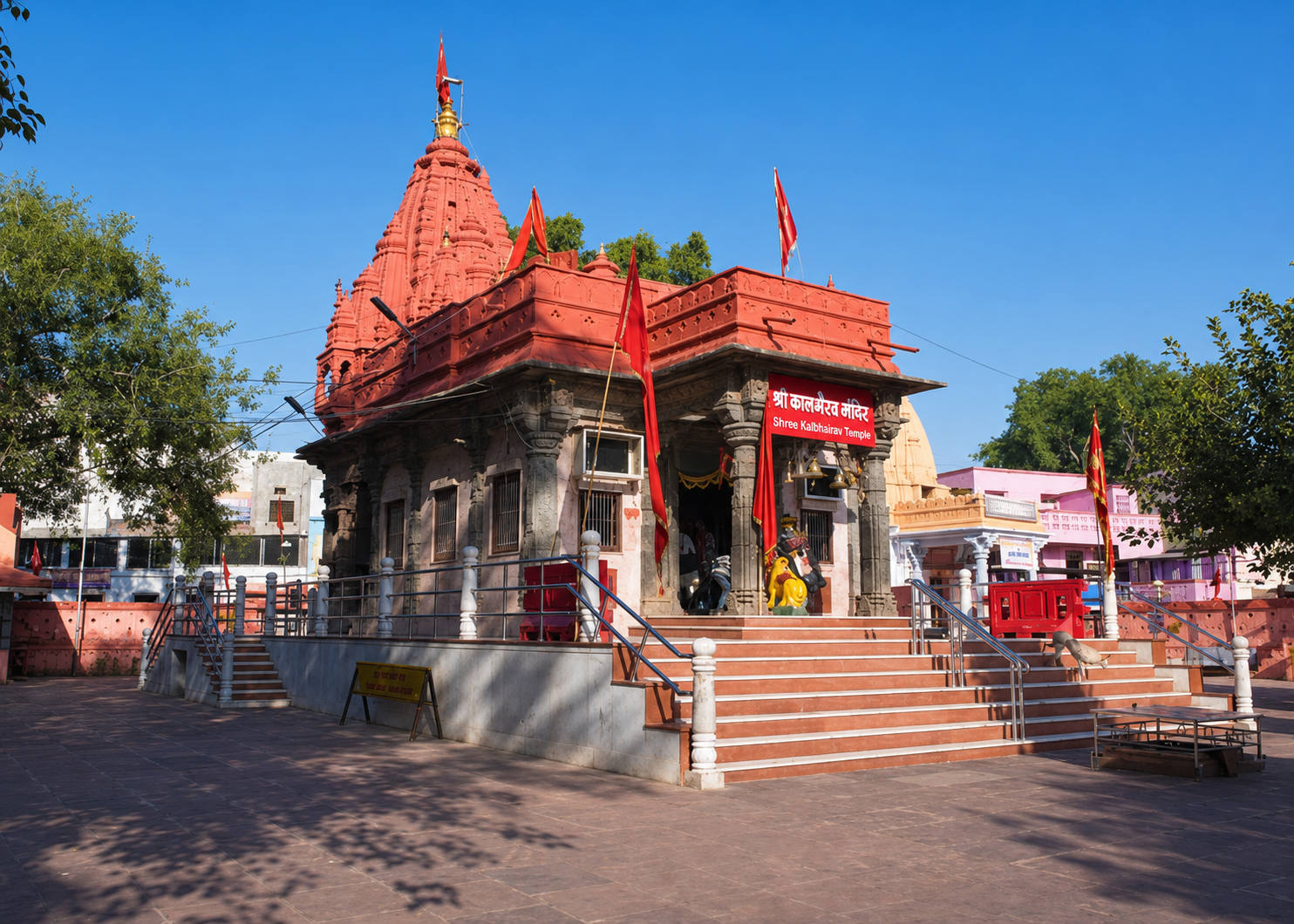
A prominent Shakti shrine with distinctive lamp towers near the Mahakal zone.
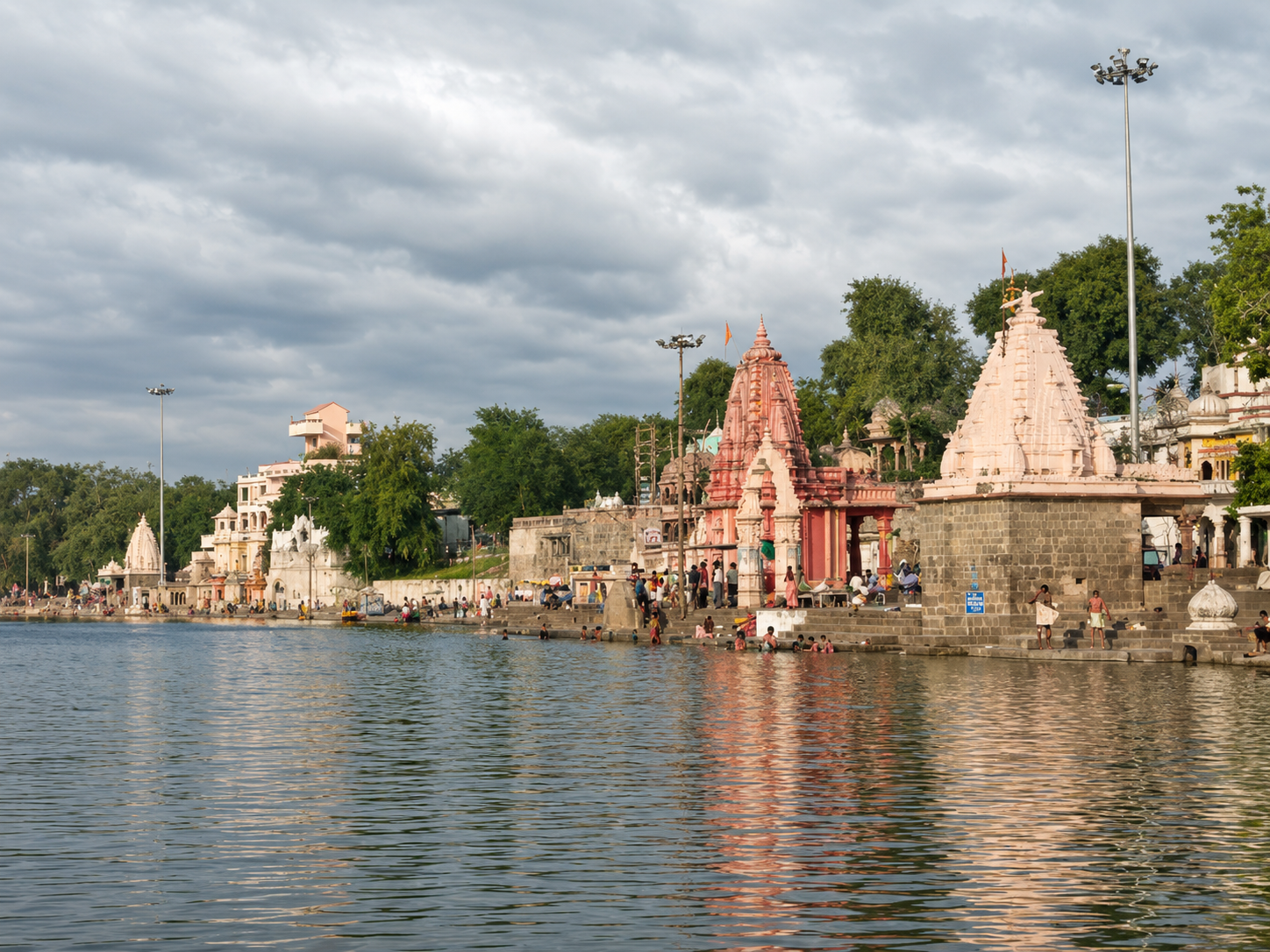
A sacred Shipra riverfront where the evening aarti is performed at sunset, generally around 6:00 PM–7:00 PM by season.
A Shiva shrine linked in tradition with Mars and Ujjain’s astronomical heritage.
A revered goddess shrine associated in tradition with Kalidasa.
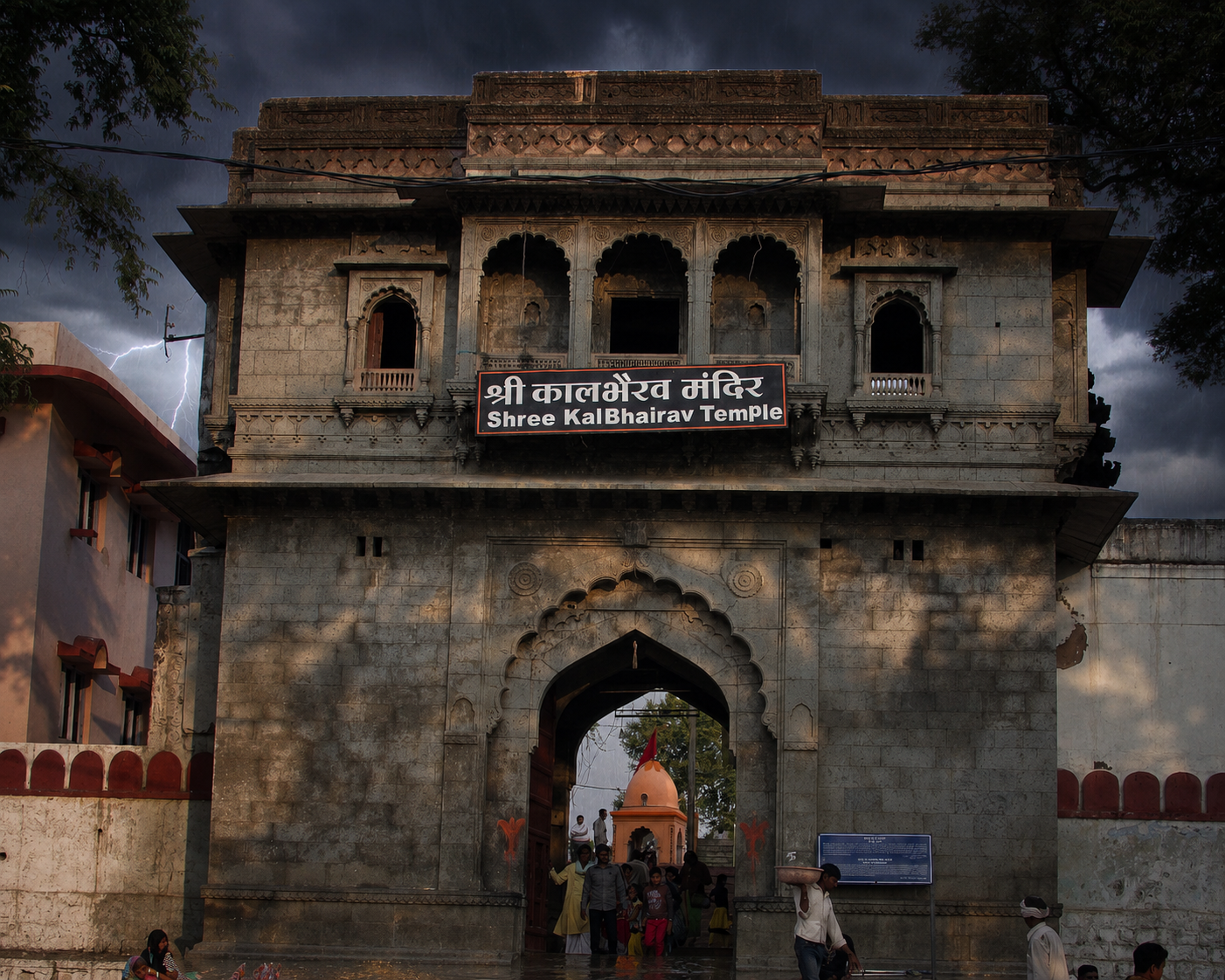
A major guardian-deity shrine within Ujjain’s Shaiva circuit.
An old Ganesh shrine included in the extended Ujjain pilgrimage route.
An extended full-day sacred circuit using a full-day local Ujjain taxi with waiting. Times are source-based planning blocks, not official Mandir schedules.
Route estimate: approximately 20–25 km
Taxi: Full-day local Ujjain taxi with waiting
Five taxi waiting clusters: Mahakal complex and central ghats; Sandipani; Mangalnath; Kal Bhairav and Gadkalika; Chintaman and return.
| Time | Route stop | Planning details |
|---|---|---|
| 3:00–3:30 AM | Hotel pickup | Begin the pre-dawn transfer to the Mahakal precinct. |
| 3:30–6:00 AM | Mahakaleshwar Mandir — Bhasma Aarti planning block | Arrive before the official 4:00–6:00 AM Bhasma Aarti and complete booking and security formalities according to the official booking instructions. |
| 6:00–6:45 AM | Mahakaleshwar Darshan | Continue through the managed darshan and exit flow. |
| 6:50–7:10 AM | Bade Ganeshji Mandir | Short walk to the nearby Ganesh shrine. |
| 7:15–7:50 AM | Harsiddhi Mandir | Visit the Shakti shrine and its lamp-tower courtyard. |
| 7:55–8:35 AM | Ram Ghat morning visit | Walk the Shipra riverfront; keep riverfront photography separate from Mandir restrictions. |
| 8:35–9:15 AM | Breakfast | Breakfast and transfer preparation. |
| 9:30–10:10 AM | Sandipani Ashram | Visit the traditional learning site associated with Sage Sandipani. |
| 10:20–11:10 AM | Mangalnath Mandir | Continue to the Mars-associated shrine and sacred-time setting. |
| 11:20 AM–12:10 PM | Kal Bhairav Mandir | Visit Ujjain’s major guardian-deity shrine. |
| 12:20–12:55 PM | Gadkalika Mandir | Continue to the goddess shrine associated in tradition with Kalidasa. |
| 1:10–1:50 PM | Chintaman Ganesh Mandir | Complete the outer sacred circuit at the Ganesh shrine. |
| 1:50–2:30 PM | Lunch and rest | Pause before the evening riverfront return. |
| From 5:30 PM | Ram Ghat Evening Shipra Aarti planning block | The aarti is performed at sunset and generally falls between approximately 6:00 PM and 7:00 PM depending on the season. |
| After the aarti | Return to hotel | Meet the waiting taxi and end the extended full-day sacred circuit. |
Traditional offerings at Mahakaleshwar are simple, devotional and closely tied to Shiva Ji worship, with puja essentials and sacred rituals usually arranged through trusted local vendors or approved mandir channels. For laddu or packaged prasad, check the official mandir counter availability on arrival.
Bel patra, flowers, milk or abhishek items and Rudrabhishek remain the most familiar offerings for devotees visiting Mahakaleshwar.
Fresh flowers and simple puja thali items are among the most common devotional offerings for Lord Shiva Ji and are easily available through trusted local vendors near the mandir approach.
Bel patra remains one of the most symbolically important offerings in Shiva Ji worship and is often part of simple, focused puja at Mahakaleshwar.
Milk-based abhishek offerings are widely associated with Shiva Ji worship. Devotees should follow current mandir rules and approved puja procedures before bringing ritual items inside.
Rudrabhishek is one of the most sought-after mandir rituals for devotees seeking a deeper spiritual offering experience at Mahakaleshwar. Use official mandir channel guidance for booking and reporting.

Short reminders that help avoid confusion and keep darshan smoother.
A little planning before you leave for the mandir usually makes the darshan experience calmer, especially on busier aarti days.
Arrival checklist
Local transfer, security flow and peak-day queues can add time beyond the ritual or darshan period itself.
Simple, respectful choices usually make the visit smoother than trying to manage extra items near a tightly monitored mandir entry.
Modest clothing, light items and simple offerings usually make entry, walking and security checks much easier.
Clothing
Mandir-appropriate clothing is the easiest choice for darshan lines, walking access and longer devotional visits.
Restricted items
The inner approach uses security screening and managed entry flow, so minimal belongings are easier to handle.
Offerings
Simple offerings are easier to manage and more likely to fit current entry expectations near the mandir complex.
Where you stay affects how easy an early darshan day feels, especially when Ujjain traffic and local transfers become part of the plan.
Staying near the mandir precinct or a practical transfer point usually makes early darshan planning much smoother than depending on long city transfers.
Best area to stay
If mandir access is the priority, stay in an area that keeps the morning approach manageable instead of adding a long transfer before the queue.
Mandir precinct or Mahakal Lok area
Staying near the mandir side or nearby Mahakal Lok area can make it easier to combine darshan, local movement and nearby mandir visits in one day.
Near railway station
This area can work better for visitors arriving by train, carrying luggage or prioritizing simpler onward travel over walkable town-center ambience.
Budget and comfort
Budget stays can work well if access is clear, while comfort stays are often worth considering when your visit depends on rest, early reporting or family travel.
Staying too deep inside older town lanes may feel immersive, but it can complicate luggage movement, auto drop-offs and very early mandir starts.
The Temple Committee provides official service, booking, donation, live darshan and contact pages for devotees.
Open the Committee service hub for current Sheeghra Darshan, aarti and Pujan/Abhishek options.
Committee portal
Use the Temple Committee service hub for current darshan, aarti, Pujan and donation access.
Direct help
The Committee maintains dedicated contact and live darshan pages alongside its online service portal.
If your darshan day depends on a specific aarti or puja slot, re-check official instructions shortly before travel rather than depending only on older summaries or unofficial listings.
Source markers identify names, places, traditions and architectural terms retained from the supplied material.
