Kodandarama
Rama is shown in a coronated form while retaining the Kodanda bow.
 Divine Mandir
Sri Kodandarama Swamy Temple, Vontimitta, Kadapa District, Andhra Pradesh 516213, India
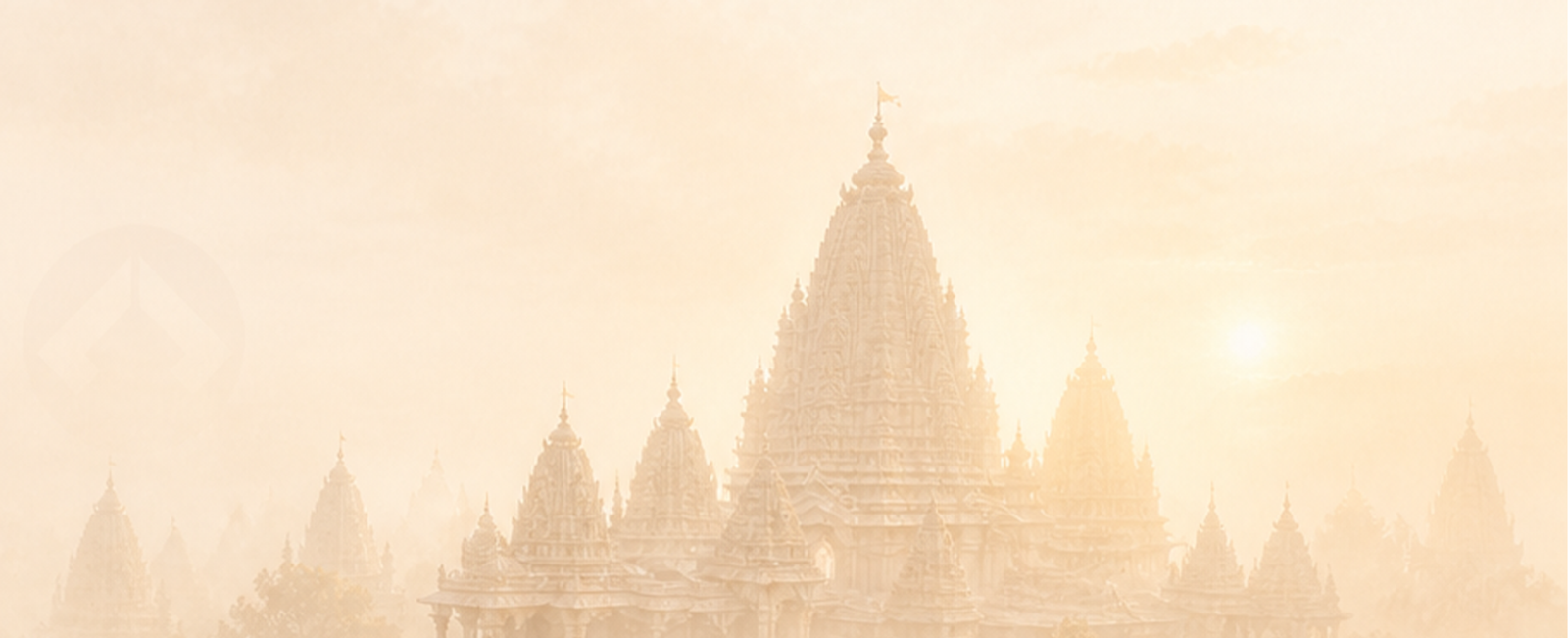
Vontimitta’s monumental stone temple of Kodandarama, Sita and Lakshmana carved as a single ensemble, with Hanuman worshipped separately outside.
Visitor note: Sri Rama Navami is the most significant visit period and also the busiest. Cooler months support easier daytime travel.
Source: DM-RM-007-A_AP.docx. Confirm current arrangements before travelling.
Vontimitta temple guide
Sri Kodandarama Swamy Temple stands at Vontimitta in Kadapa District. Kodandarama, Sita and Lakshmana are carved from a single block of stone, giving the place its Ekasilanagaram identity.
Hanuman is not part of the main sanctum group. A separate Veeranjaneya shrine stands outside and faces the temple, preserving the source’s distinct spatial tradition.
Sanctum identity
Coronated Kodandarama bearing the Kodanda bow, carved with Sita and Lakshmana from one stone.
Rama is shown in a coronated form while retaining the Kodanda bow.
Rama, Sita and Lakshmana are carved together from one block.
Veeranjaneya stands outside the main sanctum rather than within the central group.
Temple identity in context
The single-stone sacred ensemble gives the town its traditional identity.
Temple tradition attributes installation of the image to Jambavantha.
The temple is the official Andhra Pradesh venue for the Sri Sita Rama Kalyanam.
Tradition carefully framed
Local tradition remembers the devotion of Vontudu and Mittudu, whose names are associated with Vontimitta.
The source explains the separate Hanuman shrine through the temple’s post-coronation Rama identity; this remains a local sacred interpretation.
Source-backed historical outline
The temple developed through Chola and Vijayanagara patronage, with the principal fabric associated with the sixteenth century.
The source connects Vontimitta with poets and scholars in Telugu Rama devotion.
Form, materials and setting
Large stone gateways and mandapas define the complex.
Gateway towers organise the approach.
Carved stone columns support the main assembly spaces.
The source highlights carefully joined stone construction.
The central Rama-Sita-Lakshmana ensemble is the defining artistic feature.
The temple is recognised as a monument of national importance.
What makes this temple distinct
The three principal figures share one sculpted stone.
Hanuman’s separate location is an intentional local distinction.
The source notes the Rama Navami wedding is performed at night.
Visitor arrangements are managed through Tirumala Tirupati Devasthanams.
Choose the planning path that fits your visit.
Visit fit
Kodandarama darshan, Vijayanagara architecture and Andhra Rama Navami tradition
Review guidanceSetting
Vontimitta near Rama Theertham and Lakshmana Theertham
Review guidanceBest period
Sri Rama Navami is the most significant visit period and also the busiest. Cooler months support easier daytime travel.
Review guidanceConfirm
Reconfirm timings, access, photography, offerings and festival controls before travel.
Review guidanceA source-supported visitor route; current directions take priority.
Enter through the directed approach and observe the stone architecture.
Take darshan of the single-stone Rama-Sita-Lakshmana ensemble.
Continue to the separate Hanuman shrine outside the main sanctum.
Add the local water sites only when access and conditions permit.
Sri Kodandarama Swamy Temple, Vontimitta, Kadapa District, Andhra Pradesh 516213, India
Source-reported schedule; reconfirm before travel
6:00 AM–1:00 PM source-reported
2:00 PM–8:00 PM source-reported
Hours may extend; confirm with TTD
Temple schedules, festival access and local controls can change. Confirm the current programme with the responsible temple authority.
Principal source-listed celebrations
The state-sponsored Sita Rama Kalyanam is the principal celebration.
Observed within the temple’s Vaishnava calendar.
Festival worship and processions follow temple announcements.
Open public remembrance in Roman script
Shri Ram Jai Ram Jai Jai Ram
A public form of remembrance that may be recited quietly and respectfully.
Sita Ram
A concise public remembrance preserving the Sita-Rama couple context.
Simple, public and non-initiatory
Use a clean space and a calm, attentive approach.
Water, flowers, fruit or a safe lamp may be used when appropriate and permitted.
Use public Rama Nama in Roman script and close with quiet prayer.
Formal temple rites belong to trained priests and the responsible temple authority. This page does not publish initiated or operational ritual instructions.
Continue to the Lord Ram hub
Follow current temple rules
Offer only where the temple currently permits them.
Use temple-approved counters and directed offering points.
Prefer authorised temple channels and obtain a receipt when available.
Weather, festivals and crowds
Sri Rama Navami is the most significant visit period and also the busiest. Cooler months support easier daytime travel.
Weather, road conditions, queues and festival controls can change. Check close to the visit date.
Source-listed local and regional stops
The separate Hanuman shrine facing the principal temple.
Open mapA local water site associated with the temple landscape.
Open mapA second nearby sacred water site.
Open mapA regional Hanuman pilgrimage stop.
Open mapA historic regional extension.
Open mapApproximately 25 km; the main nearby city and travel base.
Open mapA practical, optional route
This route is optional. Reorder or shorten it according to time, current access and personal needs.
Before you enter
The supplied module sources used for this guide
DM-RM-007-A_AP.docx is the primary source for temple identity, traditions, worship, visitor planning and nearby places.
The derived catalogue supports public Roman-script mantras and safe household-worship framing.
Opening hours, access, photography, transport and festival arrangements can change; reconfirm them close to travel.