
Devotion
101 Shiva Lingas
The sacred narrative recounts that Ghushma formed and worshipped 101 Shiva Lingas each day before immersing them in the sacred waterbody.
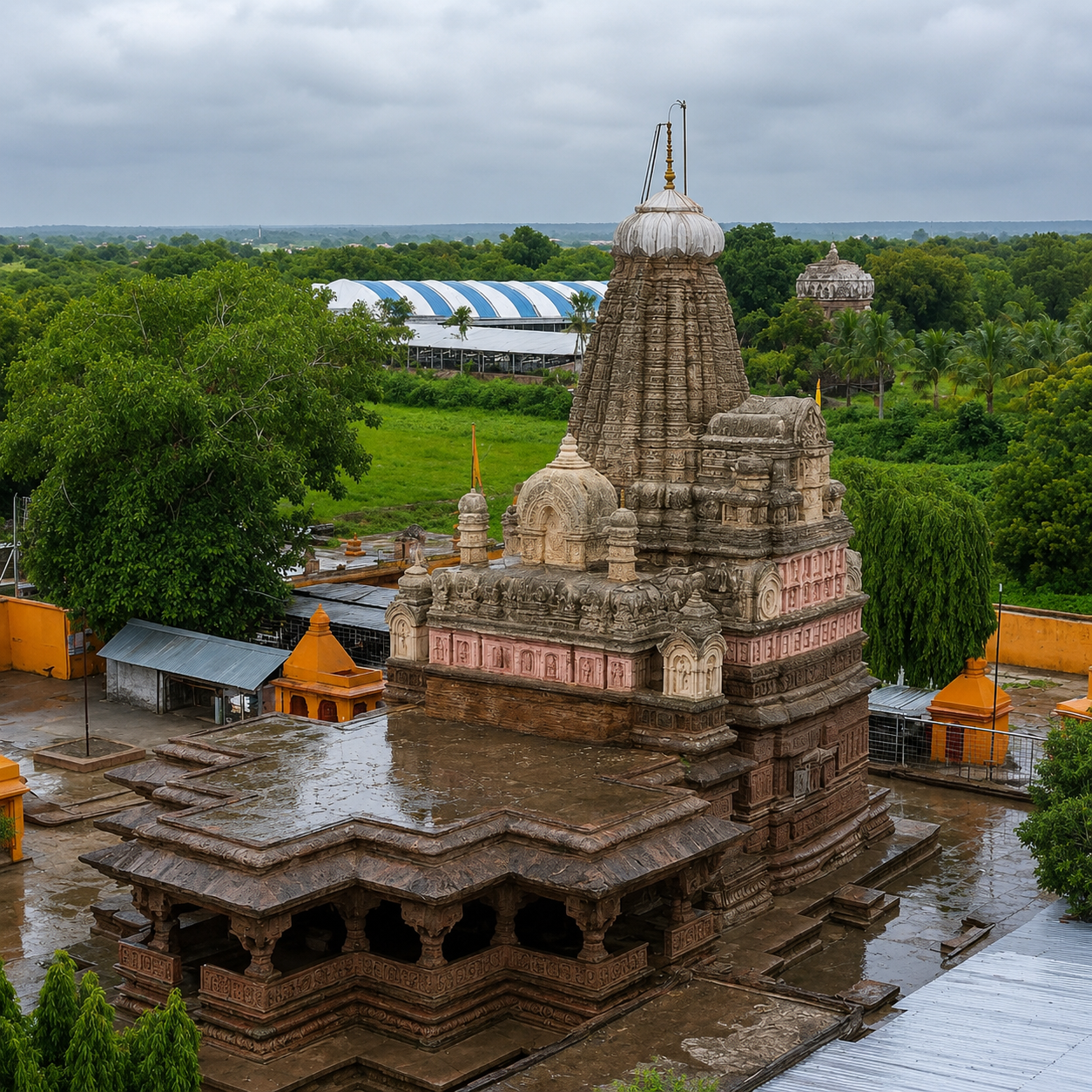
Verul, near Ellora, Chhatrapati Sambhajinagar District, MaharashtraAC4
Traditionally counted as the twelfth and final Jyotirlinga, the present red-stone Mandir is an eighteenth-century restored temple with Hemadpanthi architecture, also written as HemadpantiAR8 and later Maratha architectural featuresAR3. It stands beside the sacred and multi-faith heritage landscape of Ellora.
Current darshan sessions are taken from the coherent main temple-site scheduleTIME; the same site publishes conflicting secondary schedules, so no exact current aarti rows are claimed.
Festival, Shravan, crowd-management and administration controls can change access; no waiting time or sanctum entry is guaranteed.
Government distances are approximate; current services and routes can change.
Calculated in the browser from the Grishneshwar coordinates; values are planning guidance.
Shri Grishneshwar Jyotirlinga Mandir, also known as Ghrishneshwar, Ghushmeshwar and Kusumeshwar, stands at Verul beside Ellora. The user-supplied source SRC is reconciled here with Maharashtra Tourism, District Administration, UNESCO and current operational research.
The shrine joins a living Shiva pilgrimage with an eighteenth-century red-stone structure, the nearby Shivalaya Tirth and the Buddhist, Hindu and Jain heritage of Ellora. It is traditionally counted as Jyotirlinga No. 12; this devotional position is not presented as an automatic promise of merit or liberation.
According to the Shiva Purana-associated tradition VD3 , Ghushma—also called Kusuma K25 —and Sudeha K26 are central to the shrine’s sacred narrative; the account is not presented as documented history.
Devotion
The sacred narrative recounts that Ghushma formed and worshipped 101 Shiva Lingas each day before immersing them in the sacred waterbody.
Family narrative
Temple tradition presents the birth of Ghushma’s son, Sudeha’s jealousy and the child’s death as the sorrowful turning point of the story.
Steadfast worship
The narrative says Ghushma continued her worship without abandoning faith, even after learning what had happened.
Compassion
The tradition says Shiva restored her son. Ghushma then asked that Sudeha be forgiven and Shiva manifested there as Grishneshwar. This is a sacred account, not a promised outcome for visitors.
Sacred tradition, regional dynastic context and the history of the present restored structure are kept distinct.
Sacred layer
The Shiva Purana-associated account explains the shrine’s devotional origin but does not establish one datable foundation year.
Regional setting
Ellora’s development supplies qualified Rashtrakuta-period regional context D14 P4 ; it is not used to date the present Mandir or assign an unbroken ancient chronology.
Medieval period
Later traditions describe episodes of damage and reconstruction during the medieval period P3 and Delhi Sultanate context D15 . The evidence does not support one uninterrupted building history.
Bhosale restoration
Maharashtra Tourism records a sixteenth-century reconstruction associated with Maloji Bhosale K7 .
Present form
The current grandeur is associated with the eighteenth-century restoration of Ahilyabai Holkar K3 .
Later care
Maratha-period history D9 is used for patronage and preservation context, while AR3 is reserved for architectural features.
The broad architectural traditions are not confused with the construction date of the present eighteenth-century restored structure.
The present Mandir uses striking red volcanic basalt, giving the carved exterior and massing their distinctive appearance.
A five-tiered shikhara rises over the complex with carved deities and mythological imagery.
The pillared Sabha Mandap or court hall is described by Maharashtra Tourism with 24 carved pillars.
Nandi is aligned toward the sanctum; the Lingam and sanctum orientation are reported as east-facing.
Carving programme
Carved deities, floral and geometric motifs and scenes associated with the Ramayana and Mahabharata articulate the walls, pillars and shikhara.
Style treatment
Hemadpanthi craftsmanship describes the robust stone form; Maratha architectural features describe later rebuilding and restoration. Neither term is treated as the exact date of every surviving element.
Shivalaya Tirth R24 is the sacred waterbody near the Mandir associated with Ghushma’s daily Lingam-immersion tradition.
The Tirth belongs to the devotional landscape of Verul and the Ghushma narrative.
Temple tradition links the waterbody with the daily immersion of 101 worshipped Shiva Lingas.
The waterbody is presented as a symbol of continued devotion and renewal, without guaranteed spiritual or health results.
The nearby UNESCO complex is presented as a shared Buddhist, Hindu and Jain heritage landscape—not only as a Shiva site.
UNESCO setting
UNESCO describes 34 monasteries and temples cut into a basalt cliff. The sequence preserves Buddhist, Hindu/Brahmanical and Jain traditions and an exceptional history of artistic coexistence.
Cave groups
Buddhist caves are numbered 1–12, Hindu/Brahmanical caves 13–29 and Jain caves 30–34. Visitors may choose highlights rather than treating every cave as a pilgrimage requirement.
Shiva landmark
Kailasa is the great monolithic rock-cut Shiva temple at Cave 16, with courtyards, pillars and sculptural themes from the Ramayana and Mahabharata.
Visitor management
The Mandir is approximately 1 km from Ellora according to the District Administration. Check the current opening day, entry rules, weather and walking requirements before combining the visits.
Six concise features distinguish the shrine without repeating the full mythology or heritage sections.
Traditionally placed twelfth in the Dwadasha sequence.
Ghushma’s request that Sudeha be forgiven is central to the story.
The nearby Tirth is linked with daily Lingam immersion.
Red basalt, a five-tier shikhara and carved pillars shape the present temple.
Men entering the inner sanctum are reported to follow an upper-garment tradition; current instructions control.
A living Jyotirlinga and UNESCO rock-cut heritage sit approximately 1 km apart.
Devotional meaning is expressed as tradition and interpretation, never as a guaranteed result.
Ghushma’s continued worship is remembered as an image of steadiness during grief.
Her request for Sudeha’s forgiveness gives the sacred story its distinctive moral centre.
The repeated making and immersion of Lingas symbolises disciplined practice and renewal.
Worship continues within a major historical and protected-heritage region.
Belief note: These are devotional themes. Darshan does not automatically grant healing, wealth, moksha or completion benefits.
Grishneshwar is traditionally counted as the twelfth and final Jyotirlinga in the complete Dwadasha context C11 .
Traditional sequence
The shrine closes the conventional list of twelve sacred manifestations of Shiva.
Pilgrim practice
Some pilgrims treat Grishneshwar as the concluding shrine of a twelve-Jyotirlinga journey, while others visit it independently.
Choose the visit shape before committing to the heritage and fort extensions.
Option 1
Focus on the two published darshan sessions and allow additional time during Shravan, festivals and holidays.
Option 2
Review dress, queue and authorised-service rules without assuming direct touch or personal Abhishek access.
Option 3
Combine the Mandir with Ellora and Kailasa; add Bhadra Maruti and Devagiri only when time, heat and mobility allow.
A simple sequence keeps temple worship, optional services and the protected heritage visit distinct.
Wear traditional or modest clothing, carry minimum valuables, remove footwear where directed and check current photography and item restrictions.
Use the current queue, crowd-control and sanctum instructions. Do not assume direct touch, a particular entrance or a fixed waiting time.
If planning Rudrabhishek or another service, use only current temple counters or verified temple arrangements and ask what materials are permitted.
After Mandir darshan, check the current ASI opening day, entry rules, heat and walking conditions before entering the cave complex.
District-government distances provide the primary basis; all values and service availability remain approximate.
Chhatrapati Sambhajinagar Airport
Approximately 36 km; onward road transfer required.Chhatrapati Sambhajinagar Railway Station
Approximately 29 km; specific trains are not guaranteed.Chhatrapati Sambhajinagar to Verul
Approximately 31 km toward Ellora; state bus or taxi context.Use the airport, railway station or road hub that fits the journey.
Confirm the current route and transport toward Verul and Ellora.
Keep Mandir darshan first and plan Ellora afterward.
Travel note: Do not rely on a guaranteed bus, taxi, train, road time or parking arrangement. Weather, traffic and festival controls can change the journey.
The page preserves one coherent set of public darshan sessions and does not combine incompatible temple-site schedules.
| Published window | Time | Planning note |
|---|---|---|
| Morning temple / darshan session | 5:30 AM–12:00 PM | Arrive early outside Shravan, Mahashivratri, holidays and other peaks. |
| Afternoon and evening session | 1:00 PM–9:00 PM | Festival and administration controls can alter access. |
Source: Grishneshwar Jyotirlinga Temple website — published darshan schedule. Updated on: 1 August 2026. This is planning information, not a live access guarantee.
Four principal festival cards and three compact additional observances preserve all seven source observances without permanent Gregorian dates.
A major Shiva festival with special worship and increased pilgrimage demand; current programmes and access should be checked locally.
A high-demand devotional period; allow substantial transport, queue and crowd-management buffers.
A Shiva observance followed according to the Hindu calendar; no fixed permanent programme is claimed.
A calendar-based devotional occasion; exact local arrangements can vary by year.
Temple observance details follow the current local calendar.
A Monday new-moon observance; no permanent date or benefit promise is published.
A recurring Shiva observance whose local programme should be checked on arrival.
Offerings and worship remain subject to current sanctum, crowd and administration rules.
Traditional materials
Authorised worship
Ask current temple staff about Rudrabhishek and other authorised Shiva worship. Use only authorised counters and verified temple services; no price, availability or access is promised.
Sanctum custom
Maharashtra Tourism reports a tradition in which male devotees enter the inner sanctum bare-chested. Wear traditional or modest clothing and follow the current instructions given to every visitor.
Access control
Direct touch, sitting in the sanctum and personal Abhishek access may be restricted during crowds, festivals or administration controls. Follow the active queue and priest/staff directions.
Season, peak observances, Ellora access and walking conditions all shape a comfortable visit.
Maharashtra Tourism identifies these cooler months as generally more comfortable; check the current forecast.
Prefer early morning outside peak observances; no waiting-time guarantee is made.
Allow substantial crowd, queue and transport buffers during the sacred month, festival and holidays.
Check Ellora’s current opening day, ASI entry rules, weather, heat and walking requirements. A government schedule lists Tuesday as the weekly closure, subject to current notice.
Six horizontal cards distinguish compact local stops from longer city and Ajanta extensions.
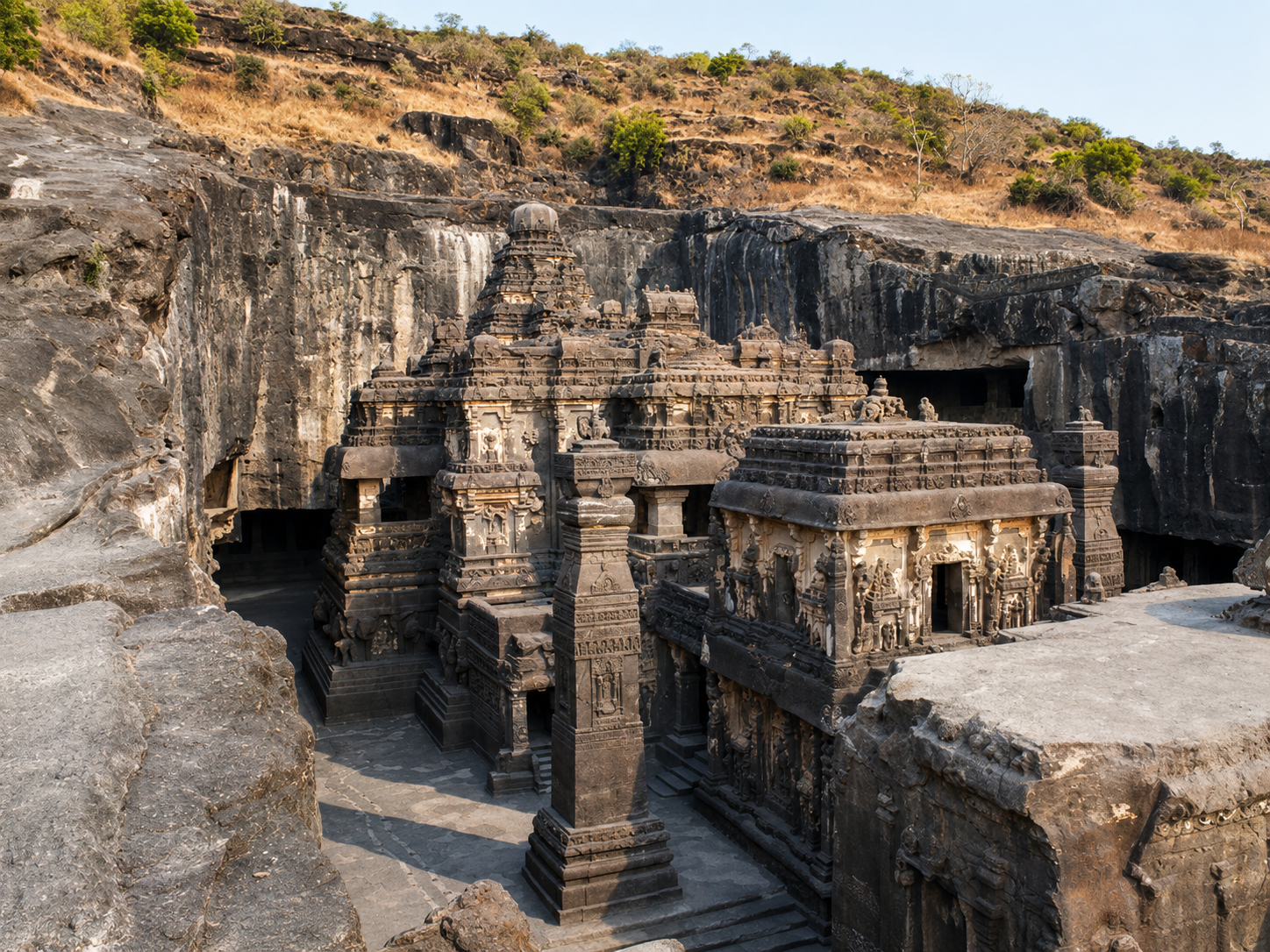
A UNESCO World Heritage complex of 34 Buddhist, Hindu and Jain cave monuments; check current ASI access and walking conditions.
Why visit: Multi-faith world heritage
The monumental rock-cut Shiva temple is commonly associated with Rashtrakuta king Krishna I K33 ; treat it as a protected heritage visit.
Why visit: Monolithic Shiva architecture
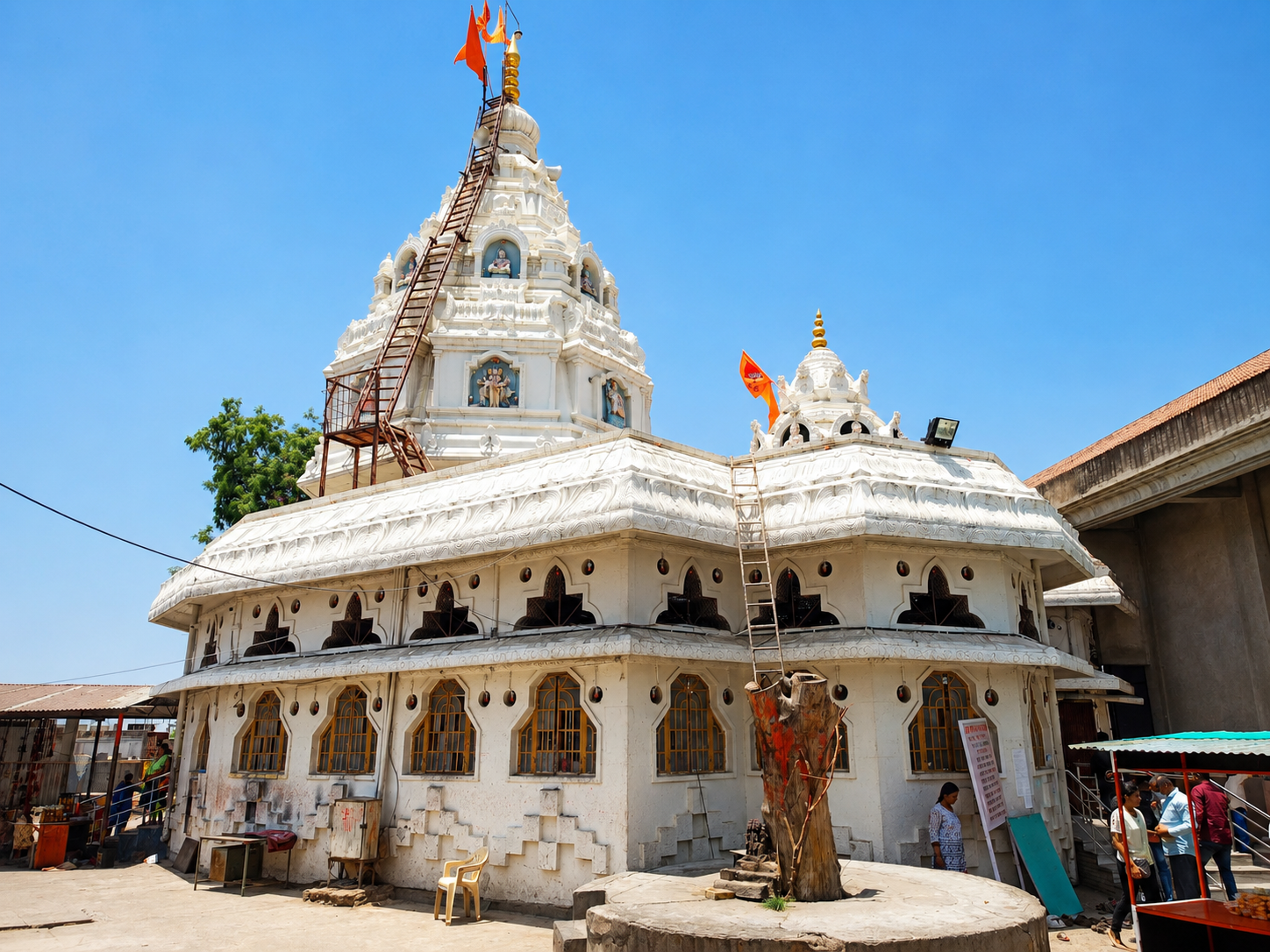
The temple is known for a reclining Hanuman form and a local tradition associated with King Bhadrasena K21 .
Why visit: Hanuman devotion
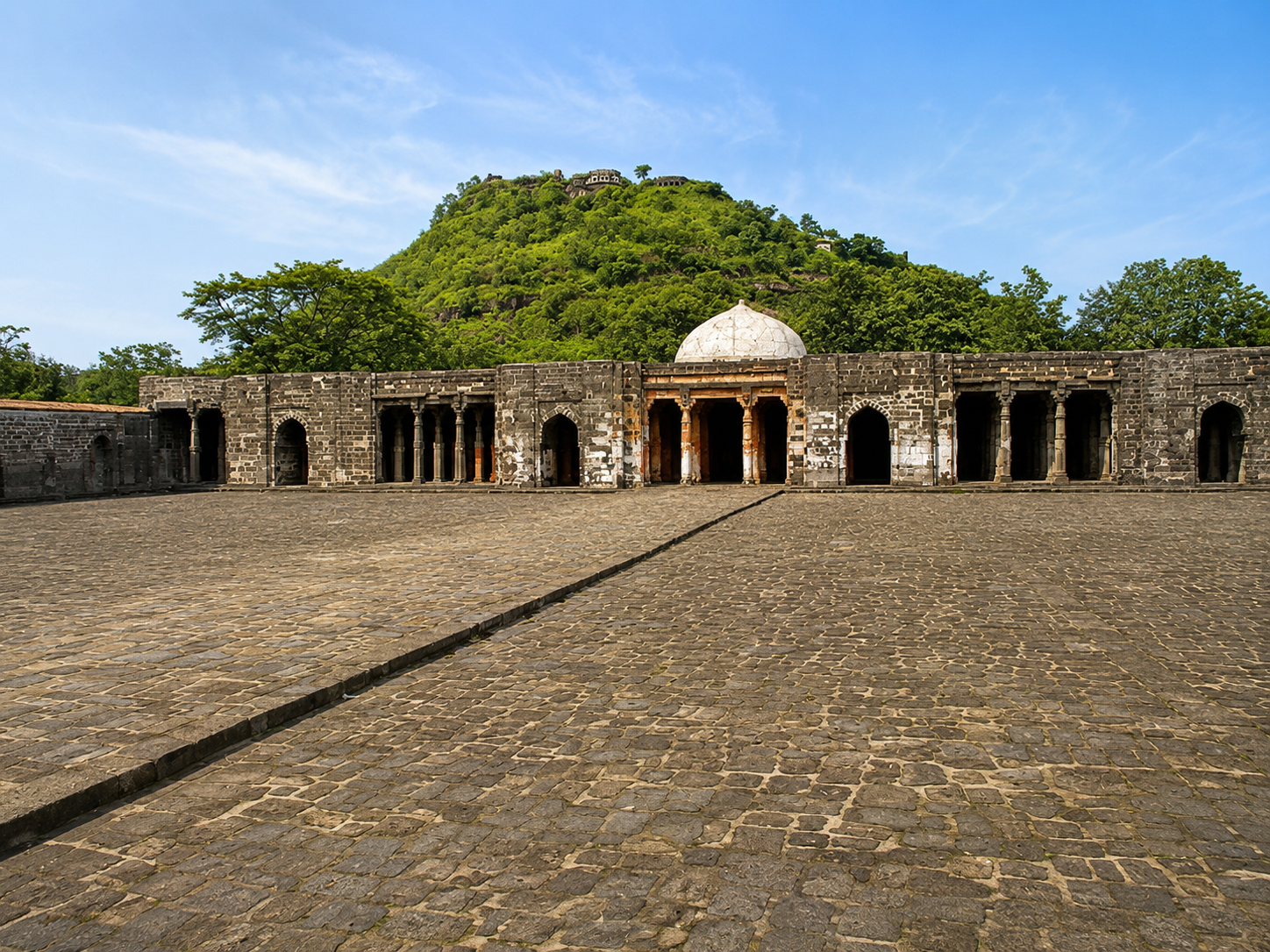
The UNESCO-listed Buddhist cave monuments require a separate longer journey and should not be treated as a nearby walking stop.
Why visit: Buddhist art and heritage
The historic water mill adds a later city-heritage stop; it is not presented as a Shiva shrine.
Why visit: Historic water engineering
Cross-link note: Bhadra Maruti should later connect to the Hanuman temple project. Distances and access remain approximate.
The complete controlled six-stop route is identified by C10 C10 and is a planning framework, not a transport or spiritual-completion guarantee.
| Stop | Sacred / heritage place | Planning details |
|---|---|---|
| 1 |
Grishneshwar Jyotirlinga Mandir
Temple start |
Begin with the published darshan window and current sanctum instructions. |
| 2 |
Shivalaya Tirth
Sacred-water stop |
Continue to the nearby waterbody only where current access permits; no bathing requirement is stated. |
| 3 |
Ellora Caves
Protected heritage |
Enter only under current ASI opening, ticketing and visitor-management rules. |
| 4 |
Kailasa Temple
Cave 16 |
Give Cave 16 focused time while preserving Ellora’s Buddhist, Hindu and Jain context. |
| 5 |
Bhadra Maruti Temple
Khuldabad extension |
Add the reclining-Hanuman shrine when transport and current temple access are suitable. |
| 6 |
Daulatabad / Devagiri Fort
Fort extension |
Conclude only when daylight, heat, mobility and climbing conditions are appropriate. |
Allow time for the active queue and move to Shivalaya Tirth only under current local access.
Check the current ASI day and protect time for walking, Cave 16 and the multi-faith cave groups.
Use approximate road transfers; keep the fort leg conditional on daylight, heat and mobility.
Three balanced cards separate traditional offerings, Abhishek materials and commonly described Prasad.
Card 1
Card 2
Use only materials allowed under the current service and sanctum rules.
Card 3
Form and availability can change.
Keep local purchases simple, transparent and secondary to the darshan and heritage plan.
Confirm that offerings are currently permitted before buying.
Inspect material and quality independently; no seller is certified here.
Plan hydration and sun protection for Ellora and the fort while respecting monument restrictions.
Ask the price first, keep receipts for substantial purchases and avoid authenticity pressure.
A safe combined visit depends on current temple instructions, protected-site conduct, realistic walking and careful extension planning.
Wear traditional or modest clothing; follow current sanctum dress, footwear, photography, queue and crowd-control instructions.
Keep belongings secure and use only authorised counters or verified temple arrangements.
Carry permitted water, pace walking, watch steps and wet surfaces and do not cross protected barriers.
Daulatabad includes steep climbing and dark/uneven passages; senior citizens, children and visitors with mobility needs should plan conservatively.
Nine concise answers cover identity, schedule, sacred tradition, sanctum access and the heritage circuit.
These definitions explain the 23 controlled first-use markers on this page.