Pune District, Maharashtra
Bhimashankar is the sixth Jyotirlinga, worshipped as a Swayambhu form of Lord Shiva in the forested Western Ghats of Maharashtra, where sacred traditions connect the Mandir with the defeat of Bhima and the source region of the Bhima River.
Current darshan is temporarily limited to 7:00 AM–11:00 AM because of Sabhamandap and temple-stair construction.
Divine Mandir planning estimate; not a live queue reading.
Monday, Saturday and Sunday use a High planning estimate; Tuesday–Friday use Moderate. Configured major-festival dates use Very High.
Check current construction, weather and forest access before departure.
A forest Jyotirlinga where sacred tradition, river geography and protected landscape meet.
Bhimashankar is revered as the sixth Jyotirlinga in Pune District, Maharashtra. The Mandir stands in the Western GhatsH12, regionally known as the Sahyadri range, amid the Bhimashankar Wildlife Sanctuary.
The Swayambhu tradition, the source region of the Bhima RiverR10 and the surrounding forest give the pilgrimage both spiritual and ecological character. The divine river-origin story is presented separately as tradition.
The supplied source and the official Trust preserve distinct narratives. They are presented side by side and are not merged.
User-supplied source tradition
Official Trust tradition
The Trust account associates the region with Tripurasura, who performs penance and later troubles others. Lord Shiva and Goddess Parvati, revered in the account as Kamalja Mata, confront and defeat him.
The sacred account is linked with Kartik Purnima, also known here as Tripurari Purnima and includes Shakini and Dakini. It is a separate tradition rather than another version of the King Kamarupeshwar narrative.
Read the official Trust historyKing Kamarupeshwar's continued worship is the devotional centre of the supplied narrative.
The story presents Shiva's appearance and defeat of Bhima as protection offered in answer to devotees' prayers.
Divine perspiration is a sacred origin tradition; the river's geographic source region is documented separately.
The Trust links the Tripurasura account with Kartik Purnima and the worship of Kamalja Mata.
An old Shaiva pilgrimage centre shaped by medieval stone architecture, Maratha-period patronage and continuing conservation.
District Pune describes Bhimashankar's architectural character as dating to the 13th century. The shrine remained an important forest pilgrimage centre and later received support during the Maratha periodD9. Later restoration, pilgrim facilities and continuing conservation have supported worship across changing periods.
Ancient heritage
The Mandir's long devotional identity is connected with mountain routes, river traditions and worship of Shiva.
18th century
District and Trust sources attribute the Sabhamandap and Shikhara additions to Nana PhadnavisK28.
Trust heritage account
The Trust associates a Portuguese bell offered here with Chimaji AppaK29 after the Maratha victory at Vasai.
Current conservation
Ongoing work now affects visitor access. No completion percentage or end date has been announced.
Nagara is the primary classification, Hemadpanthi is a qualified secondary association and Maratha describes later additions.
Primary style
Authoritative tourism and Trust sources describe Nagara / North Indian Nagara architecture AR7 as the Mandir's primary form.
Qualified influence
Hemadpanthi architectural association AR8 is presented as a separate secondary influence, not a substitute for Nagara.
Later additions
Maratha architectural influence AR3 applies to later additions, including the attributed Sabhamandap and Shikhara work.
Material
The Trust describes local stone construction. Conflicting translated claims about binding material are intentionally omitted.
Craft
Sculpted pillars, carved doorways and deity imagery enrich the compact mountain-shrine form.
Sanctum
The Trust describes a lower sanctum reached by steps and Nandi seated before the Jyotirlinga.
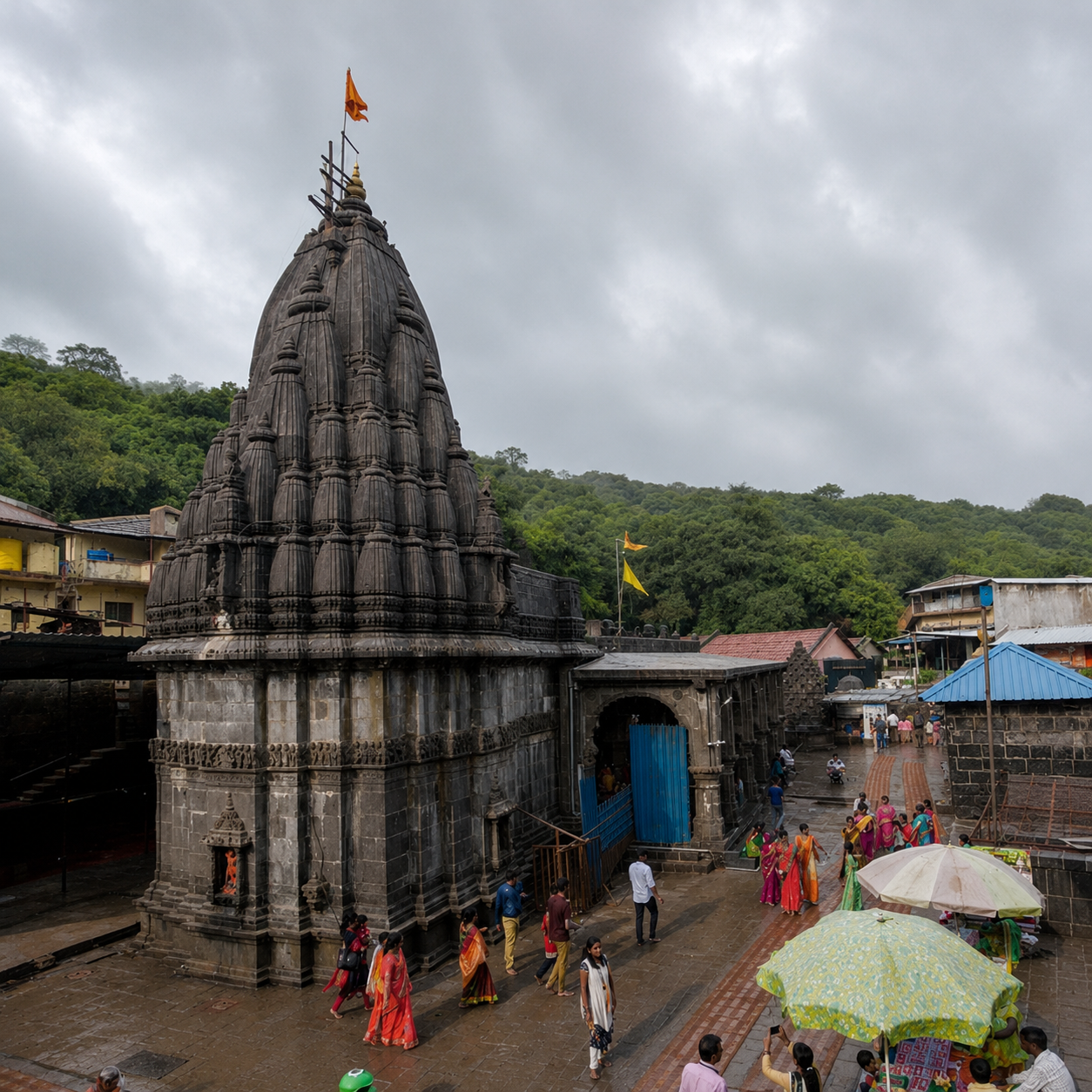
Architectural reading: The stone mandapa, shikhara, carved pillars and lower sanctum reflect work across more than one period. The broader development of Nagara architecture spans a longer historical tradition; this broad context is not used as the Mandir's exact construction date. District Pune's 13th-century description and the 18th-century additions remain separately attributed. A Trust-attributed heritage account associates the Portuguese bell with Chimaji Appa. Current Sabhamandap and temple-stair conservation work affects access but has no announced end date.
Six concise views of the Mandir's sacred geography and protected forest landscape.
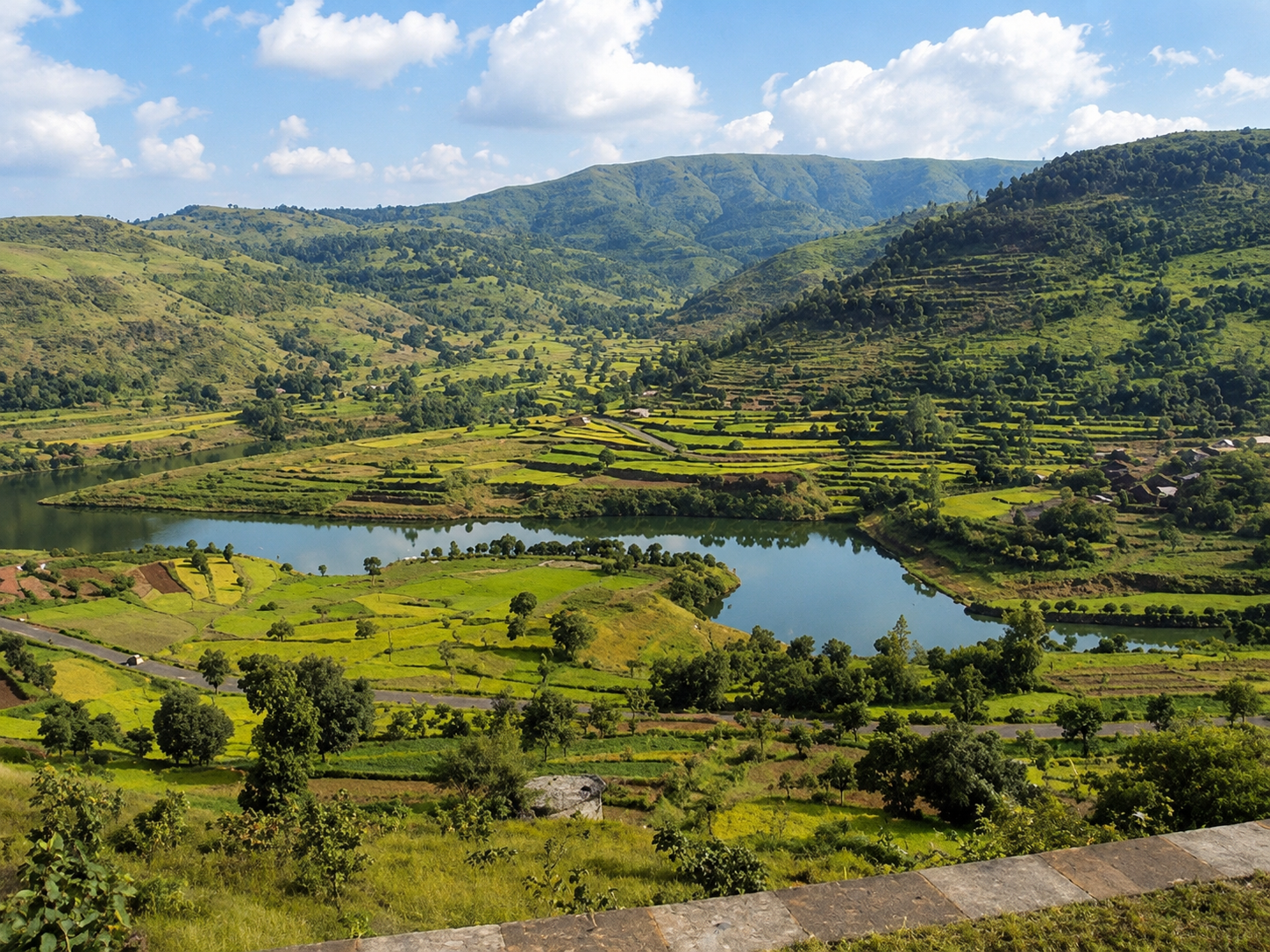
The Mandir lies in the Sahyadri forest landscape of the Western Ghats, a setting shaped by hills, streams and seasonal rain.
Geographically, the Bhima River originates in the Bhimashankar region and later joins the Krishna River R4 system. Separately, traditional belief associates the river with Lord Shiva's divine perspiration after the sacred battle. Construction can affect access to nearby source points.
Bhimashankar Wildlife Sanctuary protects forest habitat in Pune District. Entry, trails and rules can change; no safari or wildlife sighting is guaranteed.
The Indian or Malabar Giant Squirrel is associated with this protected habitat. Do not feed or disturb wildlife and do not assume a sighting.
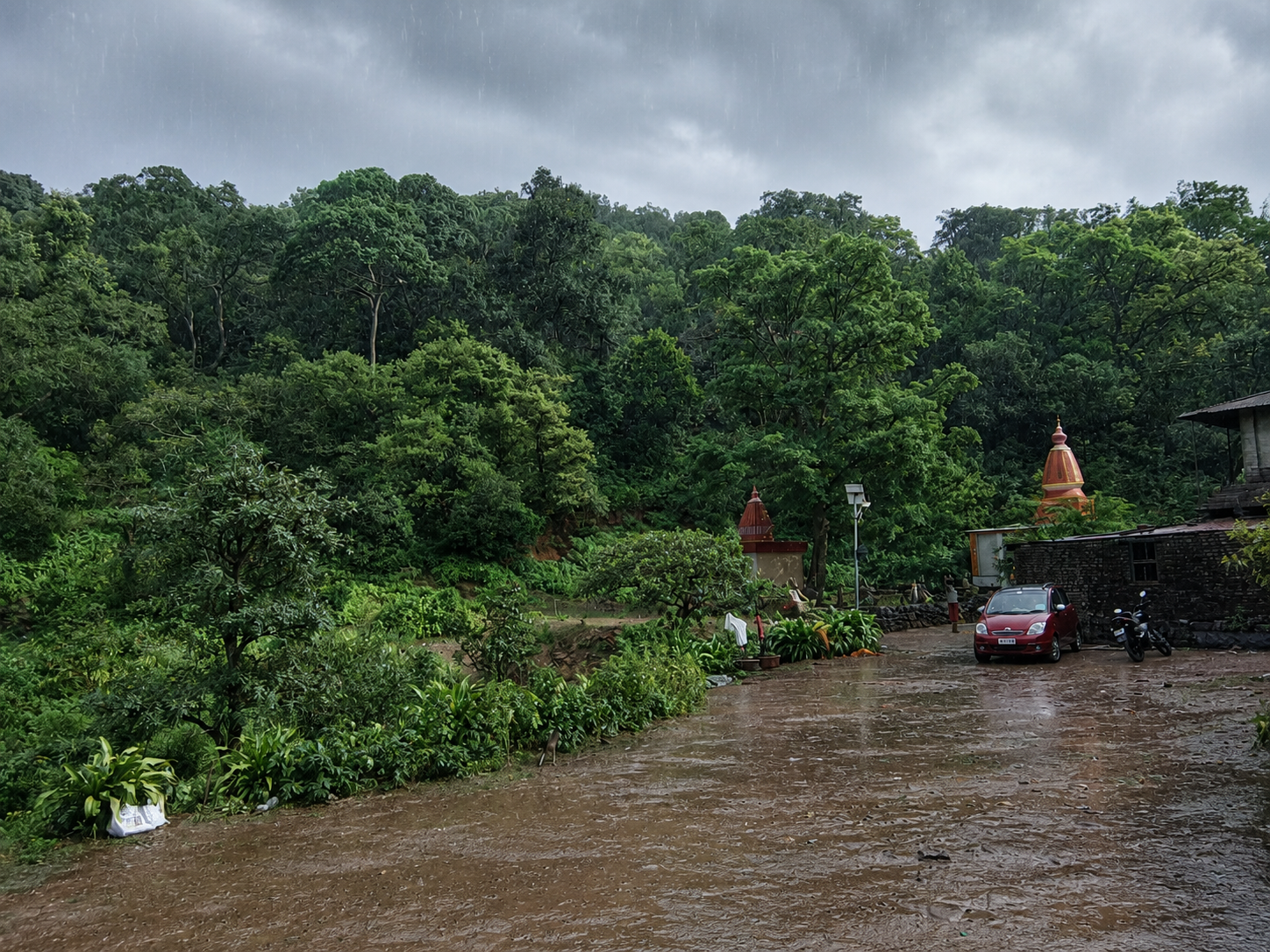
Seasonal streams, waterfalls and valleys shape the Sahyadri landscape. Stay on permitted paths, carry waste out and check rain and trail conditions before entering forest routes.
Nagphani is reached through the wider forest route, with the Trust describing the final climb as about 500 m beyond Hanuman Lake. Total distance varies by starting point and trail.
Bhimashankar's devotional identity brings together Jyotirlinga worship, a Swayambhu tradition, sacred water and forest pilgrimage.
The page follows the supplied tradition that numbers Bhimashankar sixth among the twelve Jyotirlingas.
The Jyotirlinga is worshipped as self-manifested, expressed as sacred tradition rather than a physical claim.
Mountain paths, sanctuary forest, meditation and quiet prayer have long shaped the pilgrimage experience.
Devotees connect Shiva's protective manifestation with the traditional origin of the Bhima River.
Worship is associated in tradition with courage, peace, Shiva's protection and spiritual growth, without guaranteed outcomes.
The official Trust account includes Shakini and Dakini in the sacred identity of the Bhimashankar region.
A Trust-attributed account associates the Portuguese bell with Chimaji Appa; it is presented as heritage tradition, not an uncontested architectural dating claim.
Choose a practical plan before entering the hill and forest approach.
Current priority
Plan for the 7:00 AM–11:00 AM window, arrive before opening and allow time for construction controls.
First visit
Follow permitted construction routes and stairs, complete darshan first and check current forest access before any extension.
Forest circuit
Gupt Bhimashankar, Nagphani and sanctuary routes depend on rain, daylight, access instructions and personal fitness.
Confirm that the temporary 7:00 AM–11:00 AM window is still active before travel.
Respect construction barriers and use only the stairs and route directed by Trust staff.
Pause respectfully before Nandi while keeping the managed queue moving.
Follow current movement, footwear, silence and offering instructions.
Take darshan respectfully without assuming that touching the Jyotirlinga is permitted.
Do not enter closed areas or cross construction barriers.
Reassess rain, trail, daylight and sanctuary conditions before extending the visit.
Use Pune as the principal air and rail connection, then continue through the winding Western Ghats approach.
Pune International Airport is the closest major airport. Continue by road and allow for hill-road conditions.
Pune Junction is the recommended major railway connection. Tourism sources conflict on which smaller station is geographically closest.
Use the Pune–Manchar–Bhimashankar route. Maharashtra Tourism gives approximately 125 km from Pune and approximately 220 km from Mumbai.
Ganesh Ghat is the easier/moderate option; Shidi Ghat is steeper and more difficult. Weather and forest conditions can alter access.
The Shree Kshetra Bhimashankar Trust currently limits public darshan to this window because of construction work on the Sabhamandap and temple stairs. The Trust has not announced an end date.
Use the Trust's regular programme below and check the official schedule before travel.
Currently superseded by the temporary construction notice.
Plan for devotional demand without assuming normal access while construction controls remain active.
Principal festival
The Trust lists the Maha Shivaratri yatra and Maharashtra Tourism describes it as a major gathering. Expect very high demand.
Major devotional period
Shravan brings sustained Shiva devotion and high crowds. No special ritual time is assumed here.
Trust tradition
The observance is linked with the Trust's Tripurasura and Kamalja Mata tradition. Regular evening rows are not advertised as current access.
Source-derived observance
Retained from the supplied source as a recurring Shiva observance. No Bhimashankar-specific official time is claimed.
Except for Makar Sankranti, these compact entries are retained from the supplied source and are not labelled as Trust-confirmed.
Festival access and timings remain subject to current Trust and district instructions.
Use only the current Trust services and contact channels. No price table is published.
Visitor service
The official page exists but does not show a current public amount. Availability is not guaranteed.
Open official pageRegular reference
Review the official schedule together with the current construction notice.
Open scheduleOfficial giving
Use the Trust donation page; bank and account details are not reproduced here.
Open donation pageService guidance
Ask the Trust about current puja, access and service arrangements without sending private form details here.
Open contact pageBalance darshan demand with hill-road, forest and seasonal conditions.
October–February
Often preferred for temple and outdoor planning, while crowd and access checks remain necessary.
Shravan
Plan for high crowds and current Trust controls during Shravan and Shravan Mondays.
Monsoon
Heavy rain, mist, slippery roads and uneven trails require extra caution and current access checks.
Summer
The forested setting can offer shade, but no precise temperature promise is made.
Exactly five source-backed forest and sacred extensions, with route-relative distance cautions.
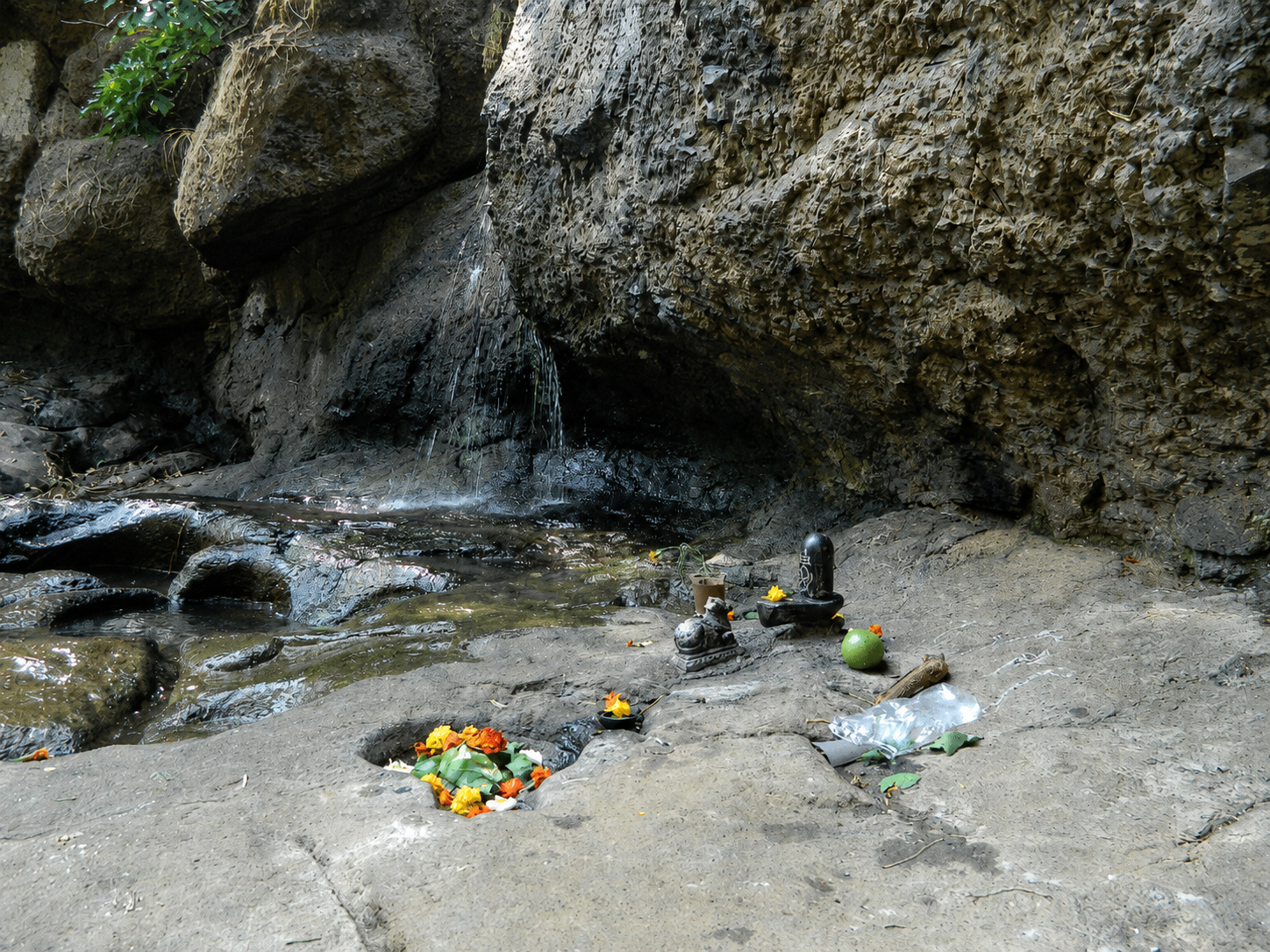
Tradition associates a hidden Shiva manifestation and continuous water flow with the forest site. Access duration depends on weather and current forest conditions.
A sacred-water and purification tradition associated by the Trust with Sage Kaushik. The one-kilometre figure is source-derived, not Trust-confirmed.
The Trust places Hanuman and Anjani Mata temples near this quiet forest lake. No swimming permission or safety claim is made.
Nagphani is reached through the wider forest route, with the Trust describing the final climb as about 500 m beyond Hanuman Lake. Total distance varies by starting point and trail.
A protected Western Ghats habitat. Check current rules and access; no safari, trail opening or wildlife sighting is guaranteed.
A construction-period-compatible plan that places darshan inside the current official morning window.
| Time | Route stop | Planning details |
|---|---|---|
| 6:30 AM | Arrival and access preparation | Reach the base area, review current barriers and prepare for the managed entry route. |
| 7:00–8:30 AM | Bhimashankar Jyotirlinga Darshan | Complete darshan inside the current temporary official window. |
| 8:30–9:00 AM | Breakfast | Pause before assessing the forest route and weather. |
| 9:15–9:45 AM | Moksha Kund | Short source-based sacred-water planning stop, subject to current construction access. |
| 10:00–11:00 AM | Gupt Bhimashankar forest route planning block | Access duration depends on the route, weather and current forest conditions. |
| 11:15 AM–12:00 PM | Hanuman Lake | Visit only when the forest route is permitted and conditions are suitable. |
| 12:00–1:00 PM | Lunch and rest | Rest and reassess afternoon weather and fitness. |
| 1:30–3:30 PM | Nagphani Point trek | Treat the duration as a planning block, not a guarantee; the final climb is route-relative. |
| 3:45–5:15 PM | Wildlife Sanctuary nature trail | Proceed only where access is permitted. No trail opening or wildlife sighting is guaranteed. |
| 5:30–6:00 PM | Return to the Bhimashankar base area | Return before concluding the forest circuit. |
| After 6:00 PM | Conclude the current construction-period circuit | No current evening Mandir access is advertised while the temporary restriction remains active. |
When the temporary Trust restriction is withdrawn, visitors may separately review the current official schedule before planning evening worship.
Traditional source-supplied Shiva offerings, subject to current Trust and sanctum instructions.
Do not assume that every item may be carried into the sanctum. Follow the current Trust queue and offering instructions.
Follow Trust controls at the Mandir and protected-area conduct on forest extensions.
Respect barriers, use permitted stairs and do not enter work zones.
Remove footwear where directed, maintain silence, avoid intoxicants and follow the managed queue.
Do not litter, feed or disturb wildlife. Stay on permitted routes and carry waste out.
Carry minimal valuables, check weather and use suitable footwear for uneven or slippery trails.
Current access, route and planning answers for a Bhimashankar visit.
Definitions for the source markers retained visibly on this page.