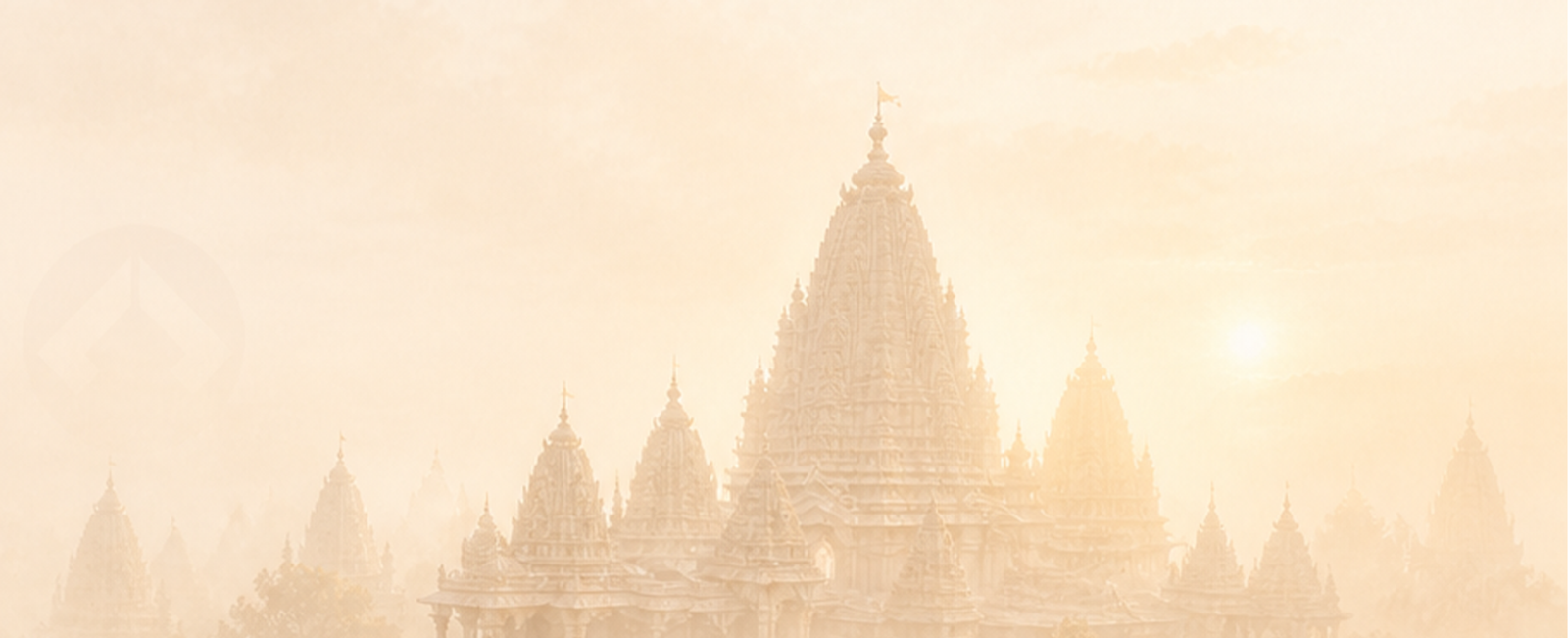
Lord Airavatesvara
The source-preserved principal identity for this temple is Lord Airavatesvara.
 Divine Mandir
Arulmigu Airavatesvara Temple, Darasuram, Kumbakonam, Thanjavur District, Tamil Nadu 612702, India
A Darasuram Lord Shiv temple centred on Lord Airavatesvara and Goddess Periya Nayaki, with a source-described Chola art-historical identity, stone chariot hall and musical steps.
Official Notice / Visitor Information: The supplied source lists 6:00 AM–12:30 PM and 4:00 PM–8:30 PM with an afternoon closure. Confirm current hours before travel.
Source: DM-SV-006-A_TN.docx. Current arrangements may vary.
Source-backed temple guide
Airavatesvara Temple stands in Darasuram near Kumbakonam. The source identifies Lord Airavatesvara as the presiding linga and Goddess Periya Nayaki as the associated deity.
The shrine name is connected in tradition with Airavata, the white elephant of Indra. Its sacred narrative and its Chola-period art history are presented as related but distinct kinds of evidence.
Exact temple identity
A Darasuram Lord Shiv temple centred on Lord Airavatesvara and Goddess Periya Nayaki, with a source-described Chola art-historical identity, stone chariot hall and musical steps.
The source-preserved principal identity for this temple is Lord Airavatesvara.
This sacred-form wording follows the exact temple source and is not generalised to the other batch temples.
The associated deity name is preserved exactly as supplied.
Temple-specific identity, not a generic substitute
The local temple name and presiding identity remain Lord Airavatesvara.
The sacred form is preserved exactly as Shiva linga of the Airavatesvara shrine.
The source situates the temple within Airavata sacred tradition and Chola temple-art identity.
Devotional narrative, carefully framed
Temple tradition recounts Airavata losing and regaining its white colour through Lord Shiv’s grace. A separate Yama narrative is associated with the Yamateertham.
These stories are presented as sacred tradition rather than used as dates for the surviving monument.
Source account and surviving fabric
Temple tradition recounts Airavata losing and regaining its white colour through Lord Shiv’s grace. A separate Yama narrative is associated with the Yamateertham.
The source attributes the temple to Chola ruler Rajaraja II in the twelfth century and describes construction beginning around 1146 CE with dedication around 1166. It places the monument within the Great Living Chola Temples heritage group.
Source-described temple form
The source describes a Dravida temple with a roughly 24-metre vimana, the chariot-form Rajagambhiran Tirumandapam with carved wheels and sundial details, seven musical steps, a forty-eight-pillar hall and finely scaled sculptural reliefs.
Follow the living temple’s current route
Approach from Local bus, auto-rickshaw or taxi from Kumbakonam to Darasuram. Remove footwear where directed, keep circulation clear and follow current security, photography and sanctum-access instructions.
The visitor-facing route does not grant access to restricted worship or heritage areas.
Six source-supported distinctions
A temple-specific feature documented in DM-SV-006-A_TN.docx.
A temple-specific feature documented in DM-SV-006-A_TN.docx.
A temple-specific feature documented in DM-SV-006-A_TN.docx.
A temple-specific feature documented in DM-SV-006-A_TN.docx.
A temple-specific feature documented in DM-SV-006-A_TN.docx.
A temple-specific feature documented in DM-SV-006-A_TN.docx.
Choose the planning path that fits your visit.
Visit fit
Best for temple-specific worship, tradition and architecture.
Plan darshanSeason and crowds
Festival periods may bring heavier crowds and altered access.
Compare visit periodsApproach
Local bus, auto-rickshaw or taxi from Kumbakonam to Darasuram.
Review the routeConfirm before visiting
Reconfirm opening, access, offerings, photography and local transport.
Use reference notesA practical four-step flow; current on-site directions take priority.
Plan the short onward trip to Darasuram.
Follow conservation and footwear instructions.
Keep worship routes clear and follow current access.
Observe the chariot hall and carved details without touching them.
Plan the final approach using the full temple address; travel times vary.
Source-listed daily opening periods with an afternoon closure.
Source-listed hours may change during festivals and local arrangements.
No separate current aarti time is asserted. Ask at the temple rather than transferring a schedule from another shrine.
Source-described temple observances
A festival or observance identified in the supplied source for Airavatesvara Temple, Darasuram. Confirm the current calendar and programme locally.
A festival or observance identified in the supplied source for Airavatesvara Temple, Darasuram. Confirm the current calendar and programme locally.
A festival or observance identified in the supplied source for Airavatesvara Temple, Darasuram. Confirm the current calendar and programme locally.
A festival or observance identified in the supplied source for Airavatesvara Temple, Darasuram. Confirm the current calendar and programme locally.
Open public remembrance in Roman transliteration
Om Namah Shivaya
Meaning: Salutation to Shiva.
Context: Public remembrance; lineage-specific initiated disciplines may add rules.
Om Mahadevaya Namah
Meaning: Salutation to Mahadeva, the Great God.
Context: No health, survival or guaranteed outcome is claimed.
Respectful participation
Temple worship centres on darshan of Lord Airavatesvara. Follow the priests’ and staff’s current instructions for queues, offerings and access.
Temple Agamic worship is not reproduced as a household procedure. No operational nyasa, bija, mudra, yantra activation, secret paddhati, consecration or fire-ritual instruction is published here.
Continue with five focused topics in the Lord Shiv hub.
Small, safe and temple-approved
Use only the items and offering points currently accepted by the temple.
Use small amounts of clean water or responsibly sourced flowers only when permitted; prevent waste and slippery floors.
Do not ingest dhatura, akanda, cannabis, mercury, unknown ash, powders or temple liquids.
Season, schedule and crowd planning
The source identifies this as the generally more comfortable visiting period.
May be easier outside festival peaks, but queue time is never guaranteed.
Choose a major festival for its devotional context while expecting crowd and access changes.
Optional source-described extensions
Distance: Approximately 5 km
An optional stop from the source-described local or regional circuit.
Open mapDistance: Approximately 5 km
An optional stop from the source-described local or regional circuit.
Open mapDistance: Approximately 8 km
An optional stop from the source-described local or regional circuit.
Open mapDistance: Approximately 40 km
An optional stop from the source-described local or regional circuit.
Open mapOptional route, not a compulsory ritual order
Begin with the main destination and current darshan route.
Approximately 5 km; include only if time, access and mobility allow.
Approximately 5 km; include only if time, access and mobility allow.
Before you enter
Source-based answers for visit planning
Source scope and editorial boundaries
Primary source for the temple’s identity, location, sacred traditions, timings, travel, festivals, architecture and nearby places.
Read-only source for public Roman-transliteration mantras, responsible offerings and restricted-practice boundaries.
Sacred narrative, history and art-historical statements remain distinct. Current arrangements are marked for local confirmation.