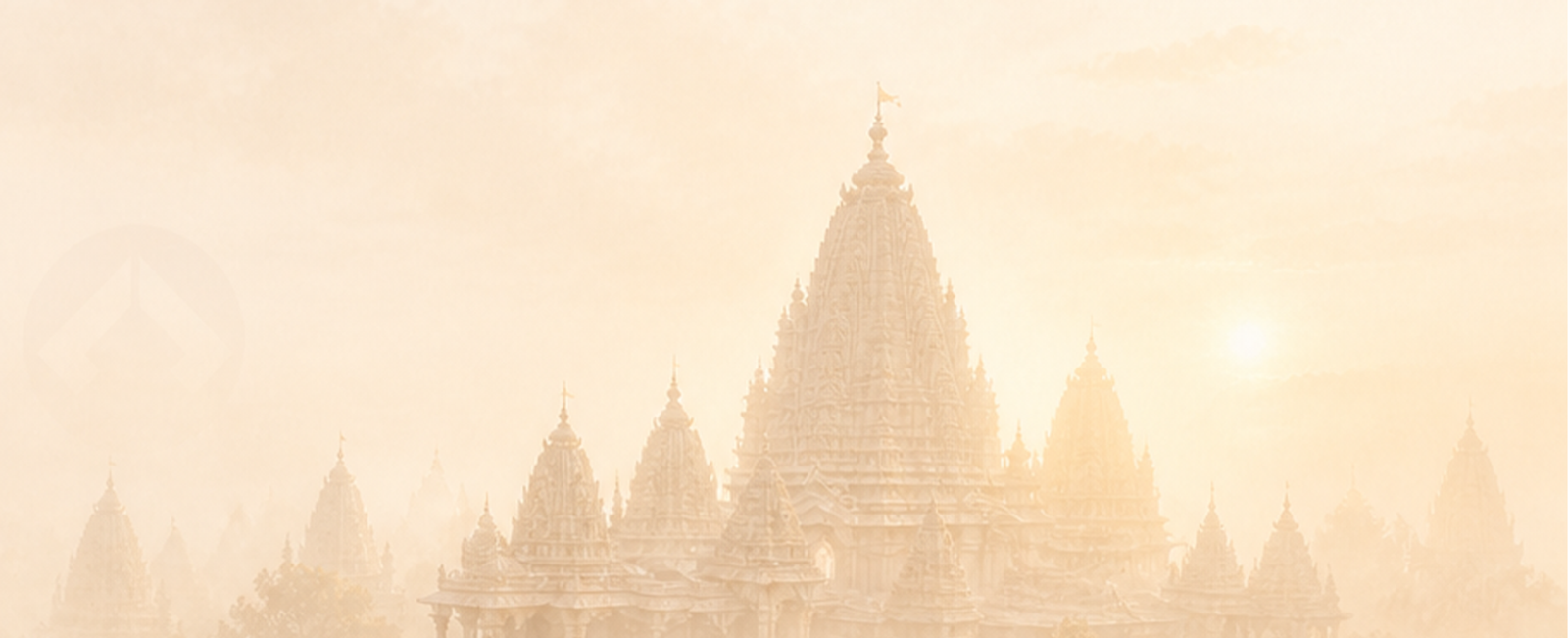
Principal Baladevjew
A 4.5-foot stone Manibigraha of Balarama is the temple’s main deity.
 Divine Mandir
Ichhapur, Kendrapara, Odisha, India
The principal Balarama shrine of Tulasi Kshetra, where the stone Manibigraha of Baladevjew is worshipped with Jagannath and Subhadra on the Ratna Sinhasana.
Official Notice / Visitor Information: The supplied source gives approximate opening and closing hours rather than a confirmed split schedule. Verify the day’s darshan and festival hours locally.
Source: DM-JN-005-A_OD.docx. Confirm time-sensitive details before travelling.
Ichhapur temple guide
Baladevjew Temple at Ichhapur is the principal sacred centre of Tulasi Kshetra in Kendrapara and is dedicated foremost to Lord Baladevjew or Balarama.
Jagannath and Subhadra share the Ratna Sinhasana, while local sacred narratives connect the temple with Tulasi, Kandarasura and the discovery of Siddha Baladev.
Source-defined sanctum identity
Lord Baladevjew, the Balarama form and elder brother of Jagannath, is the principal deity. The source describes a 4.5-foot stone Manibigraha, with Jagannath and Subhadra associated on the Ratna Sinhasana.
A 4.5-foot stone Manibigraha of Balarama is the temple’s main deity.
Jagannath and Subhadra are worshipped with Baladevjew on the Ratna Sinhasana.
The temple landscape is honoured as Tulasi Kshetra.
Identity and pilgrimage context
Baladevjew expresses Balarama’s identity as the elder brother of Jagannath/Krishna.
The regional title connects the shrine with Goddess Tulasi.
Local tradition remembers the sacred form as discovered near Siddha Sarobar.
Sacred narrative, carefully framed
Local sacred tradition tells of Balarama’s encounter with Kandarasura and connects the Kendrapara name with that narrative.
Another tradition recounts the marriage of Balarama and Tulasi and honours a Magha observance of Tulasi Bibaha.
Source-recorded temple chronology
The supplied record dates the present temple form to approximately 1761 CE.
The source associates construction with Kujanga, Chhedara and Maratha-era patrons.
Form, material and sacred setting
The complex follows an Odishan temple vocabulary.
Sri Mandir, Jagamohana, Mukhashala and Bhoga Mandapa form the core.
The source records a seven-tiered architectural element.
Baulamalia stone is named in the temple description.
Lakshmi, Tulasi, Navagraha and Sidheswar spaces form part of the complex.
The large festival chariot is a defining feature of the annual celebration.
What makes this temple distinct
Balarama—not Jagannath—is the presiding deity of this guide.
The source describes a 4.5-foot sacred stone form.
The temple anchors Kendrapara’s distinctive regional sacred identity.
The temple’s great chariot is associated with the annual Ratha Yatra.
The source highlights Rasabali in the temple’s food-offering tradition.
The local discovery narrative centres on Gopal Siddha Das.
Choose the planning path that fits your visit.
Visit fit
The principal Balarama shrine of Tulasi Kshetra, where the stone Manibigraha of Baladevjew is worshipped with Jagannath and Subhadra on the Ratna Sinhasana.
Typical duration: Allow 1–2 hours for the main and associated shrines.
Plan the sequenceSeason and crowds
Generally the most comfortable period in coastal Odisha.
Compare visit periodsMobility and family care
This is a Baladevjew-centred temple guide. Do not reverse the source identity by presenting Jagannath as the principal deity.
Review access guidanceConfirm before visiting
The supplied source gives approximate opening and closing hours rather than a confirmed split schedule. Verify the day’s darshan and festival hours locally.
Use reference notesA practical eight-step flow. Current on-site directions always take priority.
Begin with the current entrance and access directions.
Continue quietly and follow current temple directions.
Continue quietly and follow current temple directions.
Continue quietly and follow current temple directions.
Continue quietly and follow current temple directions.
Continue quietly and follow current temple directions.
Continue quietly and follow current temple directions.
Leave circulation areas clear and continue to optional nearby places only if time allows.
Baladevjew Temple, Babar Bijaynagar Kendrapara Road, Ichhapur, Kendrapara District, Odisha 754212, India.
Source-recorded visitor periods with local confirmation required.
The supplied source gives approximate opening and closing hours rather than a confirmed split schedule. Verify the day’s darshan and festival hours locally.
Daily ritual names and broad periods are source-recorded; ask at the temple for the current sequence and public access.
Source-described annual observances
The Brahma Taladhwaja chariot is central to the annual car festival.
The deities receive the annual ceremonial bath.
The source associates the period with Balarama’s birth observance.
A distinctive local marriage festival is observed in Magha.
Respectful personal participation
Begin with the principal Balarama form on the Ratna Sinhasana.
Follow the current route and instructions for the associated Tulasi shrine.
Morning and evening worship are described in the supplied source.
No unverified mantra from the source DOCX is reproduced on this page.
Temple-centred practice
Baladevjew darshan: Begin with the principal Balarama form on the Ratna Sinhasana.
Tulasi reverence: Follow the current route and instructions for the associated Tulasi shrine.
Daily arati and dhupa: Morning and evening worship are described in the supplied source.
Continue with five focused topics in the Lord Jagannath hub.
Confirm current arrangements
The sweet is highlighted in the temple’s prasadam tradition.
Confirm the current accepted devotional offerings before presenting them.
Use only current temple-managed food-service arrangements.
Season and crowd planning
Generally the most comfortable period in coastal Odisha.
Choose the chariot festival for the temple’s defining public celebration.
A practical time for the principal and associated shrine circuit.
Source-listed extensions for practical planning
Approximately 5 km. The district centre and local transport base.
Open mapNear the temple region. A river linked to local temple narratives.
Open mapNear the temple. The sacred tank associated with discovery of the deity.
Open mapNearby. An associated local shrine of Goddess Tulasi.
Open mapApproximately 40 km. A regional heritage extension.
Open mapApproximately 50 km. A mangrove and wildlife landscape in the wider delta region.
Open mapA compact suggested route around this visit.
This is a suggested visitor route, not an official compulsory pilgrimage order. Reorder stops according to current access, weather and personal mobility.
Before you enter
Source-bound answers for visit planning.
Source material used for careful framing.
DM-JN-005-A_OD.docx is the primary source for identity, coordinates, elevation, timings, history, traditions, travel and nearby-place material.
The document’s recorded website list provides its research context; this page does not add outside factual claims.
Opening hours, access, transport and festival arrangements can change and should be reconfirmed.
Source path: data/Jagannath-mandir/Batch-01-Temple-Data/DM-JN-005-A_OD.docx