Verify today’s official schedule before arrival • major
crowd during Vinayaka Chaturthi and peak devotional windows •
🔔 Aarti / Live: Daily pooja
⏳Avg Darshan Time: varies by crowd and
security flow
✨Best time
today: early morning on a normal
weekday
🚶Final access: traditional mandir
entry with queue and security guidance
💡First visit? carry minimal items and
confirm pooja timing or abhishek reporting
Mandir pattern: weekday mornings may be
smoother
• Peak: Vinayaka Chaturthi / festival dates
Ancient Rock-cut Ganesh Ji MandirVerification: To be
verified
Pillayarpatti Mandir
Pillayarpatti, Tamil Nadu
★Deity: Lord Ganesha as Karpaga Vinayagar
Pillayarpatti Mandir is one of Tamil
Nadu’s important ancient Ganesh Ji mandirs, known for its rock-cut
Karpaga Vinayagar shrine, Pandya-era heritage, Vinayaka Chaturthi
devotion, and traditional mandir worship.
Devotion here is strongly linked with wealth,
prosperity, wisdom, obstacle removal, family prayer, and the sacred
presence of Karpaga Vinayagar in an ancient Tamil mandir
setting.
Mandir schedule, abhishek reporting rules, dress
expectations, rail transfer details and festival crowd advisories
should be rechecked from official mandir sources before the
visit.
Meaning of Karpaga Vinayagar
Wish-giving Lord Ganesha linked
with prosperity and wisdom
Karpaga refers to the wish-giving
divine tree, and Vinayagar is Lord Ganesha. Karpaga Vinayagar
is worshipped as Lord Ganesha who grants blessings, prosperity,
wisdom, and fulfilment of sincere prayers.
Karpaga refers to the wish-giving divine tree,
and Vinayagar is Lord Ganesha. Karpaga Vinayagar is worshipped as Lord
Ganesha who grants blessings, prosperity, wisdom, and fulfilment of sincere
prayers.
For devotees, Karpaga Vinayagar
represents Lord Ganesha approached for prosperity, wisdom, family grace,
and the fulfilment of sincere prayers.
Name and spiritual
meaning
Karpaga Vinayagar is understood as a wish-giving form of
Lord Ganesha who is approached for blessings before major
life decisions, family milestones, study, business effort
and new beginnings.
For many devotees in Tamil Nadu and beyond, the deity
represents prosperity, wisdom, protection, wealth blessings
and heartfelt prayer offered with sincerity. That living
association is one of the strongest reasons the mandir holds
such enduring public devotion.
Meaning
Wish-giving divine identity
Karpaga refers to the wish-giving divine tree, shaping the
mandir’s spiritual meaning for devotees.
Prosperity
Blessings and wisdom
Devotees approach Karpaga Vinayagar here for prosperity,
wisdom and guidance before important beginnings.
Living belief
Protection and obstacle removal
Karpaga Vinayagar is widely approached for heartfelt prayer,
protection and the removal of obstacles.
Quick Decision Box
Choose the darshan style that fits your
visit before you enter local transfer routes and mandir queues.
First-Time Visitor
Recommended for most
devotees
Simple Darshan Planning
Best for a smooth
mandir visit with fewer moving parts.
Understanding
Pillayarpatti Mandir’s place in ancient Tamil Ganesh Ji
devotion, Pandya heritage, and Vinayaka Chaturthi worship.
An
ancient rock-cut Ganesh Ji mandir and one of Tamil Nadu’s
important devotional shrines
Recognized for Karpaga
Vinayagar, the rock-cut sanctum, and strong devotee
faith
Pandya-period heritage and
Vinayaka Chaturthi devotion shape the mandir’s
identity
Traditional Tamil mandir
atmosphere, family devotion, and daily worship remain at
the heart of the experience
Pillayarpatti Mandir is among the best-known Ganesh Ji shrines in
Tamil Nadu and is especially valued for its ancient rock-cut
character, Karpaga Vinayagar identity, and long devotional
continuity. The mandir attracts local worshippers, families and
spiritual travelers who come seeking Lord Ganesha’s blessings
before important steps in life.
Its identity is strongly tied to the carved sanctum, Pandya-period
heritage, festival devotion, and the traditional worship atmosphere
that surrounds the mandir. That gives Pillayarpatti Mandir a
distinctive place in Tamil Nadu’s Ganesh Ji devotional
landscape.
Pillayarpatti Karpaga Vinayagar Belief and Devotee Faith
Devotion here centers on prosperity,
protection, wish fulfilment, new beginnings, and Lord Ganesha’s
grace in removing obstacles.
Devotees come to Pillayarpatti Mandir
with the belief that Lord Ganesha blesses sincere effort, protects
families, supports prosperity, and helps new beginnings move forward with
grace.
Prosperity and prayer
Lord Ganesha is approached here for prosperity, protection,
wise decisions, and a clear path before important efforts.
Devotees often pray before examinations, business starts,
family milestones, travel, and other turning points in life.
The mandir is also closely connected with wish fulfilment,
family grace, wealth blessings and obstacle removal. That
devotional pattern gives Pillayarpatti Mandir a strong
place in Tamil Nadu’s living Ganesh Ji faith.
Protection
Obstacle removal
Lord Ganesha is invoked before important actions so the path
opens with fewer obstacles.
Wisdom and prosperity
Prayer before action
Many devotees seek clarity, blessings, success, and the
right direction before major decisions.
Wish fulfilment
Family and life milestones
Business starts, new homes, family prayers, and fresh
beginnings are commonly connected with Pillayarpatti Mandir
darshan.
Mandir History
The mandir is associated with ancient
Pandya-period rock-cut mandir tradition and is often dated around the
early centuries CE, with this page using 5th CE as the working reference.
Exact historical details should be verified from official mandir
sources.
Pillayarpatti Mandir is widely
associated with ancient Pandya-period devotional history and an early
rock-cut mandir tradition, with 5th CE used here as the approximate
reference pending source verification.
Ancient Tamil devotional
note
The mandir is associated with ancient Pandya-period rock-cut
mandir tradition and is often placed in the early
centuries CE. For this page, the working note uses 5th CE
in line with the provided reference while recognizing that
exact historical details should still be verified from
official mandir sources.
Over time, Pillayarpatti Mandir became one of Tamil
Nadu’s most recognized Ganesh Ji shrines because of its
carved sanctum, Karpaga Vinayagar identity, and long
continuity of family and festival devotion.
Year Approx
5th CE
The page uses 5th CE as the approximate working reference
pending source verification.
Ruling period
Pandya
The mandir is associated with the Pandya-period rock-cut
devotional tradition.
Continuity
Ancient Tamil devotion
The mandir’s importance continues through traditional
worship, family devotion and festival observance.
Architecture & Design
Pillayarpatti Mandir is shaped by a rock-cut
shrine, ancient Tamil mandir design, carved sanctum character, traditional
mandapa atmosphere, and visible Pandya heritage.
The mandir is generally described
through its carved sanctum, traditional worship atmosphere, rock-cut
identity, and long-standing Tamil devotional character.
Mandir character
Pillayarpatti Mandir is best understood as an ancient
devotional shrine shaped by its rock-cut sanctum, carved
stone character, mandapa atmosphere and traditional Tamil
mandir worship. The experience feels rooted in heritage
rather than in a later urban mandir pattern.
The design identity is centered on Karpaga Vinayagar, the
sanctum, the surrounding devotional spaces, and the
continuity of worship that connects architecture with living
faith.
Style
Rock-cut shrine
The mandir is known for its rock-cut sanctum and ancient
Tamil architectural identity.
Interior focus
Carved sanctum character
The worship flow emphasizes the sanctum, the deity, and the
mandir’s ancient stone devotional presence.
Atmosphere
Traditional mandapa devotion
The mandir atmosphere feels traditional, ancient and
heritage-centered, especially during active worship
seasons.
Spiritual Importance
Pillayarpatti Mandir is approached for wealth
blessings, wisdom, obstacle removal, family well-being, and fresh
beginnings.
The mandir holds strong devotional
value for prosperity, family blessings, business prayers, Vinayaka
Chaturthi worship, and Tamil Nadu’s wider Ganesh Ji tradition.
Faith and daily prayer
Pillayarpatti Mandir is spiritually important because
Karpaga Vinayagar is invoked at moments of uncertainty,
transition and prayerful hope. Devotees come seeking
prosperity, wealth blessings, wisdom, obstacle removal,
practical success, peace at home, new ventures and steady
family grace.
Vinayaka Chaturthi intensifies that devotional identity, but
the mandir’s importance is visible year-round in the
steady stream of worshippers who approach Lord Ganesha
before major milestones. That pattern gives Pillayarpatti
Mandir a strong place in Tamil Nadu’s Ganesh Ji
tradition.
Wealth,
prosperity and blessing-centered devotion
Obstacle
removal and wiser decision-making
Prayer
before business, career, study or life beginnings
Family,
prosperity and long-term blessings
Vinayaka
Chaturthi as the mandir’s major devotional
season
Prayer focus
Wealth and obstacle removal
Devotees come seeking clarity, prosperity and an easier path
through difficulty.
Life milestones
Wisdom and new beginnings
The mandir is often visited before new ventures, study,
travel or family decisions.
Festival energy
Vinayaka Chaturthi
The biggest devotional surge comes during the Lord Ganesha
festival cycle.
Darshan Process
A quick step-by-step flow from arrival to
exit.
Average total time: depends on
crowd, security and festival conditions
Visitor Guidance
1
Reach Mandir Area
Arrive in the mandir
area through the approved Pillayarpatti access route.
2
Clear Security
Follow current
screening, item-check and mandir entry instructions.
3
Join Queue
Move into the assigned
queue lane and keep offerings or booking proof ready if
required.
4
Enter Darshan Line
Follow the final guided
movement toward the sanctum as directed by mandir staff.
5
Take Darshan
Take darshan calmly,
offer prayer and follow the sanctum pace without blocking
the line.
6
Follow Exit Flow
Continue through the
managed exit route toward the local road or pickup area.
A simple 3-step journey to Pillayarpatti Mandir,
Tamil Nadu
1
Step 1
Reach the City
Choose the most convenient way to reach the region before
planning your local transfer to the mandir area.
Air
Madurai Airport
Primary air gateway for outstation devotees
Rail
Karaikudi / nearby rail access
Exact final access guidance should be verified
Road
Pillayarpatti road access from Karaikudi / Sivaganga region
Use taxi, app cab or city transport depending on your route
Pillayarpatti is typically reached through Tamil Nadu road and rail connections across southern
India.
2
Step 2
Local Transfer
Continue from the airport, station or stay toward the
Pillayarpatti mandir zone.
Taxi / App Cab
Practical for most devotees
Traffic conditions can affect travel time sharply
Local Rail + Last Mile
Common rail-plus-road pattern
Exact station, walking and transfer guidance should be verified
Road Transfer
Auto / taxi / private drop-off
Best planned with local traffic conditions in mind
Travel Time
Highly traffic-dependent
Leave extra buffer time for regional road transfer and festival movement
Most visitors rely on road transfer and a controlled last-mile mandir
entry.
3
Step 3
Final Mandir Access
Expect local traffic management, queue entry and security rules
before final darshan access.
Final Access
Queue-managed entry route
Exact walking and approach setup should be verified
Security
Mandatory screening before mandir entry
Rules can change depending on crowd and festival dates
Queue Control
Mandir flow is actively managed
Festival crowd can extend wait times significantly
Booked Pooja Entry
Reporting instructions vary
Confirm current pooja or abhishek reporting rules in advance
Keep the last-mile plan flexible because crowd management can change during the
day.
Important Travel Note: Final local traffic, security, and queue entry
arrangements should be verified before you leave. Road transfer time can vary
significantly, especially on festival dates or heavy traffic days.
Current
timings should be verified, especially before a puja-dependent or
festival-day visit.
Verification Pending
Some exact time windows on
this page remain to be verified.
Mandir StatusCHECK
TODAYUse official mandir sources to confirm
the active opening window before travel.
Today’s
TimingTo be verified
Daily poojaDaily poojaSchedule and
live access should be checked on the day of visitBest Darshan WindowTo be verifiedNormal weekday mornings may feel
smoother.Crowd ExpectationFestival dependentVinayaka Chaturthi and major pooja periods are
usually the busiest.Mandir
ClosesTo be verifiedUse current
official schedule
Daily
Entry
Mandir Timings
Mandir OpensTo be verified
Best Darshan WindowTo be verified
General DarshanEarly morning –
late night
Aarti
/ Live DarshanAarti +
Live
Mandir
ClosesTo be verified
Main
Rituals
Daily Pooja Schedule
Mandir
opensTo be verified
Live
darshanAarti
+ Live
Best
darshan windowTo be verified
Current
guidanceWeekday
early morning may be smoother
The illustrated DivineMandir guide covers story and significance, welcoming Ganesh Ji home, puja preparation, samagri, daily worship, offerings, visarjan, and 102 practical questions and answers.
Pillayarpatti Mandir booking planning is
most relevant for Abhishek, daily pooja requests, and any darshan path
that depends on reporting time.
Booking Required: Yes
Abhishek and daily pooja are the
main planning reasons to verify Pillayarpatti Mandir booking steps before
arrival.
Main pooja type
Abhishek
Abhishek is the main reference on this page and should be
planned through approved mandir guidance.
BookingYes
Current ruleTo be verified from
official mandir source
ReportingArrive with time
buffer if a slot is confirmed
Daily worship
Daily pooja
Devotees seeking a more focused offering beyond normal
darshan should verify current pooja availability and
process.
BookingUsually planned in
advance
Rule statusTo be verified
Best practiceDo not assume
same-day availability
Festival caution
Festival and high-demand dates
Vinayaka Chaturthi or other high-demand days can change the
practical value of a normal plan, so timing and entry
rules should be confirmed again closer to the visit.
Crowd noteQueue intensity can
change quickly
Timing noteReporting buffer is
important
VerificationUse official
updates for the active day
Current rules
Booking and reporting process
The safest approach is to verify the present booking
method, reporting time, ID requirements and any item
restrictions directly from the mandir’s official
communication.
For Pillayarpatti Mandir, crowd pattern matters as
much as season because this is a traditional mandir with steady
year-round
devotion.
Major festival period
Vinayaka Chaturthi
This is the most important and most crowded devotional period
for Pillayarpatti Mandir.
Smoother daily option
Normal weekday mornings
Early morning on a regular weekday may be more manageable for
devotees who want a calmer visit.
Crowd pattern
To be verified
Exact daily and seasonal crowd behavior should be confirmed
closer to the visit date.
Nearby Mandirs & Spiritual Circuit
Suggested nearby spiritual stops around Pillayarpatti and the wider Tamil Nadu circuit.
Distances, route order, and local access details should be verified
before making a same-day plan.
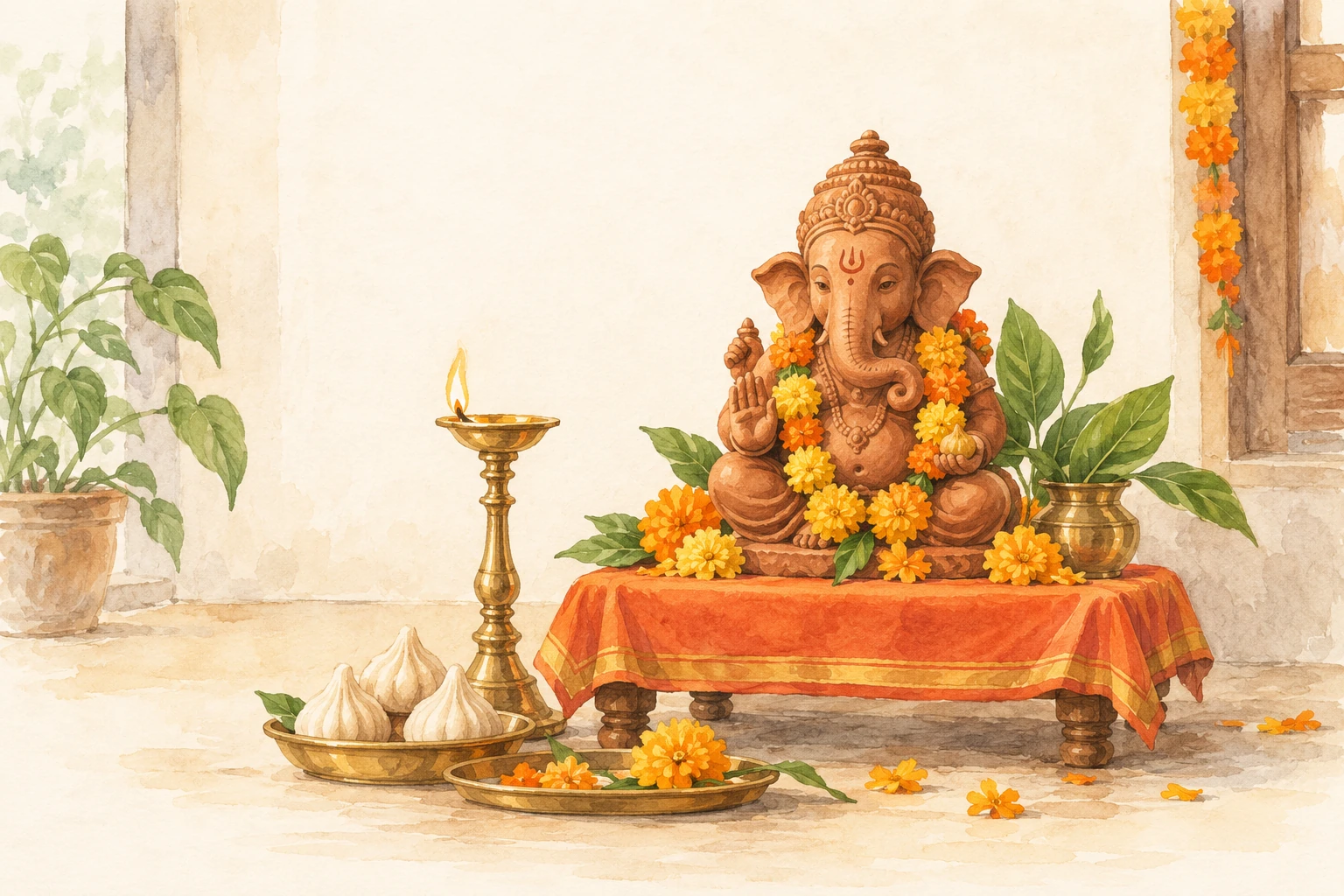
Offerings at Pillayarpatti Mandir are
simple, familiar and devotional, with kozhukattai, coconut and
flowers remaining common references for Karpaga Vinayagar worship.
Kozhukattai, coconut, flowers and
possibly durva grass are the main offering references for this page,
though current carry-in rules should be verified.
Kozhukattai
Kozhukattai is the familiar prasadam reference for
Lord Ganesha and remains spiritually associated with
Pillayarpatti Mandir darshan.
Coconut
Coconut is a common offering for Lord Ganesha and is
often carried by devotees where current mandir rules
permit it.
Flowers
Flowers are easily associated with local purchase
and simple darshan offerings near traditional
mandir approaches.
Durva Grass
Durva is traditionally linked with Lord Ganesha, but
devotees should verify before carrying it into the
mandir zone.
Offering Preview
Kozhukattai
Active offering
Kozhukattai
Coconut
Active offering
Coconut
Flowers
Active offering
Flowers
Durva
Active offering
Durva Grass
Before You Visit (Important Tips)
Short reminders that help city-mandir
darshan stay smoother.
Avoid These Mistakes
Do
not assume daily timing without verifying the current
schedule.
Do
not underestimate festival crowd
intensity.
Avoid
carrying extra items unless current security rules are
clear.
Helpful Tips for Smooth Darshan
Carry
minimal items and keep offerings simple.
Plan
extra time for traffic and security before booked
puja.
Choose
an early morning weekday if you want a calmer
experience.
Before You Visit
A little planning before you leave for the
mandir usually makes a Pillayarpatti darshan day much calmer.
Arrival checklist
Prepare these basics before entering the mandir zone
Verify darshan
timing from the official source before you
leave.
Carry minimal
items to make security checks easier.
Expect larger
crowd movement during Vinayaka Chaturthi and other
peak devotional dates.
Check booking
status before planning any paid puja.
Keep time
buffer for traffic, queue management and local
transfer.
Use
traditional or respectful clothing suited for a city
mandir visit.
Planning note
Traffic and queue control matter as much as the mandir
timing itself
Pillayarpatti Mandir planning is not only about the schedule. The
city transfer, security line and high devotional demand can
shape the visit just as much.
Dress Code & Allowed Items
Respectful, traditional or modest clothing
usually keeps the darshan experience smoother than carrying extra
items.
Traditional or respectful clothing
is the safest choice, while phone, bag, security and offering rules
should be checked before arrival.
Clothing
Traditional / respectful dress
Mandir-appropriate attire is the most reliable choice for
darshan lines and puja participation.
Traditional or
respectful clothing is recommended.
Choose
comfortable clothing for waiting and city
travel.
Restricted items
Phone / bag / security rules
Security restrictions may vary depending on crowd
control, festival management and mandir instructions.
Phone and bag
rules are to be verified.
Security
expectations can change on high-demand
days.
Offerings
Carry only what is currently allowed
Simple offerings work best, but current carry-in rules
should still be verified before you bring items into the
mandir zone.
Offerings allowed:
to be verified.
Durva grass
is spiritually appropriate but should be
verified before carrying.
Accommodation Near Mandir
Stay choice affects how easy an early
Pillayarpatti Mandir darshan day feels, especially when road transfer is part
of the plan.
Guest house stay near the mandir area
or a Karaikudi stay base are the most practical planning references,
depending on your travel route.
Best area to stay
Stay near your darshan route
Choose a hotel base that reduces transfer friction before
an early mandir visit.
Mandir guest house /
nearby stay
Useful for mandir-side planning
These are often the most practical references when
Pillayarpatti Mandir is the main focus of the day.
Karaikudi base
Works for mixed regional itineraries
This can suit travelers combining mandir visits with a
wider Karaikudi / Sivaganga schedule.
Budget and comfort
Balance rate and transfer time
The best hotel choice is often the one that reduces local
traffic stress rather than only lowering the room cost.
Convenience note
Verify traffic and transfer time before choosing a hotel
Nearby stays that look close on a map may still involve longer
transfer times depending on traffic and the time of day.
Official Info & Booking Help
Official confirmation matters most for
booking process, reporting time and day-specific darshan rules.
The official mandir source should
be checked before depending on any puja slot, live access assumption or
crowd-sensitive travel plan.
Where to confirm
Official mandir source
Mandir scheduleCheck official
mandir information
Booking processConfirm the
current procedure before payment or
travel
Reporting timeTo be verified
Before you depend on a
plan
Recheck active rules
Darshan timingTo be verified
Phone / bag rulesTo be verified
Festival accessCan change with
crowd control
Verification note
Use this page as a planning guide, not as the final legal
schedule
Exact daily timing, live access, booking process and reporting
instructions should be verified with the mandir’s current
official communication before you travel.
Mandir Location
Use this location snapshot for travel
planning around Pillayarpatti access, transfer time, and the final mandir queue
approach.
CityPillayarpatti
StateTamil Nadu
DeityLord Ganesha as Karpaga Vinayagar
SpecialityRock-cut
FestivalVinayaka Chaturthi
Rail AccessKaraikudi / nearby rail access, exact station and transfer to be
verified
AirportMadurai Airport
AccommodationGuest house / Karaikudi stay options nearby
AccessLocal mandir entry, queue and festival crowd rules should be
verified
Live Darshan Preview
Internal worship accessUse Divine Mandir live darshan for the current viewing
route.
Daily pooja access
Pillayarpatti Mandir Daily Pooja
This sidebar card keeps worship access discoverable while directing
current viewing help through the Divine Mandir live section.
Daily pooja / live
availability should still be verified for the day you visit.
Pillayarpatti Mandir is famous for its
ancient rock-cut Karpaga Vinayagar shrine, Pandya-era
heritage, Vinayaka Chaturthi devotion, and traditional mandir
worship.
Normal weekday mornings may be smoother
for many devotees, while Vinayaka Chaturthi is the major festival
period. Exact crowd pattern should still be verified before the
visit.
Yes, this page treats Abhishek and
pooja planning as booking-dependent. The current booking and
reporting rules should be verified from the official mandir
source before travel.
Kozhukattai, coconut and flowers are common
offerings, while durva grass may also be appropriate for Lord
Ganesha. Current entry rules should be verified before carrying
items.