
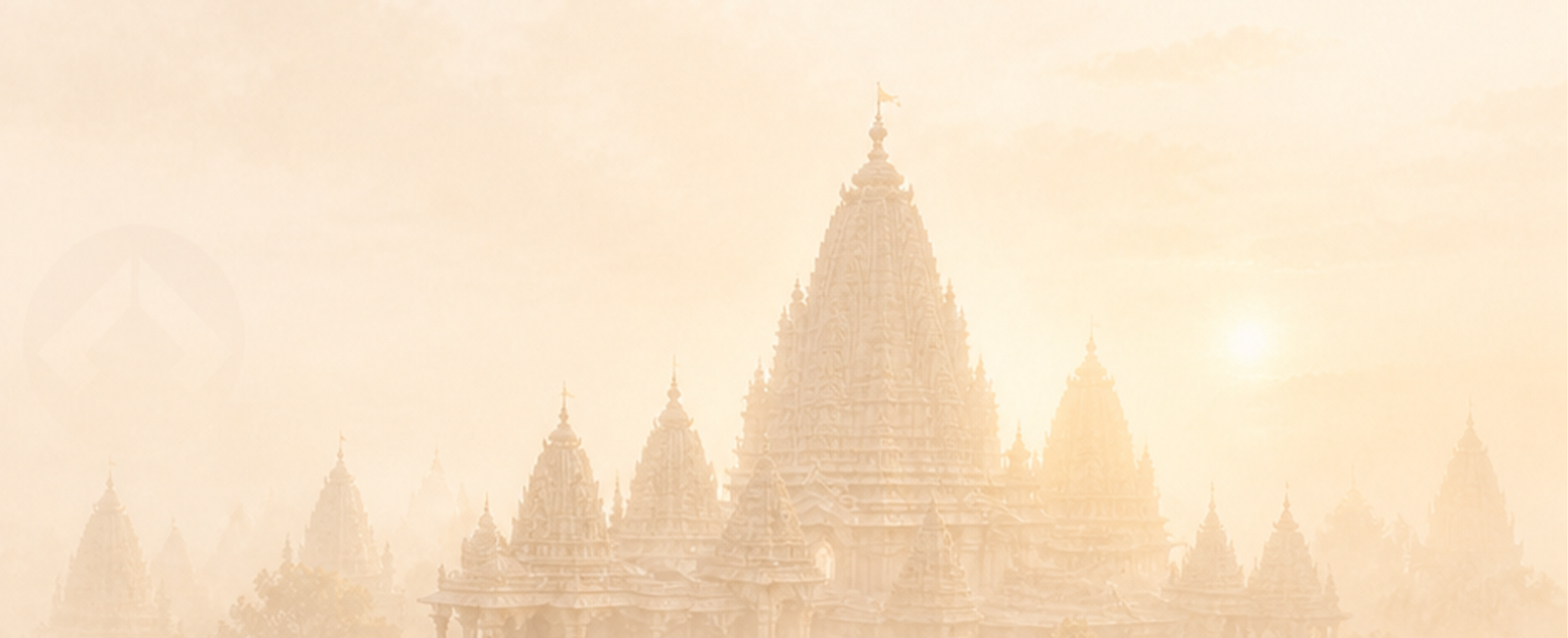
Vedanarayana Perumal
The principal deity, a form of Vishnu, worshipped with Sridevi and Bhoodevi.
Valayapettai Agraharam, Kumbakonam, Thanjavur District, Tamil Nadu, India
Sri Vedanarayana Perumal Temple, locally associated with Brahma Koil Street, is a Vishnu-primary complex centred on Lord Vedanarayana Perumal with Sridevi and Bhoodevi. It also contains a separate Brahma shrine with Saraswati and Gayatri, a Vedavalli shrine and a Yoga Narasimha shrine.
Official Notice / Visitor Information: Current temple hours are not publicly confirmed. Two published schedules conflict, so verify opening and service availability locally before travelling.
The page describes one Vishnu-primary temple complex; facts from the adjacent Varadaraja temple are not merged into this identity.
One Vishnu-primary complex with three aligned sacred units
Sri Vedanarayana Perumal Temple stands on Brahma Koil Street in Kumbakonam. Lord Vedanarayana Perumal, a form of Vishnu, is the principal deity and is worshipped with Sridevi and Bhoodevi; Vedavalli is also part of the temple's sacred identity.
A separate Brahma shrine presents Brahma with Saraswati and Gayatri, while another unit is dedicated to Yoga Narasimha. The Brahma presence is prominent, but it does not make Brahma the presiding deity of the whole complex.
The reviewed sources disagree on daily opening ranges and do not provide a current official operational notice. Visitors should confirm locally and avoid importing timing or management details from the adjacent Varadaraja temple.
Lord Vedanarayana Perumal at the centre
Lord Vedanarayana Perumal is the principal deity and is accompanied by Sridevi and Bhoodevi. This Vishnu-centred identity governs the title, introduction and interpretation of the complex.
The temple also includes Vedavalli, a separate Brahma shrine with Saraswati and Gayatri, and a Yoga Narasimha shrine. These forms create a distinctive sacred ensemble without changing the principal-deity hierarchy.
The principal deity, a form of Vishnu, worshipped with Sridevi and Bhoodevi.
The goddess associated with the temple's Vishnu-centred sacred identity.
A separate unit presenting Brahma with Saraswati and Gayatri.
A distinct shrine for the yogic form of Narasimha within the same complex.
Veda restoration within a Vishnu-centred temple tradition
The sacred name places Vishnu in relation to the Vedas and their preservation or restoration.
Temple tradition connects Brahma's worship with recovery of the Vedas and renewed creative knowledge.
Vishnu, Brahma, the goddesses and Yoga Narasimha are encountered through distinct shrines, not a blended principal identity.
Brahma, the Vedas and attributed local details
Temple tradition says Brahma undertook penance and recovered knowledge of the Vedas through Lord Vishnu's grace. The account supports the name Vedanarayana and the temple's Vishnu-primary character.
Some visitor and field accounts attribute unusual details to the Brahma form, including a nose stud, a mirror and symbolism concerning a fifth head. These are presented only as attributed accounts, not independently settled facts.
The Arasilar River association and the temple's position within Kumbakonam's dense sacred landscape connect the complex to a broader pilgrimage geography.
Mahamaham Tank is nearby, but this page does not publish a future Mahamaham year or imply that every tank festival programme belongs to this temple.
An unsettled chronology handled without invention
The reviewed material does not establish one dependable construction year or founder for the complete complex.
The three-unit arrangement and vimana forms provide a more reliable descriptive baseline than unsupported dating.
Recent field accounts help distinguish this complex from neighbouring shrines while remaining secondary evidence.
Current worship continues, but present management, services and festival dates require local confirmation.
Three shrine units on a common base
The principal and subsidiary sacred units are described as standing on a common architectural base.
The Vedanarayana Perumal sanctum carries a two-storey or dvi-tala vesara vimana in the reviewed field description.
The separate Brahma shrine is described with a single-storey or eka-tala form.
The Yoga Narasimha shrine forms the corresponding southern single-storey unit.
Read the complex as related but distinct shrines
Approach from Brahma Koil Street behind the Ramaswamy Temple area. Old-town lanes may require a short walk from a practical vehicle stop.
Within the complex, begin with the principal Vedanarayana Perumal sanctum and follow local routing to Vedavalli, the separate Brahma shrine and Yoga Narasimha.
The reviewed material supports north and south positions for the Brahma and Yoga Narasimha architectural units, but visitors should follow the route open on the day rather than treating this as a mandatory ritual direction.
A rare conjunction without a confused hierarchy
Lord Vedanarayana Perumal with Sridevi and Bhoodevi remains the centre of the temple.
A separate shrine presents Brahma with Saraswati and Gayatri.
A distinct southern unit expands the temple's Vishnu-centred iconographic range.
The temple sits close to Ramaswamy Temple, Adi Kumbeswarar Temple and Mahamaham Tank.
Choose the planning path that fits your visit.
BEST FOR
Visitors who want to understand Brahma's shrine within a clearly Vishnu-primary sacred complex.
See the sacred formsTIME TO ALLOW
Allow time for all principal and subsidiary shrines, plus the walk through old-town lanes.
Plan the sequenceMAIN CONSTRAINT
Published opening ranges conflict, so verify the active morning or evening session locally.
Review timing notesIDENTITY CHECK
Keep the adjacent Varadaraja temple separate when asking directions or interpreting temple details.
Review the approachA practical eight-step flow. Current on-site directions always take priority.
Verify the current morning or evening session locally before setting out.
Approach behind the Ramaswamy Temple area and use a practical old-town vehicle stop.
Ask specifically for Vedanarayana Perumal Temple or Brahma Koil, not the adjacent Varadaraja temple.
Recognise Lord Vedanarayana Perumal with Sridevi and Bhoodevi as the principal sacred focus.
Follow the shrine sequence and access permitted by temple staff.
See the separate Brahma form with Saraswati and Gayatri without relabelling the whole complex.
Complete the internal ensemble where access and time allow.
Walk to one nearby sacred place only if its independent hours and your available time are suitable.
The temple is within central Kumbakonam, a short onward journey from the railway station and bus facilities, with a final approach through old-town streets.
The page describes one Vishnu-primary temple complex; facts from the adjacent Varadaraja temple are not merged into this identity.
The two published ranges are displayed as conflicting source claims, not as a combined or guaranteed schedule.
No current official operating notice was identified in the reviewed material.
Confirm the active session locally before travelling, especially on festival or maintenance days.
Vishnu-centred observances require current local confirmation
Current annual dates and services are not publicly confirmed in the reviewed material; request the active calendar locally.
Festival interpretation should begin with Vedanarayana Perumal as principal deity rather than treating the complex as Brahma-primary.
The nearby tank can bring wider pilgrimage activity to Kumbakonam, but no future Gregorian festival year or temple-specific programme is asserted here.
Opening extensions, processions and shrine access can change by observance, so current temple guidance is essential.
These clear plain-Roman formulas are for general personal devotion. The Vishnu mantra reflects the principal deity, while the Brahma formulas relate to the separate shrine; none is claimed as the temple's complete fixed liturgy.
Om Prajapataye Namah
Meaning: Salutations to Prajapati, the lord of created beings.
Context: A general Brahma prayer for quiet devotion near the separate Brahma shrine, subject to temple guidance.
Om Aim Hreem Kleem Sah Om Prajapataye Namah
Meaning: A seed-syllable invocation offering reverence to Prajapati.
Context: A general Brahma devotional formula; no fixed local usage or guaranteed result is claimed.
Om Namo Narayanaya
Meaning: Salutations to Lord Narayana.
Context: Included because Lord Vedanarayana Perumal, a form of Vishnu, is the principal deity of this temple.
A Vishnu-centred sequence with separate sacred forms
The primary darshan belongs to Lord Vedanarayana Perumal with Sridevi and Bhoodevi in this Vishnu-primary complex.
Vedavalli forms part of the temple's principal sacred identity and should not be omitted when following the internal shrine sequence.
Brahma is worshipped in a separate shrine with Saraswati and Gayatri; current service arrangements require local confirmation.
Yoga Narasimha has a distinct shrine, extending the temple's Vishnu-centred worship without merging the sacred forms.
Continue with five focused topics in the Lord Brahma hub.
Confirm current arrangements before presenting any item.
Ask the active temple counter or attendants what offerings are accepted for each shrine.
Present any flower, food or archana request only through the arrangement currently authorised for Vedanarayana Perumal.
Follow separate local guidance for Brahma, Saraswati and Gayatri rather than assuming the same procedure.
Current form, price and availability are not confirmed and should not be assumed before arrival.
Season and crowd planning
A morning visit can combine the temple with nearby old-town shrines, but first verify which published opening range is active.
An evening visit may be cooler, but the two published closing times conflict and require local confirmation.
Use the temple's central location for a walking circuit only after checking each shrine's independent hours.
Allow additional road, parking and queue time when major Kumbakonam observances draw larger crowds.
A compact Kumbakonam temple-town circuit
Approximately 0.5 km away and a useful landmark for the final approach to Brahma Koil Street.
Approximately 0.8-1 km away; allow an independent visit window and verify its current hours.
Less than 1 km away in the reviewed travel notes and central to Kumbakonam's wider sacred geography.
The old-town setting supports a walking circuit, but each temple remains a distinct institution with its own hours and identity.
This is a suggested visitor route, not an official compulsory pilgrimage order. Reorder stops according to current access, weather and personal mobility.
Before you enter
Supplied temple research and approved public references used for careful framing.
Used cautiously for the temple identity, sacred forms and local tradition.
Used for the three-unit plan, central vesara vimana and the separate Brahma and Yoga Narasimha units.
Used to maintain the boundary between this complex and adjacent temples and to qualify attributed icon details.
Used for town-level rail, road and airport approach context.
Opening hours, access rules, local transport and festival arrangements can change. Reconfirm time-sensitive details close to your visit.